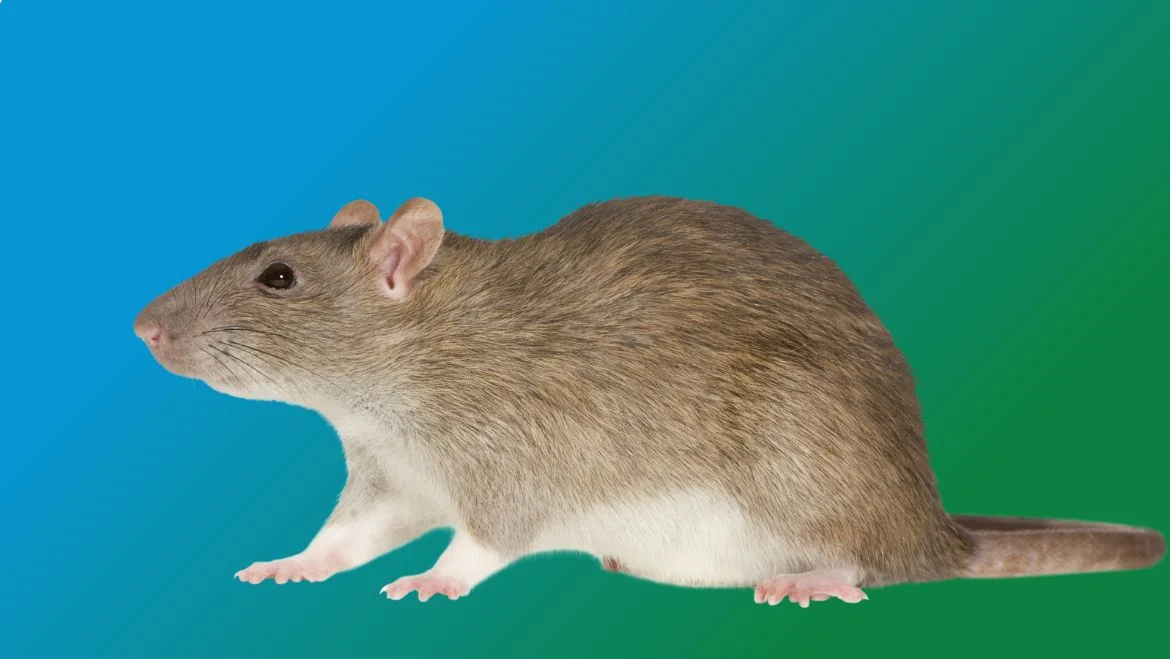
Whenever someone mentions rats, my brain doesn’t pull up a photo from a nature documentary. Instead, I’m right back in the Berlin U-Bahn, waiting for a train. It’s that familiar smell of damp concrete and electricity, and then, just for a second, I see it — a flicker of grey moving along the tracks. Let’s be honest: for most of us the reaction is instant. A gut shudder. That immediate sense of yuck. Centuries of history have told us that rats mean plague, filth and decay.
Meeting the Rat spirit animal on a journey feels almost exactly like that moment on the platform, and this is the part nobody tells you: the body reacts before the heart does. There is a tightening in the gut, a small recoil, sometimes shame. In more than two decades of practice I have watched client after client meet Rat and immediately try to send him away, ask for a “better” animal, or assume they have done something wrong. They have not. Rat comes to people in survival mode — the ones scraping through a divorce, a bankruptcy, an illness, an exile — and he does not come to comfort them. He comes to show them they are already surviving, and to teach them how to do it without shame.
From Sewer to Psyche: The Bridge Between Rat Biology and Rat Medicine
Honest spirit-animal work begins with the real animal. The spiritual message is not invented on top of the biology — it grows out of it.
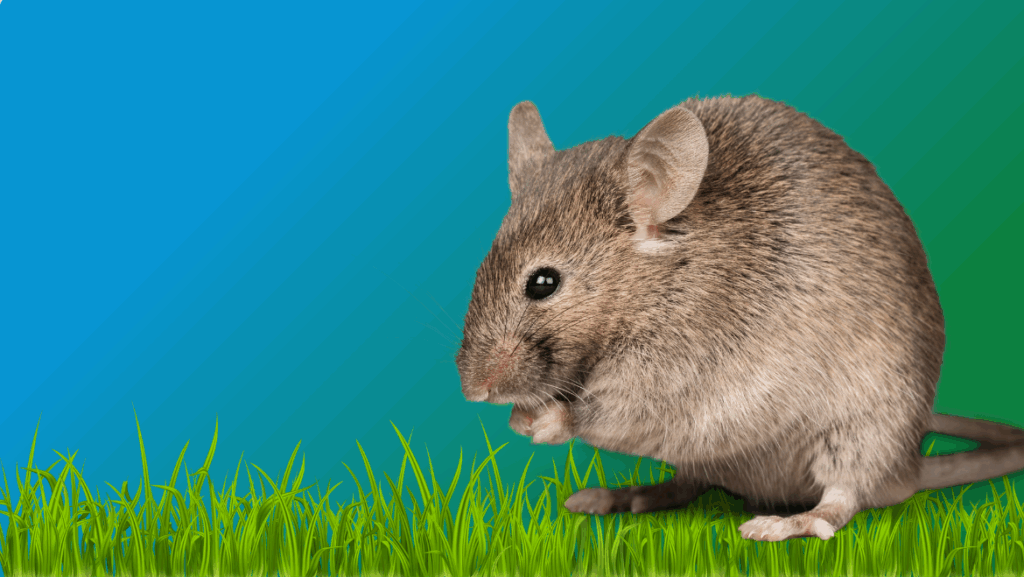
The rat’s body is a masterpiece of adaptation. His incisors never stop growing, so he can gnaw through wood, plastic, even soft metal. His skeleton is flexible enough that he can flatten himself and pass through a gap the width of a coin. His whiskers read air currents and map a pitch-black room by touch alone. He lives directly beneath our feet, in enormous numbers, and we almost never see him. Invisibility, honed over a thousand years of being public enemy number one, is one of his greatest skills.
Three behaviours translate directly into medicine:
- He tests before he commits. Rats are famously neophobic: faced with unfamiliar food, a rat takes a tiny amount and waits, sometimes for days, before eating properly. This is not fear — it is method. Rat medicine teaches the small, survivable experiment instead of the dramatic leap. When clients want to burn their life down and start again, Rat is almost always the guide who says: taste it first.
- He remembers the map. Rats build detailed cognitive maps of their territory, recalling precisely where food was found and where danger appeared. Rat is the guide of learned experience — the refusal to walk into the same trap twice.
- He is not solitary. Laboratory research has repeatedly shown rats freeing trapped cage-mates even when there is no reward for it, and choosing to do so before eating available chocolate. The animal we call filthy is, in fact, an empathetic and highly social creature. This matters spiritually: survival that abandons everyone else is not Rat medicine. It is the shadow of it.
Rats are also relentlessly clean animals, grooming for hours a day. The filth we associate with them is our filth. They simply live in it, because we left it there. Sit with that for a moment — it is the whole psychology of projection in one sentence.
Core Symbolism & Historical Context of the Rat
Few animals split the world’s traditions as sharply as the rat does. The same creature is either a sign of fortune or a reason to call an exterminator — and the split itself is the teaching.
China: First of the Twelve
In the Chinese zodiac, the Rat is first — and the story of how he got there is worth knowing. He did not win the race by being strongest or fastest. He hitched a ride on the Ox’s back, and leapt off at the finish line. Western readers usually hear this as a story about cheating. That is not how it is understood in the tradition. It is a story about intelligence, timing and knowing where to place yourself. The Rat year is associated with prosperity, quick wit, and surplus — the animal who always finds a way to have something stored.
India: Ganesha’s Mount and the Karni Mata Temple
In Hindu iconography, the elephant-headed remover of obstacles, Ganesha, rides a rat or mouse. The image is deliberate: the vast god of thresholds is carried by the small creature who can get into anywhere. Some obstacles cannot be smashed. They have to be gnawed through, from the inside, patiently. And at the Karni Mata temple in Rajasthan, thousands of rats are fed and revered as sacred. To an outsider it is shocking; to devotees, it is simply respect for a form the soul may take.
Europe: Plague, Pipers and the Weight of Projection
Europe made the rat the face of the Black Death, and later of famine, contagion and dehumanisation — the twentieth century’s most murderous propaganda reached for rat imagery to describe entire peoples, and we should never speak of rat symbolism without naming that. The Pied Piper of Hamelin, meanwhile, is a story about what a town will do to avoid paying its debts, and what it loses when it refuses.
In Jungian terms, Rat is a near-perfect image of the shadow: the disowned, the unclean, the exiled part of the psyche that survives on what we throw away and keeps returning no matter how thoroughly we deny it. When Rat appears in a journey, he is very often carrying something you have refused to claim — your hunger, your cunning, your ordinariness, or simply your will to live at all costs.
Finding Respect in the Grime: The Gifts of the Rat Power Animal
The more I have sat with that rat on the tracks, the more my admiration has grown. Here is a creature universally hated and actively hunted, which simply refuses to quit.
- Radical focus: his job is the art of living, and he has no time to worry about what we think of him.
- Resourcefulness: he can make a meal out of anything and build a life from our scraps.
- Freedom from approval: he is entirely unbothered by our fear and disgust — he is too busy surviving.
- Memory: the trap that caught you once will not catch you again.
- Community: he does not survive alone, and neither, in the end, do you.
In a human world where so many of us are crippled by the need for validation, the rat is a picture of clarity. He has one goal — to make it to tomorrow — and he pursues it with a focus that is almost philosophical. He is a champion of the margins, building whole societies in the places we deemed worthless. He has spread across the entire globe not by being the strongest, but by being the best at making a home where no one else wants to.
The Shadow Aspect: The Warning Medicine of the Rat
Rat is not a fortune cookie — and because he is a shadow animal, his warnings are unusually sharp. When he appears blocked, swarming, or in a recurring nightmare, take it seriously.
- Survival that outlived the emergency. This is the most common Rat shadow I meet in sessions. The crisis ended three years ago, and the person is still hoarding, still scanning for threat, still unable to spend, rest, or trust. Survival mode is brilliant when the ship is sinking and corrosive once you are on dry land. Ask honestly: am I still in danger, or have I simply not noticed that I am safe?
- Cunning turned to betrayal. Rat’s intelligence, unhooked from his sociality, becomes manipulation — the person who survives every situation by quietly sacrificing whoever is standing next to them. Real rats free their cage-mates. Take the lesson.
- Rats swarming in dreams. Clients almost invariably read this as a curse or a warning of illness. In my experience it is neither. Swarming rats point to something small that has been ignored until it multiplied: an unopened envelope, an unspoken resentment, a symptom you have not had looked at, a debt. The dream is not asking you to be afraid. It is asking you to go into the basement with a light.
- The rat you are disgusted by. If Rat appears and you feel revulsion, that revulsion is the material. Something in you has been labelled dirty — your neediness, your appetite, your ambition, your history — and exiled. Shadow work here is not about becoming ruthless. It is about letting the exiled part back into the house.
Genuine shadow work with Rat is not glamorous, and it is not fast. It usually starts with one honest look at the thing you have been refusing to name.
Practical Shamanic Work: Journeying with the Rat
This is the journey I give clients who are in survival, in shame, or in the aftermath of a collapse. Allow thirty minutes. Do not do it while distracted or intoxicated, and do not do it in the middle of an acute crisis — get practical help first.
- Set a precise intention. Not “show me my spirit animal” but something Rat can actually answer: “What am I already surviving that I have been too ashamed to name?”
- Build the container. Dark room, blanket, a steady drumbeat of roughly four beats per second for 15–20 minutes. Cover your eyes. Let the beat carry you rather than chasing images.
- Descend into the underneath. Rat is a lower-world guide of tunnels, roots, cellars and drains. Go down through a real opening you have seen with your own eyes, and keep going until the passage narrows.
- Do not send him away. When Rat comes, notice the recoil — and stay. Ask him three times whether he is here for your highest good, and then simply follow.
- Let him show you the cache. Rats store food. Ask: “Show me what I already have that I have not counted.” Clients are consistently shown resources they had entirely discounted — a skill, a person, a savings account, a body still functioning.
- Then ask about the trap. “Where am I still walking into the same trap?” Rat answers this question with unusual bluntness. Do not soften what you hear.
- Thank him and return the way you came, at the callback beat. Write everything down before you speak to anyone.
The Cellar Ritual: Integrating Rat Medicine
A journey without integration is entertainment. Within 48 hours:
- Open one envelope. Literally. Deal with the one small thing you have been avoiding until it grew teeth — the bill, the email, the appointment. Rat medicine begins in the material world, never in the abstract.
- Count the cache. Write down every resource you actually have, including the unglamorous ones: a bed, a friend who answers, a functioning body, a skill someone would pay for. Survival begins with an accurate inventory.
- Name the trap. One sentence: “I keep walking into ______ because it gives me ______.” Traps always pay something, or you would not return to them.
- Take one small taste. Choose the change you are afraid of and do a version of it so small it cannot hurt you — one conversation, one hour, one application. Test the food before you eat the meal.
- Free one cage-mate. Do one concrete thing for someone else who is struggling. This is the step people skip, and it is the one that turns survival back into a life.
If you are new to this work, begin with the fundamentals of shamanic journeying before attempting shadow contact — and if you would like guidance in finding your spirit animal, that is precisely the work I do with clients.
A Lesson in Not Caring What Others Think
For me, the real wisdom of the rat cuts deeper than any one culture’s story. It is about what it takes to survive when the world does not want you around. It is a lesson in thriving not because you are loved, but because your will to live is simply that strong.
A rat lives entirely unapologetically. He does not ask for permission. He finds a way, or he makes one. So when I think back to that rat on the Berlin tracks, I do not see a pest anymore. I see a small, furry masterclass in survival. He was not asking for my approval or waiting for my judgment. He was busy living — and there is a real kind of freedom in that.
Did you ever think about the rat in that way?
About the Author — Carolin Mallmann
I am Carolin Mallmann, founder of One Shamanism and author of The Path of the Paws. For over two decades I have worked with people as a coach, certified NLP practitioner and shamanic practitioner, guiding thousands of one-to-one sessions and training students internationally in shamanic journeying, spirit animal work and shadow integration. Everything I write here comes from lived practice — my own journeys, my teachers, and the real, sometimes uncomfortable experiences of the clients I sit with. I do not promise miracles, and shamanic work is not a substitute for medical or psychological treatment. What I can offer is an honest, grounded path back to your own instincts. Read more about my background and practice here.