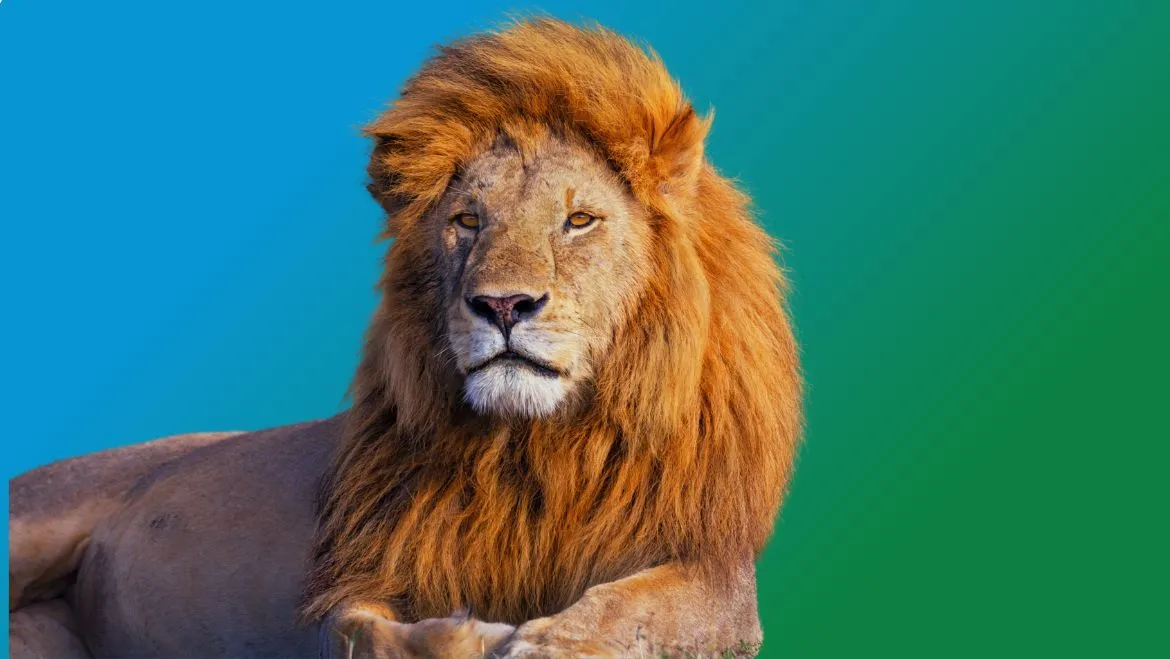
The lion does not need to prove itself. That is the first thing I notice whenever it appears in shamanic space — no display, no aggression, no assertion of dominance. It simply occupies the landscape with such completeness that everything around it reorganises. It does not claim authority. It carries it, and the difference is the entire teaching.
This page is about the lion spiritual meaning — not the animal’s diet or range. If a lion has been arriving in your dreams, your journeys, or in the strange repetition of images that will not leave you alone, what follows is what that tends to mean.
In my practice, the lion does not arrive for people who want power. It arrives for people who are ready to stop avoiding it. That is a very different population, and they are almost always surprised to be visited by this animal. They expect something gentler, because they do not yet see themselves as someone the lion would come for.
“The lion spirit animal roars within us all, beckoning us to embrace our innate courage, strength, and regal nature.”
The Bridge: What Lion Biology Teaches About the Lion Spirit Animal
The popular version of lion medicine — courage, roaring, king of the jungle — collapses the moment you look at the real animal, and what replaces it is far more useful.
- The lion is the only truly social cat. Every other big cat hunts and lives alone. The lion’s entire strategy is the pride — coordinated, hierarchical, interdependent. Lion medicine is not about individual glory. It is about authority exercised inside a group that depends on you. If your version of strength requires you to be alone, it is not lion medicine.
- The lionesses do the hunting. Roughly 85–90% of it, cooperatively, reading each other without signals, adjusting mid-hunt. The work that keeps the pride alive is done collectively, invisibly, and without ceremony — and it is not subordinate work. Hold that alongside the heraldry and the crowns.
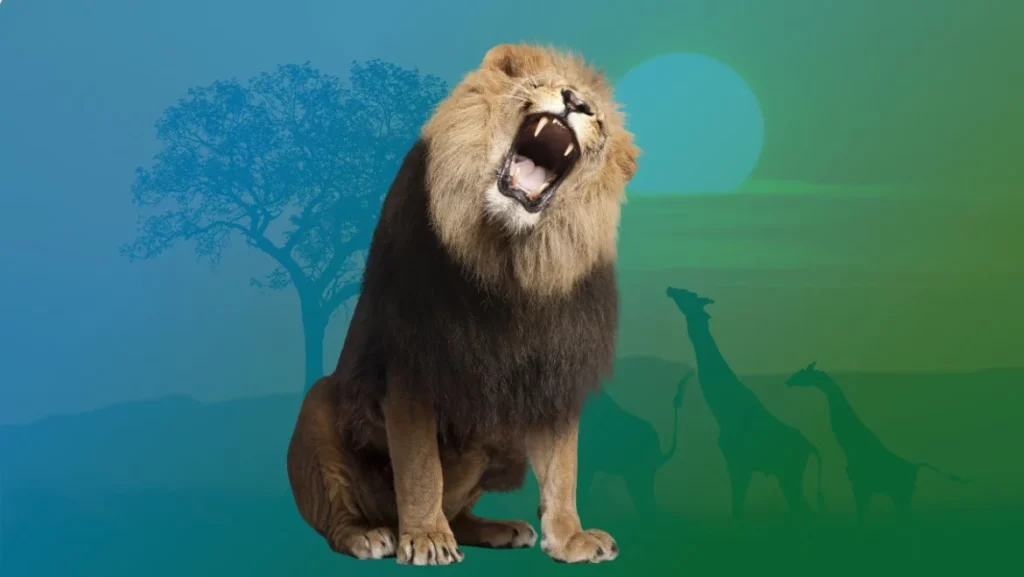
- The male’s job is the perimeter. He patrols, roars, marks, and fights off incursion. His roar carries some five miles — it is not a threat display so much as a statement of location. I am here, and this is held. That is what mature authority actually sounds like: presence announced, not force applied.
- The mane is honest advertising — and a liability. It signals condition and testosterone, and it also makes him hotter, heavier and more visible. What makes you unmistakable is what makes you a target. Anyone stepping into visible leadership is being asked to accept this trade, and the lion does not pretend otherwise.
- Lions rest for twenty hours a day. The most powerful predator on the savannah spends most of its life lying down. Power that has nothing to prove does not need to be constantly demonstrated.
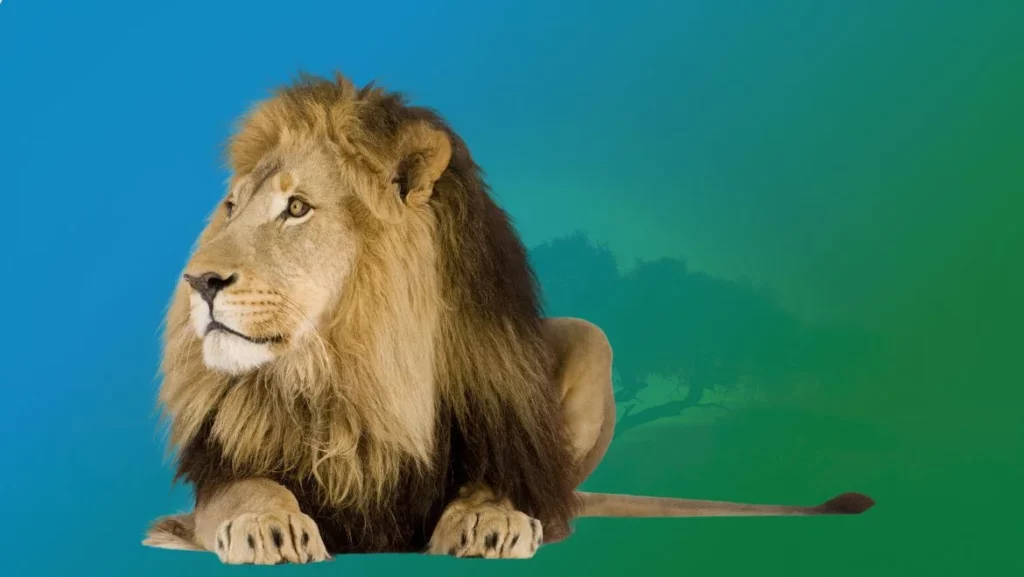
Lion Symbolism Across Traditions
The lion’s presence in world mythology is so consistent that it approaches a universal archetype — the same essential quality recognised independently by cultures that never met.
Egypt: Sekhmet, and ferocity as healing
In ancient Egypt the lioness goddess Sekhmet was simultaneously a deity of war and of healing — a combination that looks contradictory until you understand what the lion knows. Her priests were physicians. Her ferocity was not softened to make room for the healing; the ferocity was the healing — the capacity to burn out what is corrupted, to fight illness with complete commitment, to refuse to negotiate with what is destroying the body. Anyone who has had to become fierce in order to get well understands Sekhmet immediately.
Greece: the lion that cannot be fought conventionally
The Nemean Lion — Heracles’ first labour — had a hide no weapon could pierce. He had to drop the club and the arrows, close the distance, and strangle it with his hands; then skin it using its own claws, because nothing else would cut it. The invincibility was not the obstacle. It was the instruction. What the lion represents cannot be met with conventional force or from a safe distance. You have to come closer than is comfortable, and you have to use something the situation itself gives you.
Mesopotamia, Persia, India, Europe
The lion stands beside Inanna and Ishtar in Mesopotamia; guards the gates of Persepolis; becomes the four-lion capital of Ashoka and the national emblem of India; and appears on the arms of England, Scotland, Norway, Denmark, the Netherlands, Belgium, and half the principalities of medieval Europe. Heraldry is not spiritually significant in itself, but its consistency tells us something: across every culture that knew this animal, it was chosen to represent sovereign dignity — authority that comes from genuine capability rather than performance. That is the quality human beings have most consistently wanted their leadership to carry, and most rarely got.
The lioness: effective, unrecognised power
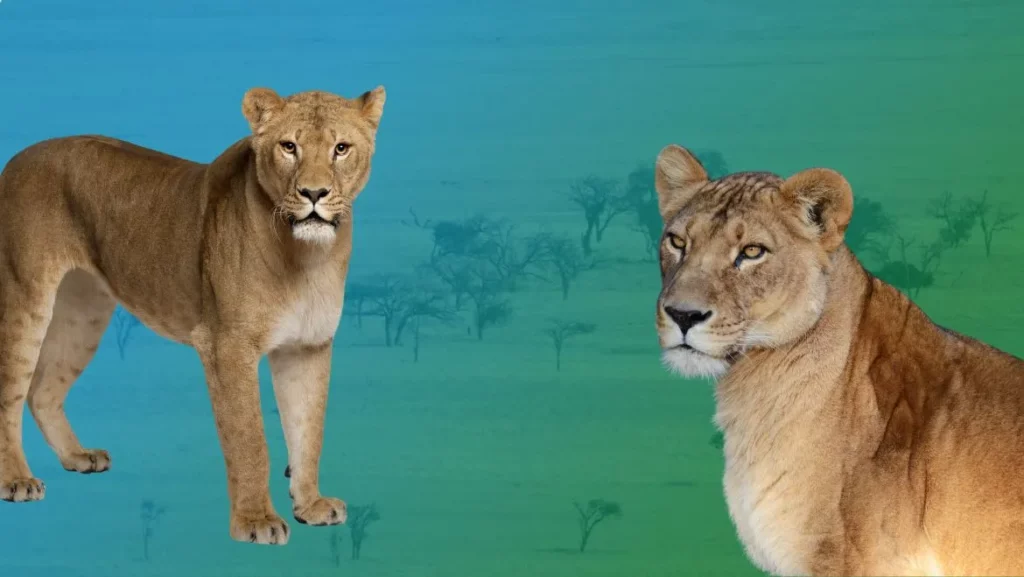
The lioness’s medicine is distinct and, for many of the people I work with, more directly relevant. She is the one doing the essential work, collectively, without ceremony or credit. Her teaching has two edges, and both matter: the capacity to do the necessary work without needing applause for it — and the honesty to know the difference between that and being systematically undervalued. The lioness does not perform her hunting for an audience. But she also does not pretend she is not hunting.
“Like the lion, may we stand tall in our truth, protecting our pride with fierce love and unwavering loyalty.”
The Shadow: When the Lion Turns
Lion medicine has a shadow that our culture is very poor at recognising, because it flatters the person carrying it right up until the moment it doesn’t.
- Authority that has become identity. The lion at its fullest leads because the situation requires it and it has the capacity to offer. The shadow lion leads because it does not know who it is otherwise. The tell is simple: when the role is removed, does anything remain? If the answer frightens you, that is the work.
- Pride that has hardened into rigidity. Dignity is the lion’s genuine gift. But dignity that cannot be questioned is not dignity, it is brittleness — and the first thing it sacrifices is the ability to be corrected by anyone who loves you.
- The unfed need for recognition. When the need to be seen goes unmet in someone with lion medicine, it does not disappear. It curdles into grievance, and grievance in a person with genuine capability is a corrosive thing — for them, and for everyone who depends on them.
- The deflected crown. The most common form of the lion’s shadow I encounter is not arrogance at all. It is the opposite: the person who has spent years managing their own power down to a size that feels safe for other people, and who now cannot find the switch to turn it back up. They are not humble. They are hiding, and calling it humility.
A lion that chases you in a recurring dream is rarely the threat it feels like. In my experience the pursuing lion is driving the dreamer back toward something they have been running from — a responsibility deflected, a leadership offered and declined, a power denied. It does not want to harm you. It wants you to stop running. A lion caged or chained is one of the more painful images and needs no interpretation from me. A roaring lion is a clarion call: something needs to be said, claimed or declared, and you have been withholding it.
The lion’s question is short and not easy: What would you do, and who would you become, if you stopped managing your own power down to a size that feels safe for others?
The Path of the Paws
42 hand-illustrated oracle cards, one for each animal guide — drawn from the same practice these articles come from. A way to sit with an animal instead of only reading about it.
Order your deck →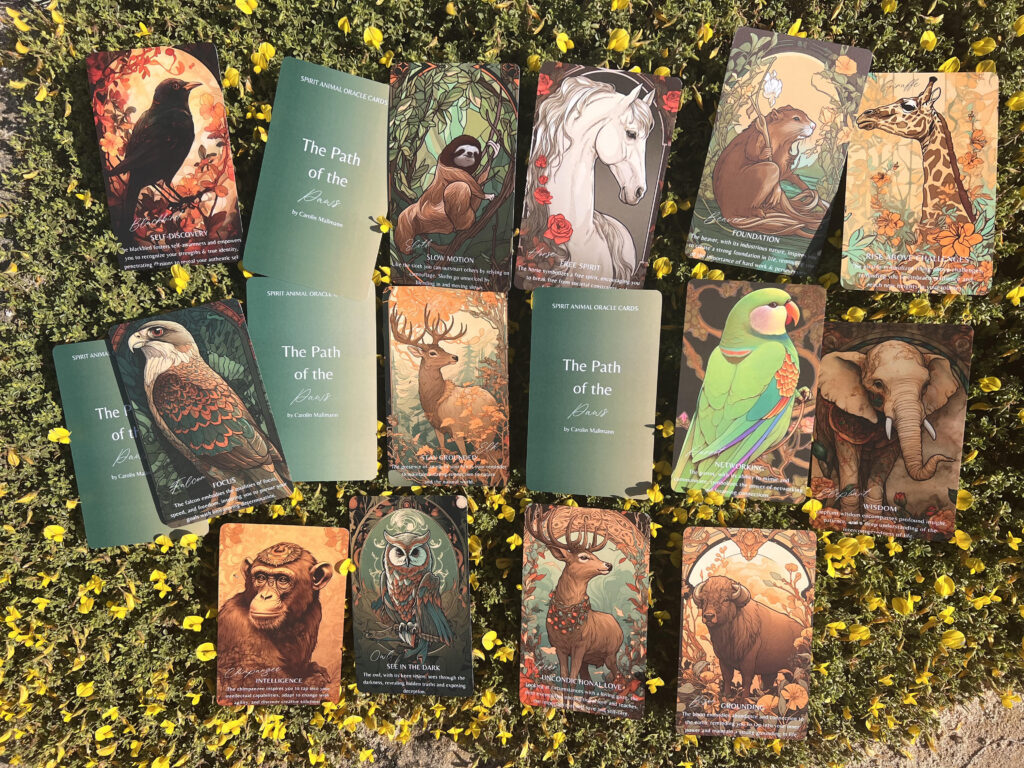
How to Journey to the Lion
Shamanic work is not a substitute for medical or psychological care. If you are new to the practice, start with the beginner’s guide to shamanic journeying and come back to this.
- Bring the right question. The lion does not respond well to “how do I become more confident?” It responds to “Where am I failing to claim my own authority, and what is that costing the people who depend on me?” Specificity is a form of respect here.
- Journey toward open, sunlit ground. Savannah, grassland, warm stone. The lion does not live in caves or dense forest. It lives where it can see and be seen — move toward light and openness rather than enclosure.
- Do not approach with deference. This is the instruction people find hardest. The lion does not respond to supplication. Come with respect but not submission, state your intention once, and then be still and let it assess you. Grovelling in a lion journey produces nothing.
- Notice whether lion or lioness comes. The male speaks to visible leadership and the willingness to be seen and held responsible. The lioness speaks to the effective, often invisible work of holding things together — and to whether that work is being properly owned and valued. People are frequently visited by the one they were not expecting, and that mismatch is usually the message.
- Meet its gaze and do not look away. Let the lion see you as you actually are, not as you manage yourself to appear. Then ask, inwardly: “What are you calling forward in me?” Let the answer come as sensation rather than words — it usually arrives in the chest and the spine before it arrives in language.
- Afterwards, name one thing you will stop deflecting. One. This week. The lion’s medicine dies in the gap between insight and action, and it does not come back quickly for people who waste it.
Leo, the sun, and the lion’s fire
For those born under Leo (23 July – 22 August), the lion’s medicine is both birthright and assignment. The gifts are real: warmth, the capacity to inspire, a presence others feel across a room, the ability to hold complex situations without flinching. The shadow is equally real, and it is the one described above. The Leo path — and the lion’s path for anyone who carries it, regardless of birth chart — is the movement from leadership as identity to leadership as service. As a fire sign, Leo connects the lion to solar qualities: radiance, generosity, warmth given without depletion. The sun does not withhold its light from the undeserving. It simply shines. That is the lion’s last teaching — not that power should be rationed, but that genuine power, freely offered, does not diminish the one who gives it. You can explore the wider system in the zodiac signs and their spirit animals.
Lion Spirit Animal: Questions People Actually Ask
What does it mean when a lion appears in your life?
It almost always points at authority — either authority you are being asked to take up, or authority you are holding badly. The lion does not come to make you braver in general. It comes with a specific, locatable invitation, usually to a responsibility you have already been offered and quietly declined.
Is the lion a good or bad omen?
Good, but rarely comfortable. Across traditions the lion is protective and sovereign, not malevolent. What makes it feel ominous is that it tends to arrive at exactly the moment you would prefer to stay small — and it does not accept that preference as an answer.
What does a lion in a dream mean?
Read what it is doing. Watching from a distance: you are being assessed, and being asked to assess yourself honestly. Walking beside you: one of the most affirming dreams this animal offers — you are currently walking with your power rather than behind it. Chasing you: it is herding you back toward what you are avoiding. Caged: you already know.
Lion or lioness — does the difference matter?
Yes, and it is worth being precise. The lion speaks to visible, public, accountable leadership. The lioness speaks to the essential, often invisible work that actually sustains a group, and to the question of whether you are being fairly recognised for it. Notice which one came. It is not a detail.
How do I know if the lion is my power animal?
The people I meet who carry lion medicine rarely feel powerful. More often they feel the weight of a capacity they have been reluctant to claim, and they end up holding responsibility they never asked for. If others routinely bring you their crises and decisions — even when you feel far from steady yourself — that is the signature. Work through the A–Z spirit animal guide, or sit with the Path of the Paws oracle deck and let the animal find you.
“The lion’s mane is not just a crown of beauty but a symbol of the radiating power and leadership that resides within each of us.”