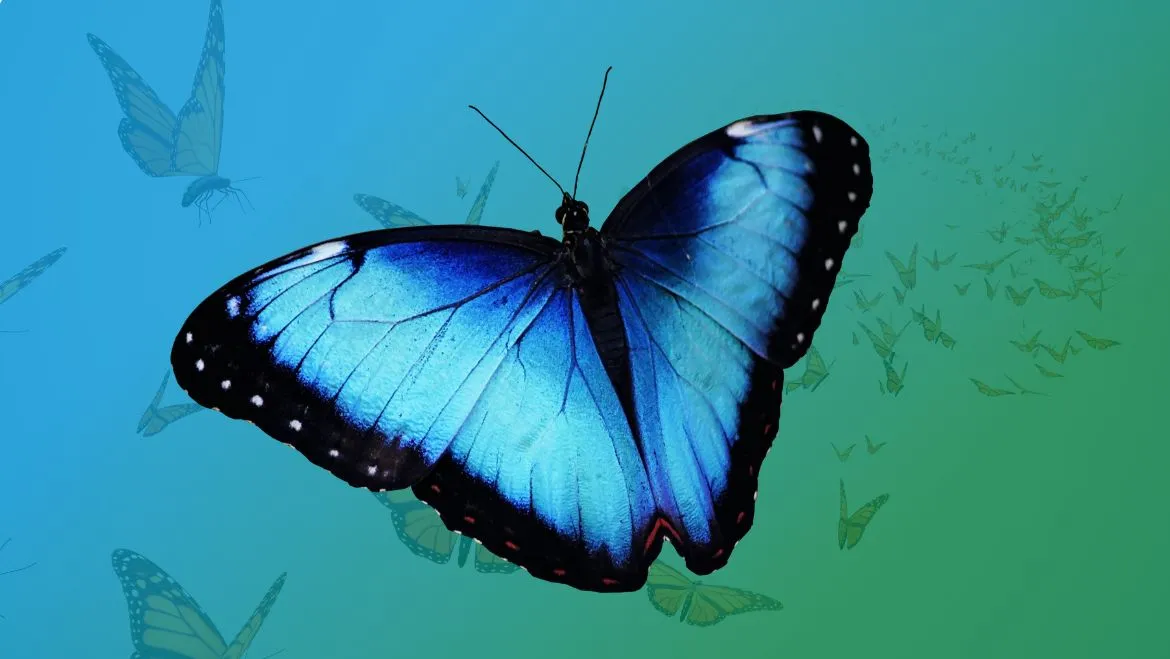
The butterfly rarely arrives in a journey the way people expect. It does not settle on an outstretched hand. It moves — erratically, unpredictably, refusing to be tracked — and when people try to follow it with their attention they lose it, over and over. Almost everyone who journeys to the butterfly reports the same frustration: I couldn’t get it to hold still. That is not a failed journey. That is the animal, telling you exactly what it is.
This article is about what the butterfly means when it keeps appearing — in dreams, in journeys, in the weeks after a loss, in the strange stretch of life where the old thing is over and the new thing has not started. It is not about lepidoptera. If a butterfly has been following you and you want to know why, you are in the right place.
And the first thing to say is that almost everything written about it is only half the story. The butterfly is not the symbol of having transformed. It is the symbol of what transformation actually costs.
Butterfly Spirit Animal: Meaning and Message
Here is the part the greeting cards leave out. Inside the chrysalis, the caterpillar does not sprout wings. It dissolves. Specialised enzymes break its own body down — a process called histolysis — until most of it is an undifferentiated liquid. What survives are small clusters of cells called imaginal discs, which have been present since the caterpillar hatched, doing nothing, waiting. From that liquid and those discs, an entirely different creature is assembled.
The name of those cells is not an accident of Latin. The blueprint for what you are becoming has been inside you the whole time, dormant, while you were busy being the caterpillar.
So when the butterfly appears as a spirit animal, its message is not you are about to become beautiful. It is: what is dissolving in you is not being destroyed — but it does have to actually dissolve. In my practice the butterfly does not arrive when a transformation is finished. It arrives in the middle, in the phase that feels far more like loss than like growth, when people are convinced they have failed rather than that they are mid-process.
From the Animal to the Meaning: Butterfly Spiritual Meaning Grounded in Biology
It tastes with its feet. A butterfly’s chemoreceptors are on its legs — it identifies the right plant by standing on it. It cannot know what is nourishing from the air. It has to land. This is a precise instruction for anyone in transition: you will not determine whether something is right for you by thinking about it from a distance. Contact is the test.
Its flight is deliberately erratic. That looping, unpredictable path is not weakness. It is an anti-predator strategy — a flight path a bird cannot compute. The butterfly survives precisely because it cannot be tracked in a straight line. If your own path has looked chaotic to the people watching it, the butterfly is not a rebuke. It is a defence of how you have moved.
It emerges with wet, folded wings — and must not be helped. The butterfly has to pump fluid into its wings and hang, motionless and utterly vulnerable, while they harden. Cut a butterfly free of its chrysalis and it dies: the struggle is the mechanism. This is the single most important thing the butterfly has to teach about premature rescue — of ourselves, and of the people we love.
The Four Stages as a Map You Can Actually Use
The value of the butterfly is diagnostic. It lets you locate yourself, and most suffering in a transition comes from misidentifying which stage you are in.
- Egg — potential before commitment. Something has been seeded and has not begun to move. The work is protection, not action. Talking about it too early is how it dies.
- Caterpillar — accumulation. The caterpillar does one thing: it eats, relentlessly, and grows. This stage feels unglamorous and directionless, and people constantly mistake it for stagnation. It is not. You are building the material that the dissolution will later reassemble.
- Chrysalis — dissolution. The hardest stage and the one everybody tries to skip. The old form is gone; the new one is not visible. Nothing is happening that anyone can see. This is where people force a decision, take the wrong job, go back to the relationship — anything to end the not-knowing.
- Butterfly — a different mode of being. Not a reward. A new set of capacities that required the dissolution to exist at all. And it is one-directional: nothing that has been through the chrysalis goes back.
Butterfly Symbolism Across Cultures
Ancient Greece. The word for butterfly and the word for soul are the same word: psyche. This is not a poetic overlap; it is an identification. Psyche, in the myth, is a mortal who becomes divine only by surviving a sequence of impossible trials — the soul that reaches immortality by consenting to be undone first.
Japan. A butterfly entering the house is widely understood as the spirit of someone — living or dead — making itself known. Two together signify the meeting of two souls. The butterfly here is not decorative. It is carrying something.
Mexico, P’urhépecha and Nahua traditions. The annual arrival of the monarchs in Michoacán coincides with Day of the Dead, and the butterflies are widely understood as the returning souls of the ancestors. This is one of the few places on earth where a mass migration and a festival of the dead are the same event.
Christian tradition. The three visible stages — caterpillar, chrysalis, butterfly — map directly onto death, burial and resurrection, which is why butterflies appear on early Christian tombs.
What unites them all: in none of these traditions is the butterfly a symbol of pleasant change. It is a symbol of the change that requires the previous form to be surrendered entirely.
The Shadow of Butterfly Medicine
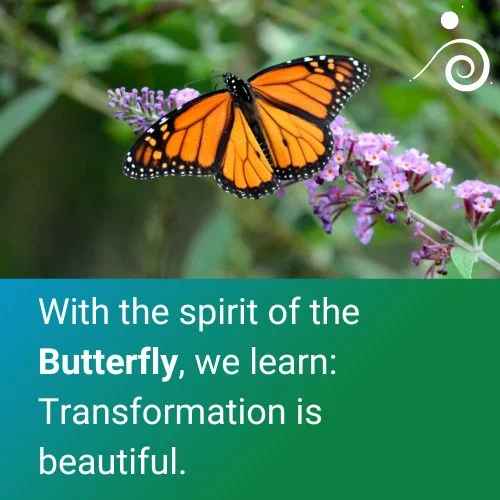
The butterfly is the most sentimentalised spirit animal there is, which is exactly why its shadow goes unnoticed for years.
Perpetual becoming. The most common distortion in my experience is the person who is always transforming and never actually living. Another course, another shedding, another reinvention — the chrysalis used as a place to hide from ordinary, unglamorous commitment. Transformation can become a way of never having to be anything in particular.
Refusing to land. The butterfly tastes with its feet, but the shadow butterfly never touches down. It samples. It moves on before anything can ask something of it. This is often mistaken for freedom by the person doing it, and experienced as absence by everyone around them.
Forcing the chrysalis. The opposite failure. People in the dissolution phase very often cannot bear the not-knowing, and they break out early — they make the decision, take the offer, name the new identity — before the reorganisation is complete. The wings are not hard yet. It does not hold.
The dead or trapped butterfly. In dreams this image alarms people, but it usually points to something specific: a transformation that was begun and then abandoned, or a self that was allowed to emerge and then folded away again because it was inconvenient to somebody. It is grief, not omen.
The Moth: The Butterfly’s Nocturnal Counterpart
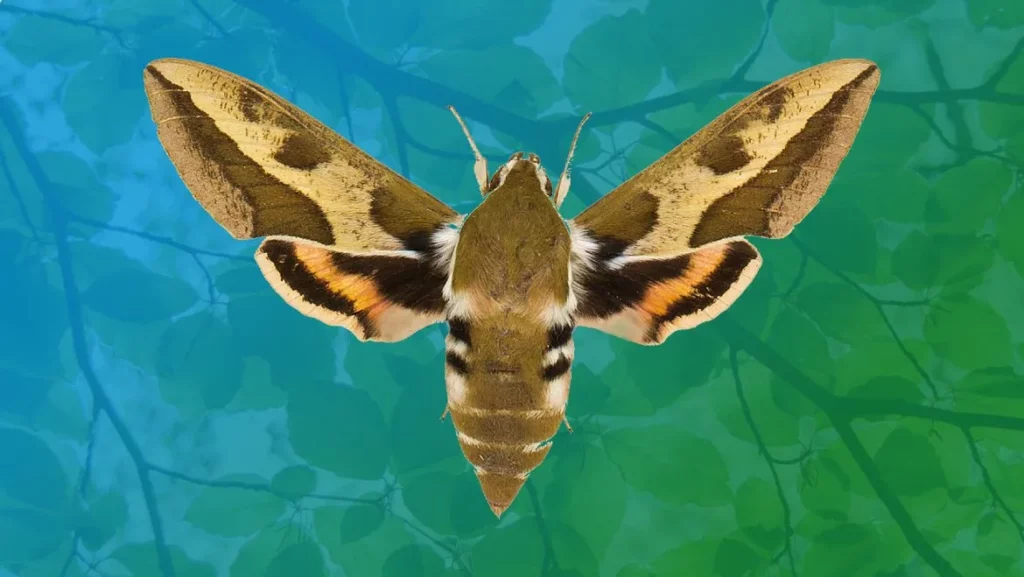
The moth carries a distinct medicine. The butterfly transforms in the protected privacy of the chrysalis and then lives in the light. The moth does its essential work in the open dark, navigating by moon and star — a transverse orientation system that our artificial lights hijack, which is the real reason it spirals toward the flame.
Read spiritually, that is not stupidity but total commitment to the brightest available light, without calculation. Moth people are those whose most important development happens where nobody can witness it — in dreams, in solitude, in processes they cannot explain to anyone. The moth’s warning is contained in the same gesture: be careful what you have chosen as your light. You will follow it all the way in.
Peacock and Lemon Butterfly: Two Specific Messages
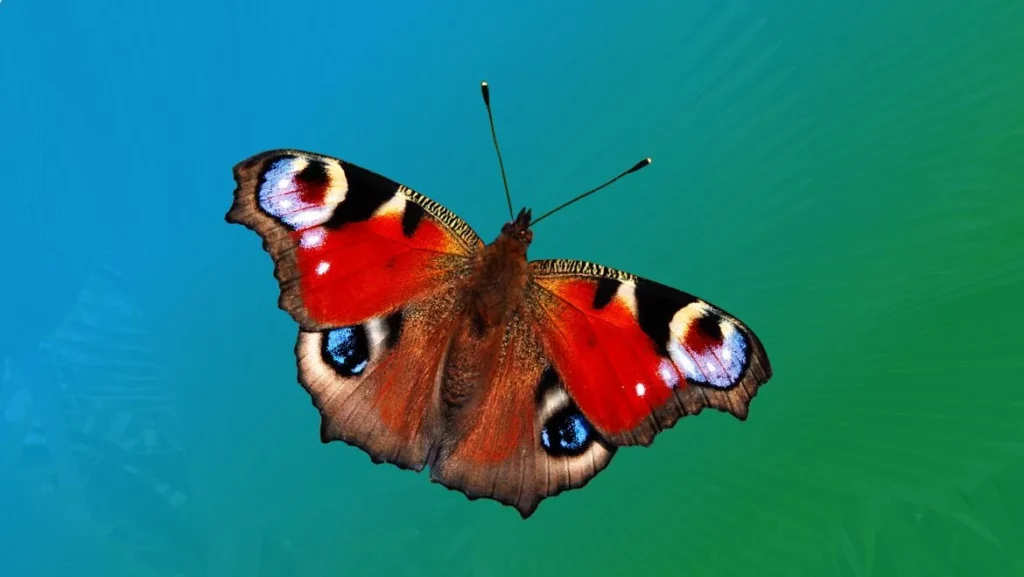
The peacock butterfly carries large eye-spots on its wings, and when threatened it snaps them open — startling a predator into seeing a much larger creature. It survives not by hiding but by sudden, complete revelation. Its question is uncomfortable and precise: what in you, if shown plainly and without apology, would change how you are being read by people who currently misjudge you?
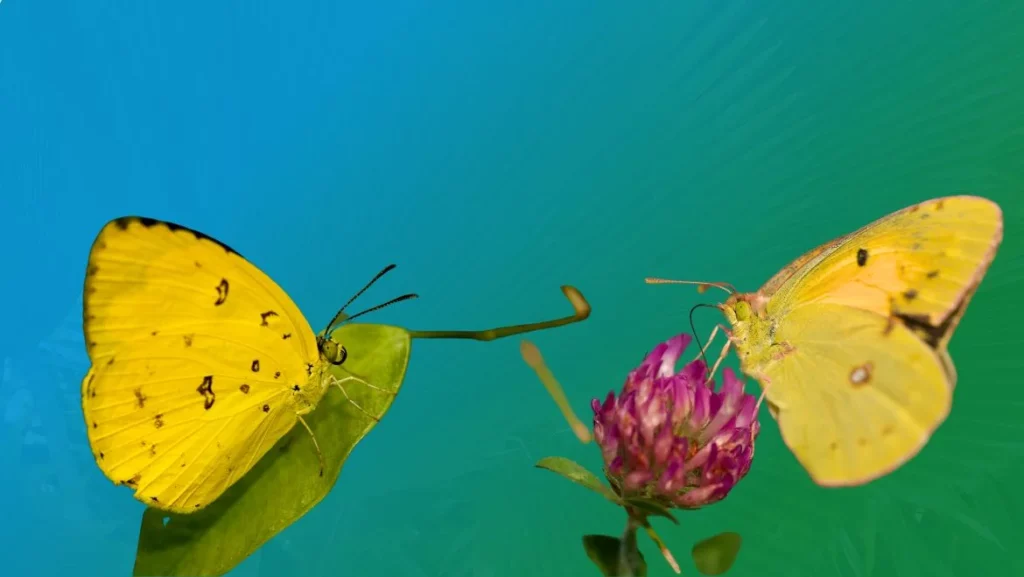
The lemon butterfly (the brimstone) is among the first to fly in spring — it overwinters as an adult and emerges while frost is still possible. It does not wait for safe conditions. Its message: the season has already turned somewhere in your life. Are you willing to come out before it feels entirely safe?
How to Journey to the Butterfly Spirit Animal
This is a chrysalis practice, not a flight practice. Allow thirty minutes.
- Name the stage first. Before you begin, write one sentence: I believe I am in the … stage. Egg, caterpillar, chrysalis, butterfly. You will often find in the journey that you were wrong, and that is the point of writing it down.
- Do not chase it. When the butterfly appears, let it move. Following it with your attention is how people lose it. Stay still and let it pass in and out of your field.
- Ask to be shown the chrysalis, not the wings. The wings are the easy vision and they teach nothing. Ask: what in me is currently dissolving?
- Stay inside it. If you find yourself enclosed, dark, unable to move — do not push against the walls, and do not end the journey. The impulse to force your way out is the material you came to work with. Sit in it for as long as the drumming lasts.
- Ask what is being kept. Not everything dissolves. Something — the imaginal discs — survives every transformation you have ever been through. Ask what has always been in you, and listen for what does not change between one version of your life and the next.
- Integration: decide nothing for seven days. The butterfly’s discipline is refusal to force emergence. Make no irreversible decisions for a week after this journey, and notice how strongly you want to.
The Path of the Paws
42 hand-illustrated oracle cards, one for each animal guide — drawn from the same practice these articles come from. A way to sit with an animal instead of only reading about it.
Order your deck →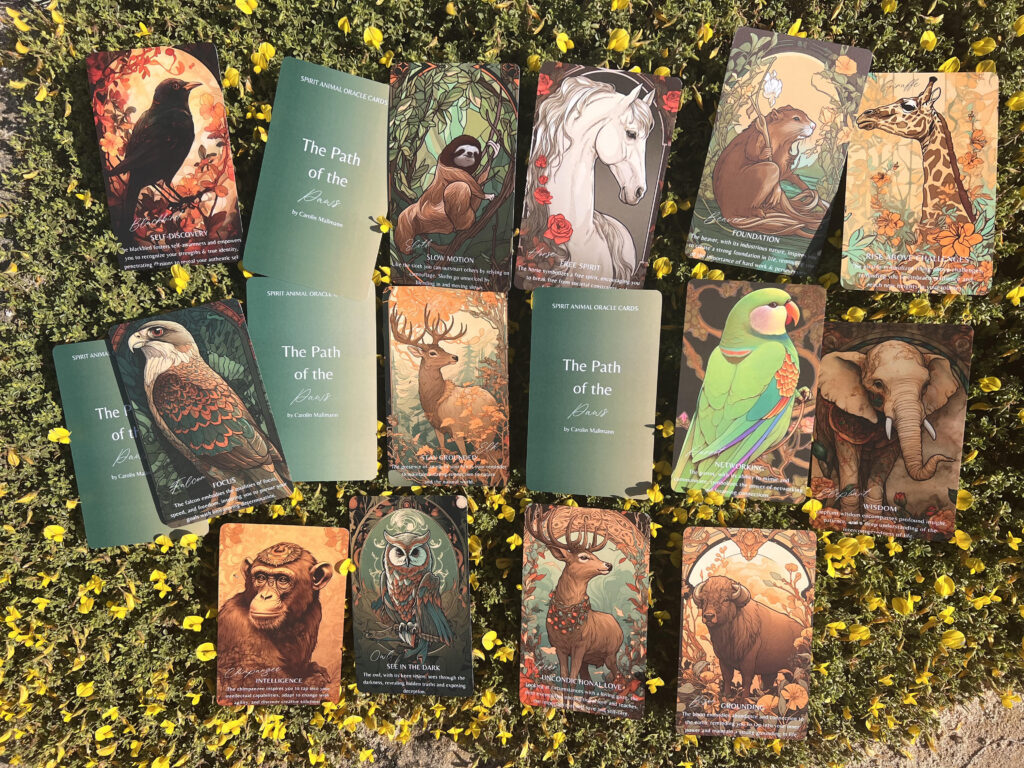
Butterfly Spirit Animal FAQ
What does it mean when a butterfly lands on you?
Butterflies land for salt and moisture, which is the ordinary explanation and does not cancel the other one. Traditionally it is read as contact from something that has already transformed — a soul, an ancestor, a version of yourself that has come through. What matters is what you were thinking about in the moment before it landed.
Do butterflies mean a loved one is visiting?
Many traditions — Japanese, P’urhépecha, Greek — hold exactly this, and people in grief report butterfly encounters at a rate that is hard to dismiss. I do not think this needs to be proved or debunked. If a butterfly arrives at the moment you were thinking of someone, the correct response is not analysis. It is to say thank you.
What does a butterfly in a dream mean?
Read the stage. A caterpillar means accumulation you are mistaking for stagnation. A chrysalis means a dissolution already underway. A butterfly emerging with wet wings means something new that is real but not yet load-bearing — do not test it too early. A trapped or dead butterfly usually points to a transformation you began and abandoned.
What is the difference between butterfly and moth medicine?
The butterfly transforms in private and lives in the light. The moth transforms in the open and lives in the dark. If your growth is visible to others, that is butterfly. If it is happening where nobody can see it and you cannot explain it, that is moth.
How do I know if the butterfly is my spirit animal?
It tends to claim people who have already been through at least one full dissolution and survived it. To work with it deliberately, use the A–Z guide to spirit animals, draw from the Path of the Paws oracle deck, or take it step by step in the four-week spirit animal course. If the shedding rather than the dissolving is what you recognise, read the snake spirit animal next.
Affirmations for Butterfly Medicine
- “What is dissolving in me is not being lost. It is being reassembled around a different centre.”
- “I do not push against the chrysalis. The struggle is not an obstacle to my wings — it is how they harden.”
- “I have been undone before, and what came out of it had never existed until then.”
If you are in the dark part and nothing is visibly happening, you are not behind. You are in the only stage where the real work occurs — and the instruction is the hardest one the butterfly gives: do not help yourself out of it too soon.