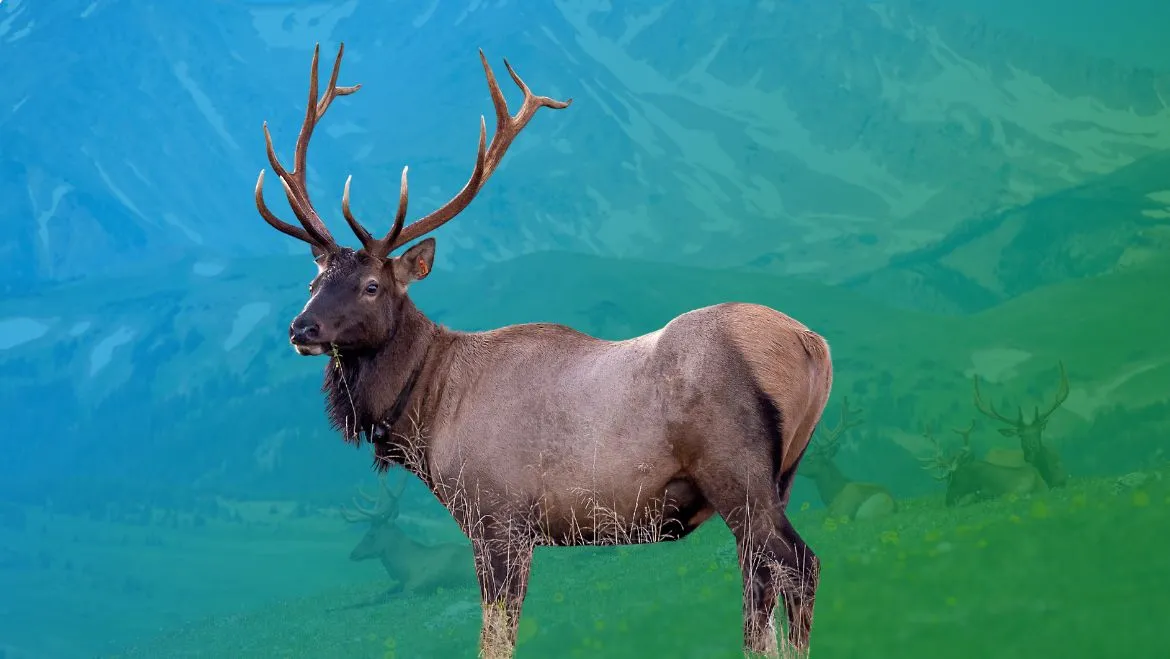
The elk does not hide. It cannot. It is too large, too audible, too visibly there — and it moves through a forest with an unhurried authority that makes concealment beside the point. Everything in the woods knows where the elk is. The elk knows that everything knows. And it keeps walking.
When people journey to it, the first thing they usually notice is not its size but its pace. It sets a rhythm that feels frustratingly slow. Almost everyone’s instinct is to walk faster. That impulse — and what happens when you resist it — is the entire teaching.
This page is about what the elk means: in journeys, in dreams, and in the long seasons where something must be carried further than you thought you could carry it. Not about antler biology. If the elk has been appearing to you, stay.
From Migration to Meaning: What the Real Elk Tells Us About the Elk Spirit Animal
Some elk populations make one of the longest land migrations in North America — well over a hundred miles, twice a year, through mountain terrain and deep snow. They do it not by force but by pacing: reading the ground, conserving on the descents, following routes that older animals carry in memory, and stopping genuinely when stopping is required.
That distinction is the elk’s core medicine, and it is sharper than “be patient.” There is endurance as force — gritting through, treating exhaustion as evidence of commitment — and there is endurance as intelligence. The elk has no interest in the first. It will not survive the migration by burning everything it has in the first ten miles, and it does not admire animals that try.
The second fact worth holding: a bull’s antlers are shed every winter and regrown every year — bone that grows faster than almost any tissue in the animal kingdom, then falls off. The elk builds its most conspicuous asset annually and then discards it, without ceremony, and starts again. Nothing it carries is permanent, and it is not diminished by the losing.
And the third: elk herds practise distributed vigilance. Different animals attend to different sectors, so the herd perceives more than any single animal can. The elk does not navigate the migration alone, and the knowledge it relies on is older than its own memory.
Sustainable pace. Annual shedding. Shared perception. In my practice, the elk arrives almost exclusively for people in the middle of something long — and specifically for those who have begun to suspect that the way they are doing it will not last the distance.
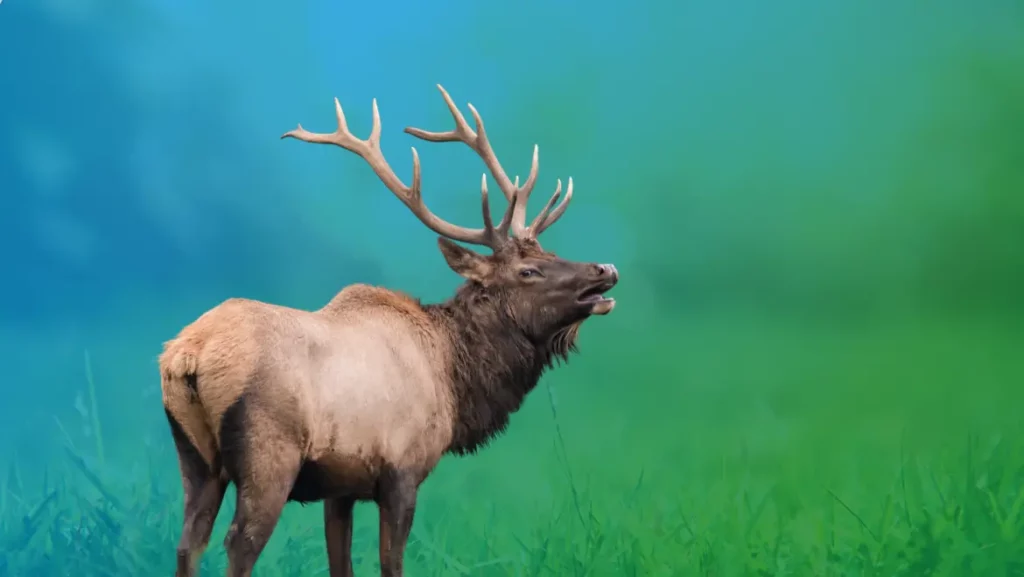
Elk Symbolism and Spiritual Meaning Across Traditions
Lakota tradition. Among the Lakota, the elk — hehaka — is associated with masculine power, courtship, and a particular kind of spiritual authority; elk dreamers formed their own society, and the elk’s call was understood as a power that could draw and charm. I name the nation rather than writing “Native American” because the elk means different things in different nations, and flattening them is a way of erasing them. The point that carries across: the elk’s power is not aggression. It is presence that does not need to prove itself.
Siberian and northern Eurasian traditions. Across the taiga, the great antlered animals — elk and reindeer — are cosmological figures. In several Siberian traditions the elk is placed in the sky itself; the constellation we call the Great Bear is read in some tellings as the celestial elk, hunted eternally across the night. The animal that walks the long migration on earth also walks the long migration overhead.
Celtic and Norse forest lore. The great stag-like animal appears again and again as a guide between worlds — the creature that leads a hunter deeper into the forest than he meant to go, and by doing so changes him. Where the deer is elusive, the elk is the opposite: it does not lead you astray. It simply keeps walking, and you either match it or you lose it.
What runs through all of it is earned authority. The elk carrying the fullest rack has survived the most winters. Its dignity cannot be performed, purchased, or claimed. It can only be accumulated — season by season, migration by migration.
The Path of the Paws
42 hand-illustrated oracle cards, one for each animal guide — drawn from the same practice these articles come from. A way to sit with an animal instead of only reading about it.
Order your deck →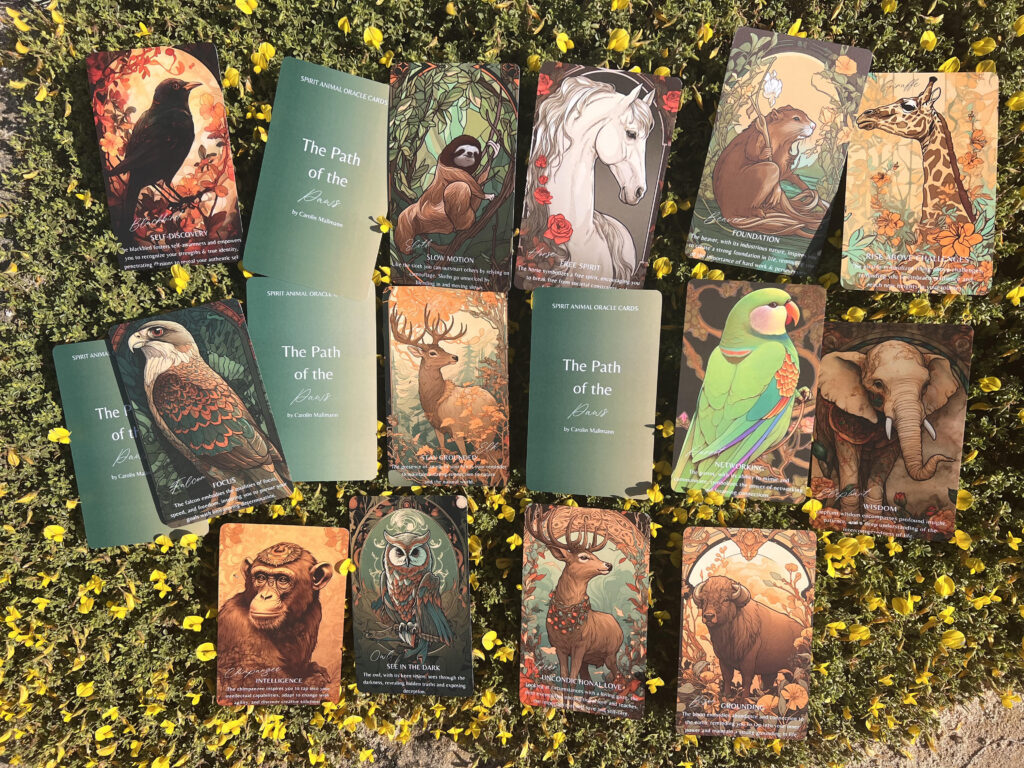
The Shadow of the Elk
The elk is easy to romanticise, which is precisely why its shadow goes unnoticed for years.
Endurance becomes martyrdom. The animal that can keep going sometimes keeps going long after it should have stopped. In my practice, the most common elk shadow is the person who is proud of what they are enduring — whose identity has quietly fused with the difficulty of the thing they are carrying. Ask honestly: if this got easier tomorrow, who would I be? If the answer is uncomfortable, the elk is not asking you to walk further.
Presence becomes performance. The elk cannot hide, and neither can some people — they occupy the room whether they want to or not. The shadow is when that unavoidable presence becomes something curated: the bearing, the gravitas, the composure worn as armour. The antlers grown for display and never shed.
The herd becomes the excuse. Distributed vigilance is a gift, right up until you are relying on the herd to notice what only you can see. Elk people often defer — waiting for the community to move, for consensus, for someone else to know the route. Nobody else knows your route.
When the elk appears wounded or exhausted. This is the image that alarms people most, and it is rarely a warning about the outside world. In the pattern I encounter most often, a limping, depleted, or fallen elk arrives for someone who has been overdrawn for a long time and has stopped noticing. The elk is not injured. You are. An elk standing still and refusing to move is saying the same thing more gently.
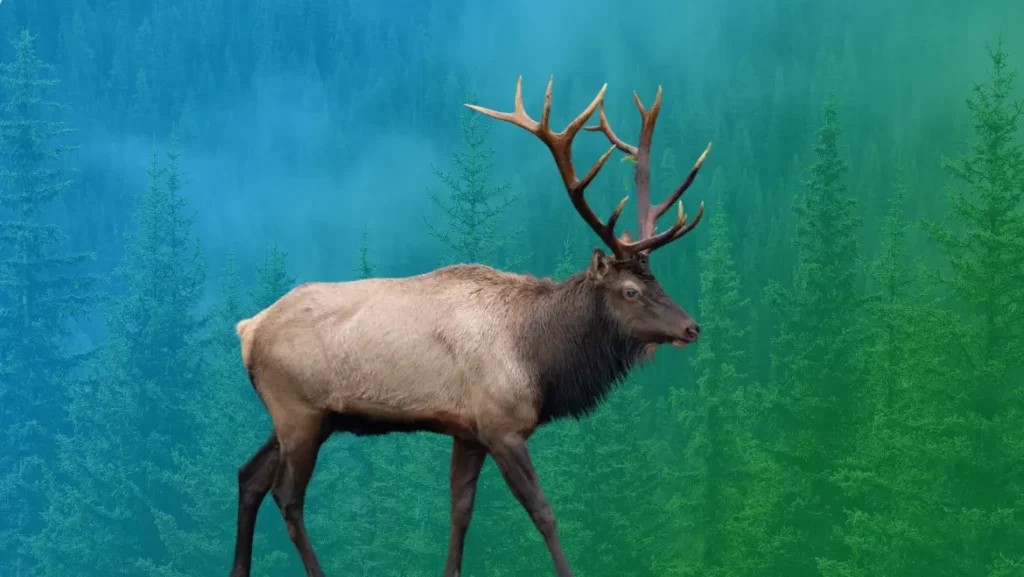
Practice: Walking the Migration
This is a walking journey, not a seated one, and it is the only guide I know that teaches almost entirely through pace. If you have not journeyed before, work through the step-by-step guide to finding your spirit animal first.
- Bring a long question, not an urgent one. Not “what do I do this week?” but: can I sustain this for the distance it actually requires? The elk has nothing useful to say about emergencies.
- Enter through open terrain. Let a steady drumbeat carry you and find yourself in a wide valley or high meadow — nowhere enclosed. The elk does not come to rooms or corridors.
- Do not approach it. Fall in beside it. When the elk begins to move, walk at its shoulder. It will not slow down for you and it will not speed up.
- Match the pace, especially when it frustrates you. This is the practice. The urge to overtake it is the exact behaviour that is exhausting you in waking life. Stay at its pace until the frustration passes — and note what you feel in your body when it does.
- Look for the herd. Is the elk alone or accompanied? An elk alone is speaking about your individual endurance. An elk in herd is asking what you are carrying by yourself that was never meant to be carried alone.
- Ask what to shed. One thing. The elk drops its antlers annually without grief; ask it what you are still carrying that should have fallen off a year ago.
- Integrate by subtraction. Within a week, remove one thing from the long project — a commitment, a standard, a self-imposed deadline. Then schedule rest as a fixed part of the plan, not as a reward for finishing. The elk rests before it needs to, which is why it arrives.
Elk Spirit Animal: Common Questions
What does it mean when an elk appears to you?
It means the thing you are in is longer than you have been treating it as. The elk does not arrive for turning points or single decisions — it arrives in the middle, when the initial energy is gone and the finish is not in sight. Its message is almost always about pace rather than direction.
What is the difference between the elk and the deer spirit animal?
The deer teaches through vigilance, softness, and the readiness to vanish. The elk cannot vanish and does not try. Where the deer’s medicine is sensitivity, the elk’s is sustained presence — remaining visible, at scale, over a long time. People often confuse the two and receive the wrong instruction as a result.
What does an elk in a dream mean?
Watch what it is doing. An elk walking steadily shows you what sustainable movement through your situation actually looks like. A herd of elk asks who is making this journey with you, and whether you are drawing on them. An elk resting is one of the most significant images this guide offers: permission, from an animal that covers enormous distances, to stop.
Is the elk a good or bad omen?
Neither. The elk does not predict outcomes — it reports on your relationship with time. Whether that is good news depends on whether you are willing to hear that the distance is longer than you hoped and the pace must therefore be slower.
Keep Walking
The elk will not make you faster. It will not tell you that you are nearly there. It will show you the pace at which the full distance is actually possible — and then it will start walking, and wait to see whether you come.
If the elk is walking with you, look also at its relatives — the stag, which waits where the elk moves, and the moose, which stands alone where the elk keeps the herd. The full A–Z guide to spirit animals will place it among the rest.