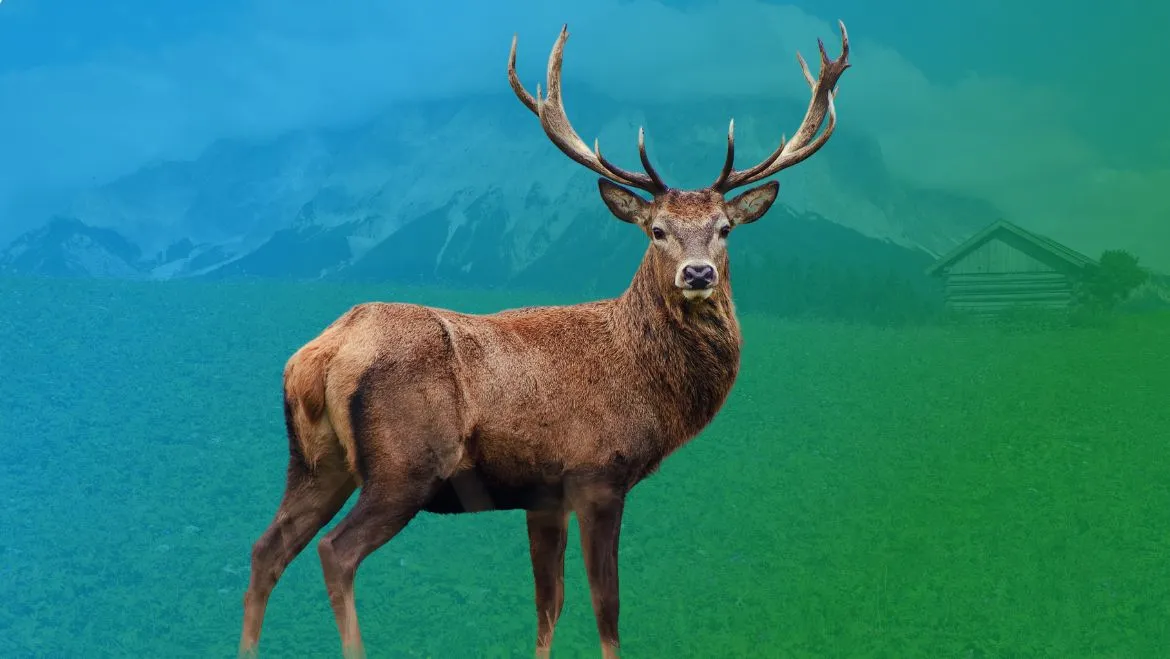
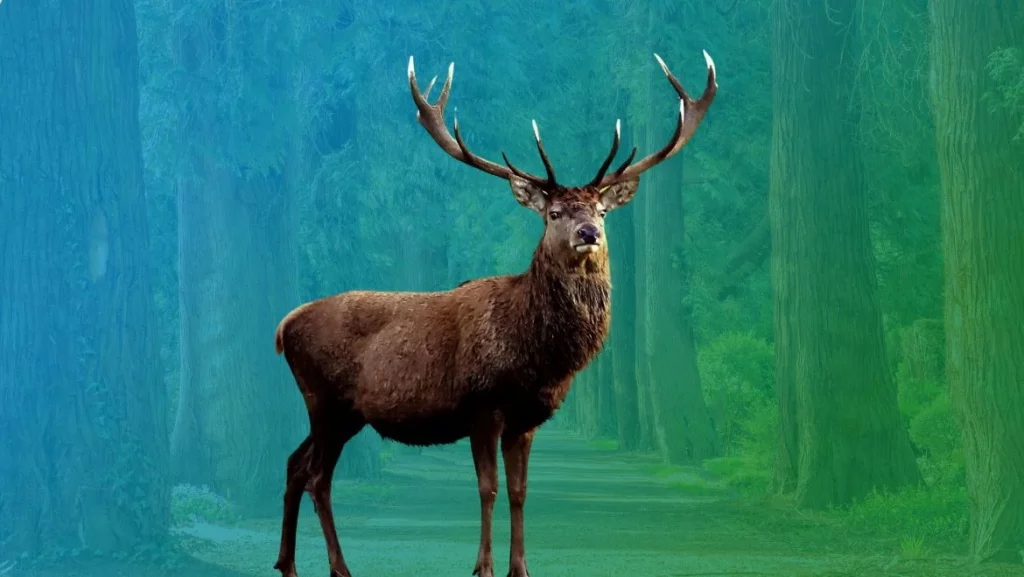
There is a moment on a journey when the stag steps out of the treeline and everything goes still. Not the stillness of fear — the stillness of recognition. The drum keeps going. The landscape stays where it is. But attention narrows to a single point, and something very old in the body sits up and pays attention.
If you have come here looking for antler measurements and rutting dates, you are in the wrong place. This is about the stag spiritual meaning — what it means when this animal keeps arriving in your dreams, on your walks, in your journeys, or in that insistent way an image has when it wants something from you.
In my practice, the stag does not arrive for people who are lost. It arrives for people who are standing at a threshold and have not yet admitted that they are standing at one. When people journey to the stag, they almost never report being led anywhere. They report being seen. The stag stands, holds the gaze, and refuses to move — and the person eventually realises the animal is not showing them the way forward. It is showing them exactly where they are already standing.
The Bridge: What the Real Animal Teaches About Stag Spirit Animal Meaning
Every honest piece of animal medicine is anchored in the actual creature. The stag’s symbolism is not decorative — it is written into its body and its year.
- Antlers are the only mammalian organ that fully regenerates. Not repaired — regrown, from bare bone, every single year. The stag drops the crown that defined it, walks around bare-headed through the coldest months, and grows a larger one. The medicine is not “strength.” It is the willingness to lose your defining feature on schedule, without negotiation.
- It is an animal of the edge. Red deer are creatures of the ecotone — the band where forest meets open ground. Not deep cover, not exposed field. The threshold itself is its habitat. An animal that lives on the boundary is the correct guide for anyone who is living on one.
- It perceives you before you perceive it. The stag’s hearing and scent do most of the work; its eyes are built for movement, not detail. It knows the shape of the clearing through senses you do not lead with. That is the bridge to its message: you already have the information. You are simply insisting on receiving it through the wrong faculty.
- The rut costs it everything. During the autumn rut a mature stag barely feeds, roars until it is hoarse, and can lose a fifth of its body weight in a few weeks. Full visibility, full assertion, full expenditure — and then it stops. The stag does not rut all year. Neither should you.
Stag Symbolism Across Traditions
Wherever deer and humans have lived alongside each other, the stag has been understood as a boundary animal — the one who stands where the known world ends.
Celtic: the antlered threshold
In Celtic material the stag belongs to the Otherworld. The antlered figure on the Gundestrup cauldron — conventionally identified with Cernunnos — sits cross-legged wearing the antlers rather than hunting them, a being who is not the lord over the wild but the wild made articulate. In later Arthurian and Welsh literature, the hunt for the white hart repeatedly draws knights out of the ordered court and across a boundary they cannot uncross. The stag is not the prize in these stories. It is the mechanism by which the ordinary world is left behind.
Norse: the stags at the world tree
Norse cosmology places four stags — Dáinn, Dvalinn, Duneyrr and Duraþrór — in the branches of Yggdrasil, feeding on the world tree itself, while the stag Eikþyrnir stands on the roof of Valhalla and from whose antlers the waters of the worlds run down. Read that image slowly. The antlers are not a crown here. They are a watershed — the point at which what comes from above is distributed below. When a stag appears in your journeying with unusually prominent antlers, this is the register it is working in: something is being transmitted, and you are the place it lands.
Greek and Christian: the deer that cannot be possessed
The Ceryneian Hind of Greek myth — sacred to Artemis, golden-antlered, faster than an arrow — was the labour in which Heracles was forbidden to harm his quarry. He pursued it for a year and had to bring it back alive. That is a precise instruction for anyone working with this animal: the sacred stag can be followed, but not taken. Centuries later the same shape reappears in the legends of Saint Hubert and Saint Eustace, both of whom are hunting a stag when it turns, and a light appears between its antlers, and the hunt is over — not because the animal was caught, but because the hunter was.
Across all of these, the pattern is the same. The stag appears immediately before a significant reorientation. It is not the destination. It is the sign that you are approaching one.
The Shadow: When the Crown Becomes a Trap
The stag has one of the least discussed and most punishing shadows of any animal I work with, and it is visible in the biology if you are willing to look.
- Locked antlers. When two stags fight and their antlers interlock and cannot be pulled free, both animals die — slowly, still standing, joined to the thing they were fighting. There is no cleaner image of a certain kind of human deadlock: the argument, the rivalry, the grievance that has fused you to your opponent so completely that neither of you can walk away and neither of you can eat. If the stag has arrived while you are locked into a conflict, this is the message and it is not a gentle one.
- Refusing to shed. The most common distortion I encounter is the person who has built an entire identity on a form of authority they outgrew years ago — the role, the title, the reputation, the version of themselves that once earned the respect. The stag does not clutch last year’s antlers. Holding a crown past its season does not preserve it. It simply prevents the next one.
- Permanent rut. Constant assertion, constant visibility, constant roaring at the field. The stag can do this for a few weeks a year at enormous cost. People who carry stag medicine badly try to do it permanently, and they arrive in my practice depleted and mystified as to why.
- The crown as target. The antlers that make the stag magnificent are exactly what make it hunted. If your visibility is bringing you attention you did not ask for and cannot metabolise, the stag is not asking you to grow larger antlers. It is asking whether you understand what they cost.
A stag that appears threatening in a recurring dream — lowering its head, blocking the path, charging — is very rarely hostile. In my experience it is standing between the dreamer and a direction they should not take, or forcing a confrontation with an authority they have been avoiding claiming. A stag appearing wounded or hunted points somewhere more painful: something in you that is exposed precisely because of its excellence.
How to Journey to the Stag
Shamanic work is not a substitute for medical or psychological care. If you are new to this, begin with the beginner’s guide to shamanic journeying before attempting the practice below.
- Name your threshold before you begin. Not a question — a location. “I am standing between this life and the next one and I have not admitted it.” The stag responds to accurate positioning, not to requests.
- Journey toward an edge, not a place. Forest meeting clearing. Treeline meeting moor. Wherever two environments touch. The stag lives in the seam, and if you journey into the middle of a landscape you will usually meet nothing.
- Do not pursue. This is the instruction people ignore and the one that decides the journey. Heracles chased the hind for a year. You have twenty minutes. Arrive, state your intention once, and stand still. The stag comes to presence, not to grasping.
- Read its position before you read its message. Inside the treeline or outside it? Facing you or turned away? Between you and something, or beside you? In stag journeys the geometry is the message, and people routinely talk over it by asking questions too early.
- Look at the antlers. Full crown, velvet, or shed? Full crown speaks to a season of visibility and assertion. Velvet — tender, blood-warm, still growing — speaks to something new and unfinished that must be protected before it hardens. Shed and bare-headed is the hardest and most honest: something is being released, and it is not yet clear what will replace it.
- Follow only if it moves first. If the stag turns and walks, go with it and do not try to anticipate the destination. If it does not move, that is not a failed journey. That is the whole journey.
- Ask one question on the way out: “What am I still wearing that should have dropped last winter?”
Stag, Buck, Hart, Doe and Elk: Reading the Family
People often arrive uncertain about which member of the deer family actually came to them, and the distinction matters — the medicines are genuinely different.
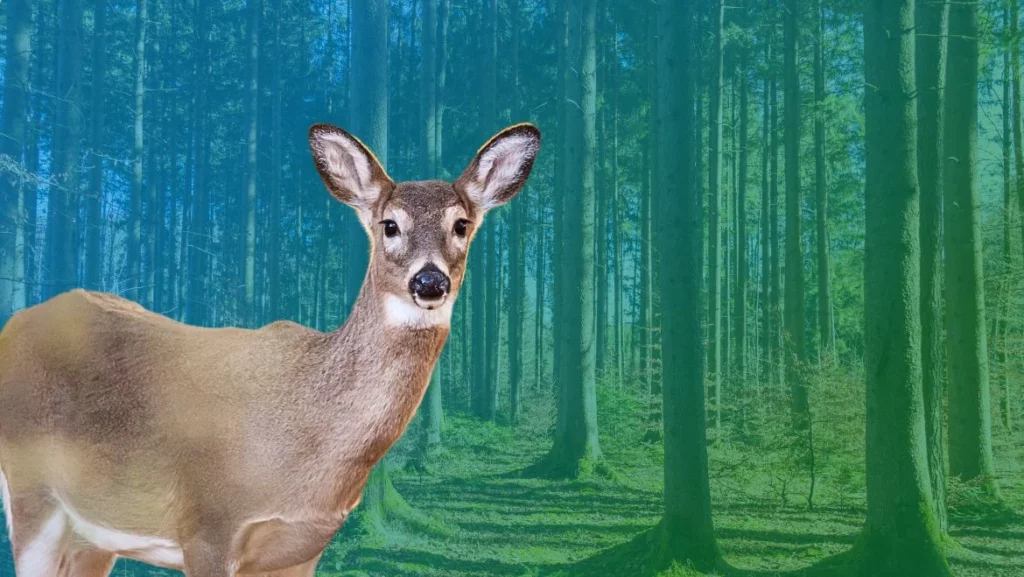
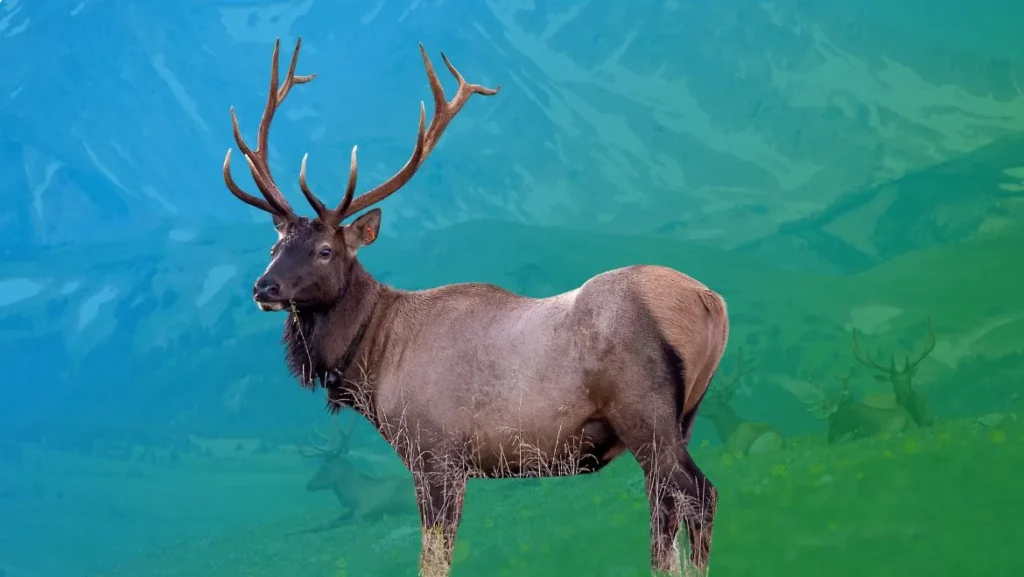
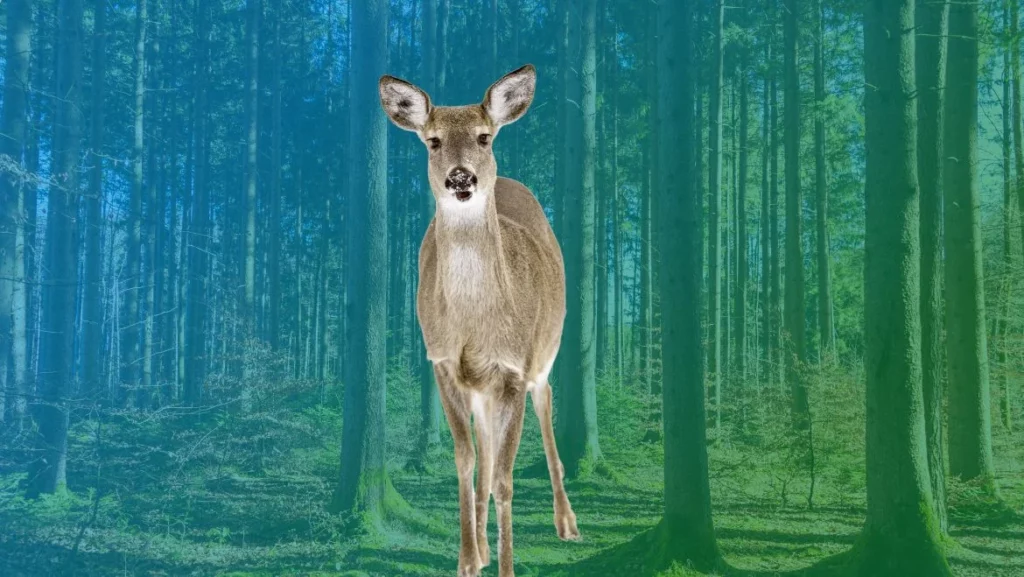
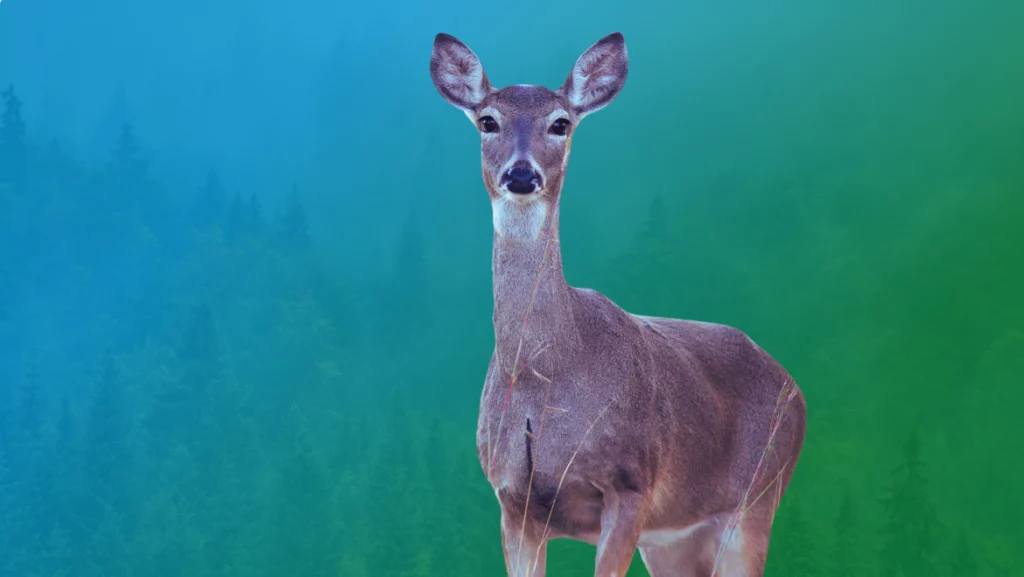
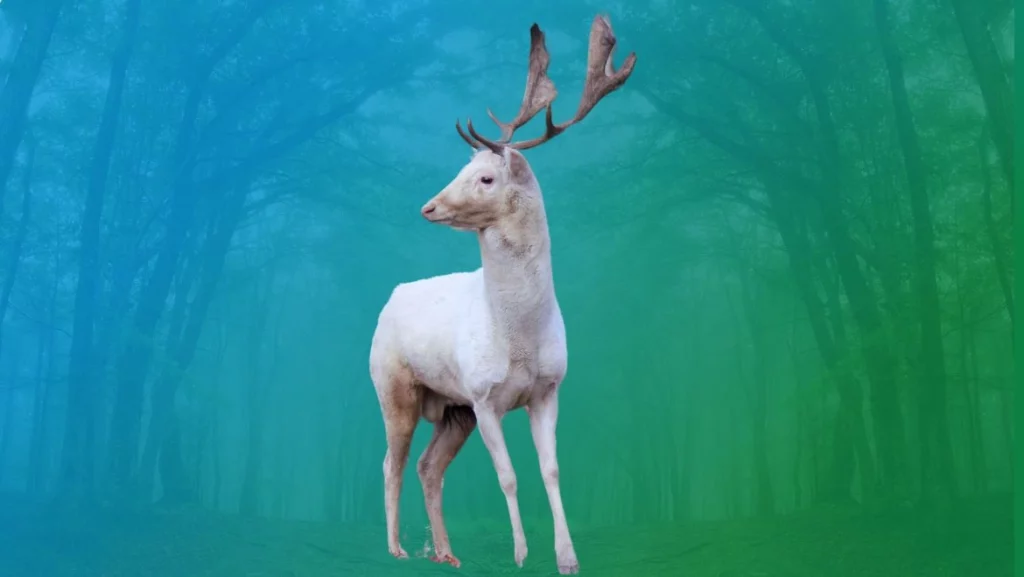
A stag is a mature male deer, most associated with the larger European species. The word itself carries gravitas: earned maturity, ceremonial weight, the deep woodland. A buck — the North American equivalent — is quicker and less ceremonial, an energy of alertness and responsive action. A hart is the archaic word for a mature red deer stag, and when it surfaces in a dream or journey its very antiquity is part of the medicine: it is pointing at a lineage, at something inherited. The doe, or hind, carries gentleness without weakness and the ability to move through the world softly and still arrive exactly where she is needed — where the stag commands the clearing, she reads it. Her medicine is explored in the deer spirit animal guide. The elk is stag medicine amplified and lengthened — endurance, sustained presence, the carrying of weight across long distances rather than a single moment of recognition. And the white stag is a category of its own: not a message, but a summons.
Affirmations for Stag Medicine
- “I stand at the threshold without needing to know what lies beyond it.”
- “I release what I have outgrown, trusting that what grows back will be larger.”
- “I move through the forest of my life with my senses fully open, guided by what I cannot yet see.”
Stag Spirit Animal: Questions People Actually Ask
What does it mean when a stag crosses your path?
A stag crossing your path is a positioning message, not a prediction. It marks a boundary you are at — between roles, between relationships, between one version of yourself and the next. The traditional reading is not “good luck coming” but “you are further along than you have admitted.” Ask what decision you have been treating as hypothetical when it is in fact already live.
Is the stag a good or bad omen?
Neither, and the question itself is the problem. The stag is an omen of threshold, and thresholds are neutral until you act. In folklore the stag is overwhelmingly a sacred and protective sign — but it is also the animal that leads hunters out of the known world and does not always bring them back. What determines the outcome is whether you follow it consciously or stumble after it.
What does a stag in a dream mean?
Read three things: the antlers, the position, and the gaze. A stag standing still and holding your gaze is asking about your own presence and authority. A stag moving away and looking back over its shoulder is an invitation to follow into the unknown. A stag with shed antlers is speaking directly about release — something is being let go of, and the dream is rarely comfortable but almost always accurate.
What is the difference between the stag and the deer spirit animal?
“Deer” as a spirit animal usually carries the medicine of gentleness, sensitivity and non-defensive presence. The stag is the mature male form and its medicine is different: sovereignty, seasonal renewal, and the willingness to be visible and to bear the cost of visibility. If you are unsure which came to you, ask what the animal was doing. Deer medicine watches. Stag medicine stands.
Can the stag be my totem if I have never seen one?
Yes. Spirit animals are not distributed by geography. What matters is persistence — whether the image keeps returning without your invitation. If you want a structured way to test the connection rather than guess at it, work through the A–Z spirit animal guide or sit with the Path of the Paws oracle deck and let the animal find you rather than the other way round.
The stag does not arrive to tell you what to do. It arrives to stop you pretending you do not already know.