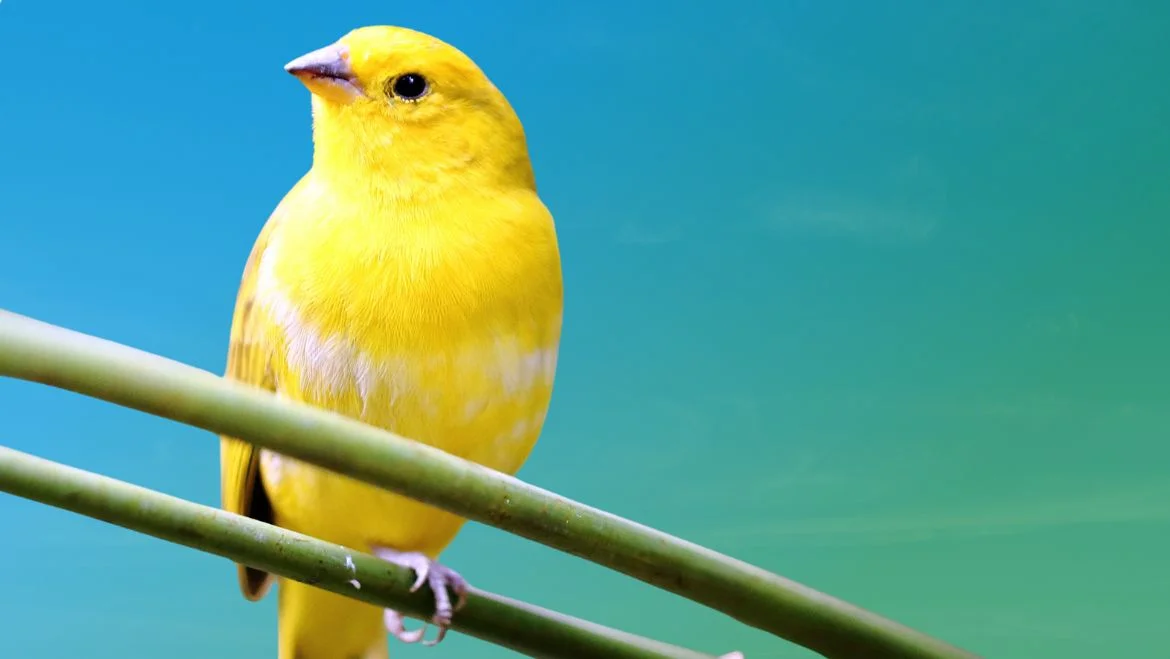
The canary is a small guide, and people almost always underestimate it. In a journey it does not command the space — it arrives as a flash of yellow and a thread of song, often before you have even seen it. And then, just as suddenly, it can go silent. That silence is not shyness. The canary is the one in the room who feels the change in the air before anyone else does, and when it stops singing, it is telling you something the rest of you has not registered yet.
This page is about the canary spiritual meaning — what it means when this bird keeps appearing in your dreams, your journeys, or the odd persistence of an image that will not leave. It is not about keeping songbirds. In my practice the canary arrives for the sensitive ones: people who feel the emotional weather of a place before they can explain it, and who have been told, often for years, that they are “too much” for noticing.
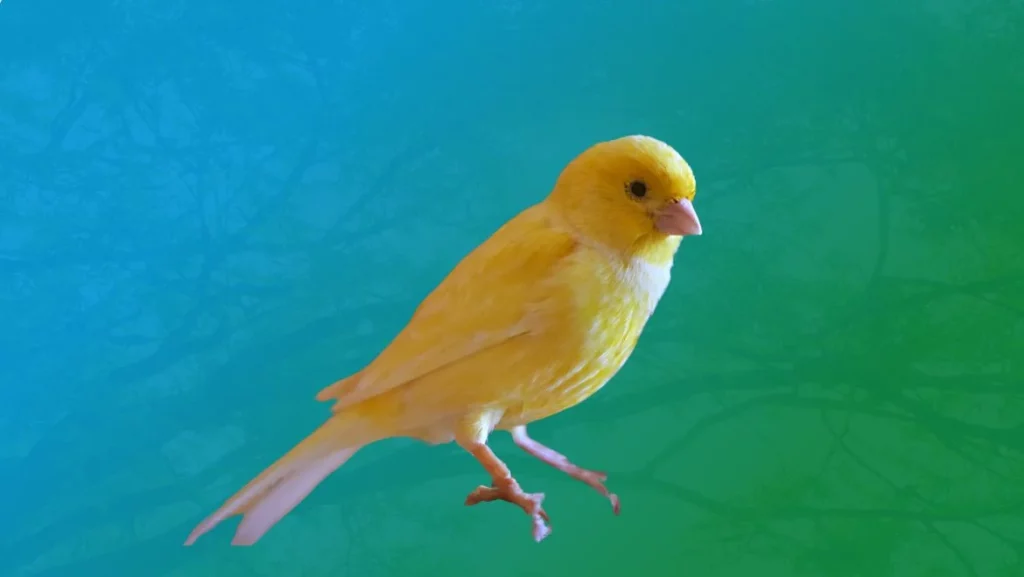
The Bridge: What the Real Bird Teaches About the Canary Spirit Animal
Honest animal medicine is anchored in the actual creature, and the canary’s whole history is written into its sensitivity and its song.
- It feels danger before anyone else can. For generations, miners carried canaries underground because the bird’s fast metabolism and delicate respiratory system react to toxic gas long before a human notices anything. The canary was not weak — it was accurate. This is the heart of canary medicine: the same sensitivity that makes you feel everything first is not a defect. It is an early-warning system, and it has probably kept you and the people around you safe more often than you know.
- Its song is a signal of safety. A canary sings most freely when it feels secure, and it falls silent under stress. The song is not just decoration; it is a live readout of the bird’s environment. In a person, this is worth taking seriously: when a naturally expressive, joyful person goes quiet and grey, the problem is usually not the person. It is the air they have been asked to breathe.
- It is a bred singer — and a caged one. Canaries have been kept and bred for their song for centuries, prized precisely for producing beauty on demand. That is a gift and a wound at once. The canary that must sing whether or not it feels safe is the image of a very particular kind of pressure, and we will come to it in the shadow.
- It carries the colour of the sun. The canary’s bright yellow has long tied it to light, warmth and hope — the small bird whose very presence lifts a room. But the sun in it is not naive. It is the light that a sensitive being chooses to keep making, even knowing exactly what is in the air.
Canary Symbolism and Cultural Context
Honesty first: the canary does not have a deep, worldwide mythological history the way the owl or the snake do. It is a relatively recent companion to Europe, and its symbolism is rooted less in ancient myth than in what people have actually watched it do. That is no weakness — it means its meaning is unusually grounded.
The bird of the islands and the sun
The wild canary comes from the Atlantic islands off the coast of Africa, and from the fifteenth century onward it was carried into Europe and bred for its voice and its colour. Across European folk feeling it settled quickly into a consistent role: a small bringer of light, joy and good cheer, its yellow associated with the sun, with warmth, and with the lifting of spirits. It is the domestic emblem of ordinary, everyday hope — the joy that lives in a windowsill rather than on a mountaintop.
The canary in the coal mine
The canary’s most powerful symbolic role is barely two centuries old and entirely earned. As a sentinel in the mines, it gave us a phrase that has outlived the practice — the “canary in the coal mine,” the one whose sensitivity warns everyone else of unseen danger. It is rare for an animal to give a culture a genuinely new piece of wisdom, and the canary did: the most sensitive member of a group is often the most valuable, precisely because they register what the rest cannot yet feel. Every highly sensitive person, every empath who has been dismissed as dramatic, is living inside that piece of folk knowledge.
The Shadow: When the Song Is Forced
The canary is easy to reduce to a symbol of simple happiness, and that is exactly why its shadow goes unseen. Its gifts have precise distortions.
- Brightness performed on demand. The bred singer must produce song whether or not it feels safe — and the human version is the person who has learned that their job is to keep everyone else’s mood up. Relentless positivity, cheerfulness as a duty, a smile that has become a uniform. The most common canary shadow I meet is someone exhausted from being the light in every room, who has forgotten they are allowed to have a grey day.
- The sentinel who absorbs the poison. The canary’s gift is sensing toxicity — but a real canary in bad air does not survive it. The shadow is the sensitive person who stays and stays in a toxic environment, absorbing everyone’s tension because they feel it so acutely, until they collapse. Feeling the danger first is a gift only if you are also allowed to leave the mine.
- The silence that no one reads. When a canary stops singing, it is information. The shadow is a life in which your going quiet is treated as sulking rather than as the accurate warning it is — and, worse, a habit of overriding your own silence, pushing yourself to sing again in air you already know is bad.
- The caged canary in a dream is one of the clearest images of a bright, expressive spirit kept somewhere too small and too controlled. A canary that has stopped singing points to a sensitivity being ignored — yours or someone’s near you. And a canary struggling to breathe is a serious image and deserves to be written down: something in your environment is genuinely not safe for the most tender part of you.
How to Journey to the Canary
Shamanic work is not a substitute for medical or psychological care. If you are new to journeying, start with the step-by-step guide to finding your spirit animal before working with the practice below.
- Set a canary-shaped intention. Not “make me happier” but: show me where my sensitivity is a gift and where it is being used up.
- Enter through a bright, safe place. A sunlit room, a garden window, a warm morning. The canary will not sing in a threatening landscape; give it a safe one and let it come to you.
- Listen for whether it is singing. This is the whole diagnosis. A singing canary is telling you something in your inner world is currently safe. A silent one is pointing straight at what is not.
- Ask what it is sensing. Ask the canary to show you what in your current environment — a relationship, a workplace, a habit of mind — it can feel that you have been overriding. Let the answer arrive as sensation, often in the chest or the throat.
- Ask what your song is for. Not who it is performed for — what it is actually for. The canary sings to claim its place and to signal safety, not to keep an audience entertained.
- Integrate by honouring one signal. Within the week, take one piece of your own sensitivity seriously instead of talking yourself out of it — leave the room, name the discomfort, trust the quiet. Canary medicine is completed when you finally believe your own instrument.
Affirmations for Canary Medicine
- “My sensitivity is not weakness. It is accurate, and it keeps me safe.”
- “I am allowed to stop singing when the air is bad — and to leave.”
- “My joy is real when it is chosen, not when it is demanded of me.”
Canary Spirit Animal: Questions People Actually Ask
What does it mean when a canary appears in your life?
It usually points to sensitivity, expression and the atmosphere you are living in. The canary tends to arrive either to affirm that your voice and joy want to be shared, or to draw your attention to an environment your instincts have already flagged as unhealthy. Ask which one lands — sometimes it is both, because they are related.
Is the canary a good or bad omen?
Good — it is a bird of light, hope and song. But it is an omen with a job attached. The canary brings joy and, in the same breath, a warning function: it asks you to trust what you sense. A canary that appears bright and singing is encouragement; a canary that appears silent or distressed is asking you to check the air you are breathing.
What does a canary in a dream mean?
Read the song and the cage. A freely singing canary speaks of self-expression flowing and an environment that feels safe. A silent canary points to a sensitivity being suppressed — yours or someone’s around you. A caged canary speaks to a bright spirit kept somewhere too small, and a canary struggling to breathe is a direct message about a genuinely toxic situation.
Why does the canary connect to highly sensitive people?
Because of the coal mine. The canary is the creature whose sensitivity is its purpose, not its flaw — the one who feels the change first and warns the whole group. Highly sensitive people carry exactly this medicine, and the canary reframes what they were taught to be ashamed of: your capacity to feel the room before others do is a form of intelligence, and it deserves to be protected rather than dismissed.
How do I know if the canary is my spirit animal?
It tends to claim people who are expressive and joyful and unusually porous to atmosphere — those who light up a room and also absorb it. Persistence is the test: whether the image keeps returning uninvited. For a structured way to explore it, work through the A–Z spirit animal guide or sit with the Path of the Paws oracle deck. If it is the voice more than the sensitivity you recognise, read the parrot spirit animal next.
The canary does not ask you to be relentlessly bright. It asks you to trust that the part of you that feels everything first is not broken — and to keep singing only where the air is clean enough to deserve your song.