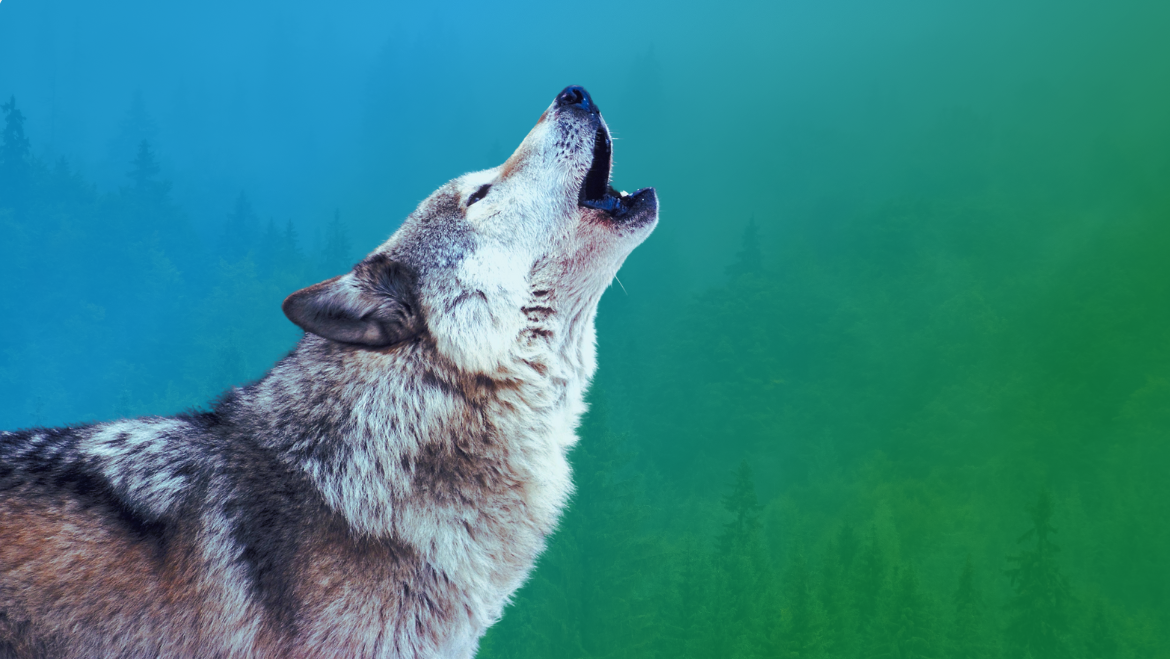
The first time Wolf came to me on a journey, I did not see her — I felt her breath at the back of my knees. There is a very particular physical signature to meeting the Wolf spirit animal: the spine straightens, the hearing sharpens, and the whole body drops into a low, patient alertness, as if you had been walking through your life half-asleep and something just woke the animal in you. Clients describe it almost identically. A tightening in the chest that is not fear but readiness. The sudden certainty that you are being seen.
Wolf does not arrive to comfort you. She arrives when you have been ignoring what you already know — about a relationship, a boundary, a direction you are afraid to commit to. In more than two decades of shamanic and coaching work, I have watched the Wolf power animal show up again and again at exactly the moment a person stops trusting their own instincts and starts asking everyone else for permission. This article is what I have learned about her medicine: her loyalty, her intelligence, her shadow, and how to work with her properly rather than decoratively.
From Pack to Psyche: The Bridge Between Wolf Biology and Wolf Medicine
Good spirit-animal work always begins with the real animal. The spiritual message is not invented on top of the biology — it grows out of it.
Start with the myth almost everyone still repeats: the alpha wolf. The idea of a dominant male who fights his way to the top came from studies of unrelated captive wolves forced together in enclosures. In the wild, as biologist L. David Mech — the researcher whose early work popularised the term — later publicly corrected, a wolf pack is simply a family. The “alphas” are the parents. Leadership is not domination; it is parenthood, provisioning, and teaching.
This correction changes Wolf’s entire message. When Wolf appears as your guide, she is not asking you to fight your way to the top of a hierarchy. She is asking you to lead the way a parent leads: by carrying responsibility, by feeding what depends on you, by walking first into the weather.
Other habits translate just as directly:
- The hunt is mostly refusal. Wolves test many animals and commit to very few. Their success comes from knowing what not to chase. Wolf medicine is therefore boundary medicine: the discipline of saying no.
- Territory is communicated, not fought over. Howling and scent-marking exist so that conflict does not have to happen. Wolf teaches you to state your edges clearly before resentment forces you to defend them violently.
- Endurance over speed. A wolf will travel for hours at a steady trot. Wolf people burn out when they try to sprint through a life that requires pacing.
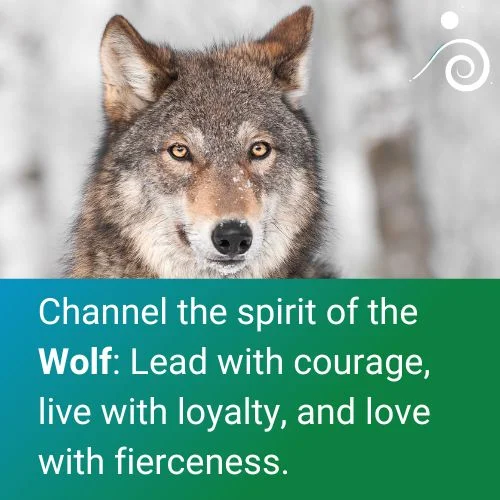
Core Symbolism & Historical Context of the Wolf
The Wolf is one of the oldest and most contradictory figures in the human imagination — nurse and devourer, guardian and outlaw. Understanding that contradiction is what keeps your practice honest.
Norse: Fenrir, Geri and Freki
Norse tradition holds both poles at once. Fenrir, the bound wolf destined to swallow Odin at Ragnarök, is the image of a power so great it can only be contained by cunning — and only for a while. Yet the same Odin keeps two wolves, Geri and Freki (“the ravenous ones”), at his side and feeds them from his own table. The message is stark and useful: the wild force in you will either be fed and befriended, or it will be chained — and what is chained eventually breaks loose.
Roman and Celtic Threads
Rome traced its own founding to a she-wolf who suckled Romulus and Remus — the Wolf as nurturer of civilisation itself, wildness at the root of order. In Irish and wider Celtic material the wolf moves through the borderland between human and beast: warriors, outlaws and shape-shifters take wolf form at the edges of the settled world. The Wolf marks the threshold. She belongs to neither side, which is exactly why she can carry you across.
Jung and the Instinctual Self
In Jungian terms, the Wolf sits close to the shadow and to instinct — the part of the psyche that Western life trains us to suppress, then fears when it surfaces. Jung’s insight, which shamanic practice arrives at by a different road, is that the instinct we exile does not disappear. It goes feral. Integration, not exile, is the work.
A note on respect: wolf traditions among Indigenous peoples of North America, Siberia and Central Asia are living, specific and belong to their communities. Where I reference them, I do so as an outsider acknowledging their depth, not as a claim to their ceremonies. My own practice sits in a European lineage, and I name that plainly.
The Grey Wolf: Freedom Held Inside Belonging
Most people meet the grey wolf first, and most people read her wrongly. They see the lone silhouette on the ridge and call it freedom. The animal itself tells a different story, and it is worth following closely, because the correction is where the medicine lives.
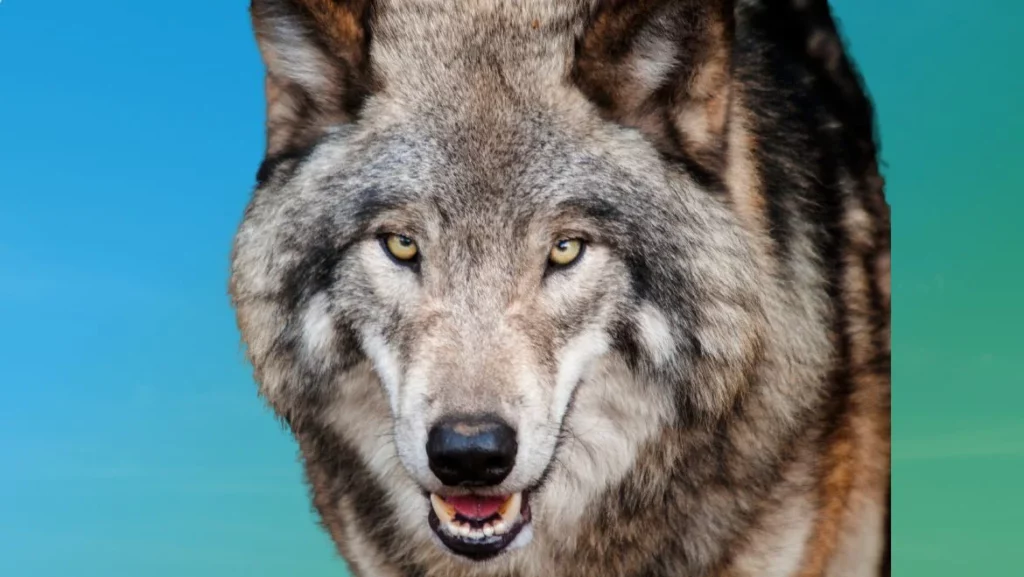
- The howl is a question, not a threat. A wolf howls to locate the family it has become separated from, and the sound carries for miles across open country. Answering is the point. Read as medicine: your voice exists so that the people who belong to you can find you. Wolf asks whether you have gone quiet in a life where nobody can hear where you are.
- The whole family feeds the pups. Adults return from a hunt and bring food back to the young, and the yearlings stay behind at the rendezvous site to watch them. Care is distributed, not centralised. If you are the only adult in your circle who ever carries anything back, that is not loyalty. It is a family missing most of its members.
- Leaving is part of the design. Young wolves disperse at one to three years old and can travel hundreds of kilometres to find a mate and unclaimed ground. Dispersal is not exile and it is not failure. It is how new packs come into existence at all. Wolf medicine makes room for the person who has to go, and refuses to call the going a betrayal.
Put those three together and the grey wolf’s teaching about freedom stops being a poster and becomes something you can act on. Freedom, in her terms, is not distance from other people. It is the confidence that you can leave and still be answered when you call. That is what she is testing in your relationships: not how close you stand, but whether the journey away and the return are both permitted. In love this shows up as loyalty without possession. Clear speech about what you need, protection of the bond itself, and enough room that neither person has to go quiet to stay.
The Black Wolf: Guardian of the Shadow
There is a fact about black wolves that reorganised how I work with them. In North American grey wolves, the black coat comes from a single mutation at the K locus, in a beta-defensin gene, and genetic work published in Science in 2009 traced it back to domestic dogs. It entered wolf populations through interbreeding thousands of years ago and stayed, because it turned out to be useful: melanistic wolves are markedly more common in forest than out on the tundra.
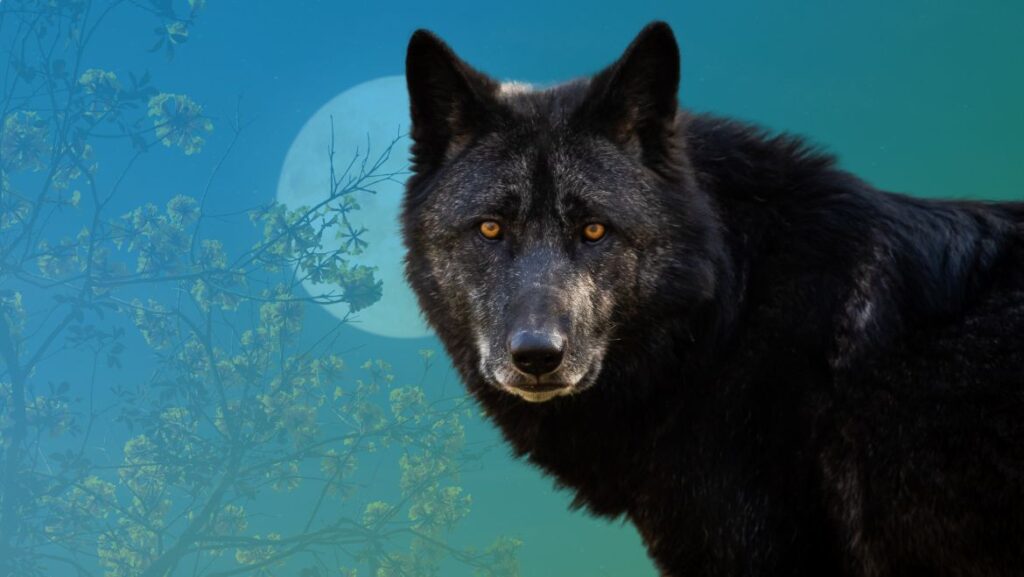
So the darkest wolf on the continent is carrying something that came in from the tame side of the line, crossed over, and proved to be an advantage in the dark places. I find that a more honest picture of the shadow than anything I could invent. What you call the worst of yourself is usually not foreign at all. It arrived through contact, it has been in the family a very long time, and in the wrong terrain it looks like a flaw while in the right one it is the reason you are still here.
In my practice, the Black Wolf almost always appears at the beginning of genuine shadow work — never at the end. When she comes, something is ready to be looked at that you have been circling for years. She does not ask you to remove it. She asks you to find the forest it was made for.
Spiritual Messages & Abilities of the Wolf Power Animal
- Protection: a steady, unsentimental guardian presence — especially at boundaries and thresholds.
- Leadership: leading as a parent leads, by carrying weight rather than by dominating.
- Intelligence: strategic patience; knowing what not to chase.
- Loyalty & family ties: the discipline of showing up for the people who are actually your pack.
- Connection to the wild: a demand, not a suggestion, to put your body back into nature.
- Inner guidance: the messenger of the subconscious, calling you to trust your instincts again.
The Path of the Paws
42 hand-illustrated oracle cards, one for each animal guide — drawn from the same practice these articles come from. A way to sit with an animal instead of only reading about it.
Order your deck →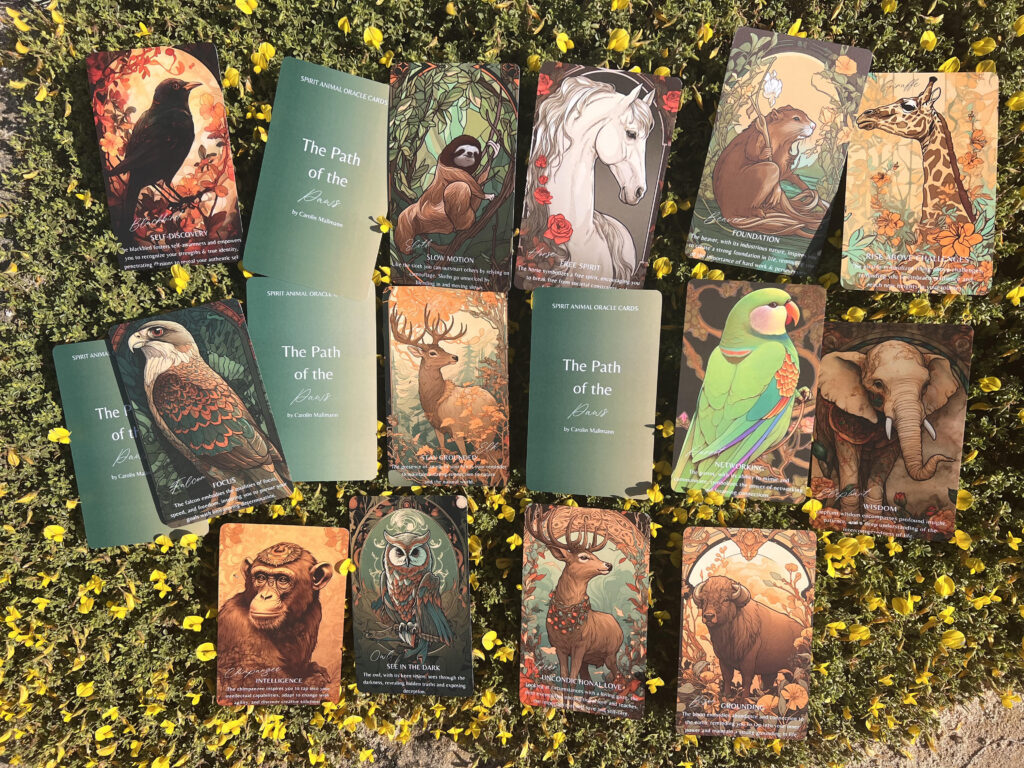
The Shadow Aspect: Warning Medicine of the Wolf
Wolf is not a fortune cookie. When she turns up reversed, blocked, or in a recurring nightmare, she is showing you something you will not enjoy — and that is precisely her value.
- The romanticised lone wolf. This is the most common distortion I meet in sessions. In the wild, a lone wolf is usually a wolf in transition or in trouble — dispersing, injured, or grieving. If you have made “I don’t need anyone” into an identity, Wolf’s shadow is asking whether you are strong or simply unattached because attaching once hurt. Self-sufficiency built on old wounding is armour, not power.
- The devouring wolf. Loyalty turned inside out becomes control: policing your partner, your children, your team “for their own good”. Fenrir is what happens to a force that is never fed and never allowed to run.
- Being hunted in a dream. When clients dream of wolves circling or pursuing them, the wolves are rarely the enemy. Almost always they are carrying an instinct, an anger, or a truth the dreamer has exiled — and it is now hunting them down to be readmitted. Ask: what am I refusing to know?
- The blocked or silent wolf. If Wolf appears turned away, muzzled, or will not meet your eyes on a journey, the classic reading in my practice is a betrayal of your own instinct: you said yes when your body said no, and the guide will not speak until you tell the truth about it.
Shadow work with Wolf is unglamorous. It usually means one uncomfortable conversation, one boundary held, one fear walked towards rather than around. Do that, and the guide becomes reliable.
Practical Shamanic Work: Journeying with the Wolf
This is the journey I give clients who are ready to meet Wolf directly. Allow thirty minutes and do not do it while distracted or intoxicated.
- Set a precise intention. Not “show me my spirit animal” but something Wolf can actually answer: “Where in my life am I ignoring my own instinct?”
- Prepare the container. Dark room, blanket, a steady drumbeat (roughly 4 beats per second) for 15–20 minutes. Lie down. Cover your eyes.
- Descend. Travel down through a real opening in the earth you have actually seen — a tree root, a burrow, a cave mouth. Keep descending until the tunnel opens out.
- Call, then wait. Say the intention aloud in the lower world and wait. Do not manufacture a wolf. Let one come, and ask it three times whether it is here for your highest good.
- Walk, don’t interview. Wolf teaches by moving. Follow her. Notice where she takes you, what she shows you, what she refuses to look at.
- Ask the one question you are avoiding. You will know which one it is by the resistance in your chest.
- Thank her and return the way you came, at the callback beat. Write everything down before you speak to anyone.
The Threshold Ritual: Integrating Wolf Medicine
A journey without integration is entertainment. Within 48 hours:
- Name the edge. Write one sentence: “My instinct has been telling me ______, and I have been overruling it because ______.”
- Mark the boundary physically. Walk the perimeter of your home or land once, slowly, and speak your boundary out loud at each corner. Wolves mark territory before they defend it; you are doing the same.
- Take one honest action within a week. One conversation, one refusal, one commitment. Wolf medicine that stays in your journal does not take root.
- Feed the pack. Do something concrete for one person who genuinely belongs to your circle. Loyalty is a verb.
If you are new to this work, start with the basics of shamanic journeying before attempting shadow contact — and if you would like guidance in finding your spirit animal, that is exactly what I do with clients.
Capricorn & the Wolf: Ambition Held by Belonging
For Capricorn, the Wolf mirrors determination, discipline and the long climb — but with one correction. Capricorn’s risk is achieving the summit alone. The Wolf’s pack mentality insists that success which costs you your people is not success. She asks Capricorns to lead with both strength and warmth, and to let themselves be carried occasionally, too.
Dreaming of a Wolf
Context decides meaning. A wolf who walks beside you signals protection and returning instinct. A wolf who blocks your path is usually a boundary you refuse to see. A wolf who hunts you is an exiled part of yourself demanding readmission — not a prophecy of harm. And the lone wolf in a dream is almost always a portrait of your own isolation, asking a single question: is this solitude chosen, or is it a wound wearing the costume of independence?
Wolf Spirit Animal: Questions People Actually Ask
What does it mean when a wolf keeps appearing to you?
Repetition is the signal, not the single sighting. When Wolf keeps returning in dreams, images and odd coincidences, the pattern in my sessions is nearly always the same: there is something you already know and have decided not to act on. Wolf does not bring new information. She brings the information back until you stop overruling it.
Is the wolf a good spirit animal to have?
She is a demanding one. Wolf will not settle for a comfortable life built on avoided conversations, and people who work with her tend to end up with fewer relationships and better ones. If you want a guide who soothes, she is the wrong animal. If you want a guide who will not let you lie to yourself, she is the right one.
What does a black wolf mean spiritually?
The Black Wolf marks the opening of shadow work, not its conclusion. She usually appears when something you have kept out of sight has become survivable to look at. Read her as an escort rather than a warning: she goes ahead of you into the part of your history you have been walking around, and she waits there until you follow.
What is the difference between the wolf and the white wolf?
They ask for different things. Wolf works on instinct, boundaries and belonging. The White Wolf carries a quieter authority and tends to arrive when the work is about being seen rather than about hunting. If both appear, note which one moves and which one stands still. That distinction usually names your task.
How do I know if the wolf is my spirit animal?
Not by whether you like wolves. Almost everybody likes wolves. The test is persistence you did not invite, and a physical response you cannot manufacture: the straightening spine, the sharpened hearing, the sense of being looked at. If you want a structured way to check rather than guess, work through the practice in finding your spirit animal and see whether she is still there in a month.
About the Author — Carolin Mallmann
I am Carolin Mallmann, founder of One Shamanism and author of The Path of the Paws. For over two decades I have worked with people as a coach, certified NLP practitioner and shamanic practitioner, guiding thousands of one-to-one sessions and training students internationally in shamanic journeying, spirit animal work and shadow integration. Everything I write here comes from lived practice — my own journeys, my teachers, and the real, sometimes uncomfortable experiences of the clients I sit with. I do not promise miracles, and shamanic work is not a substitute for medical or psychological treatment. What I can offer is an honest, grounded path back to your own instincts. Read more about my background and practice here.