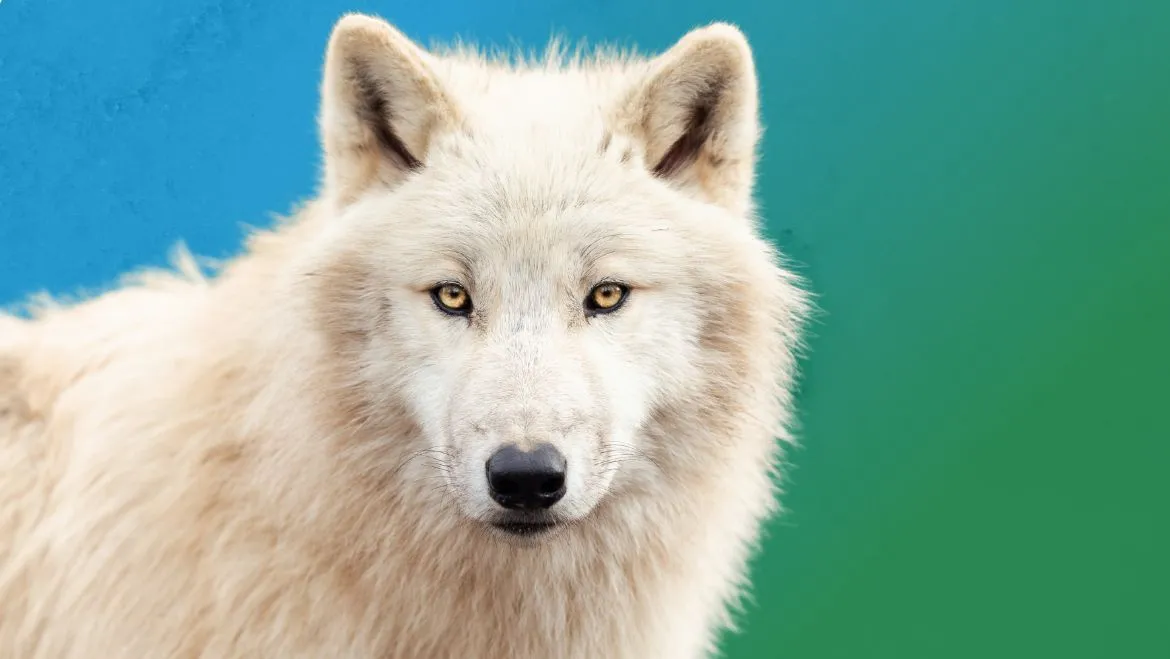
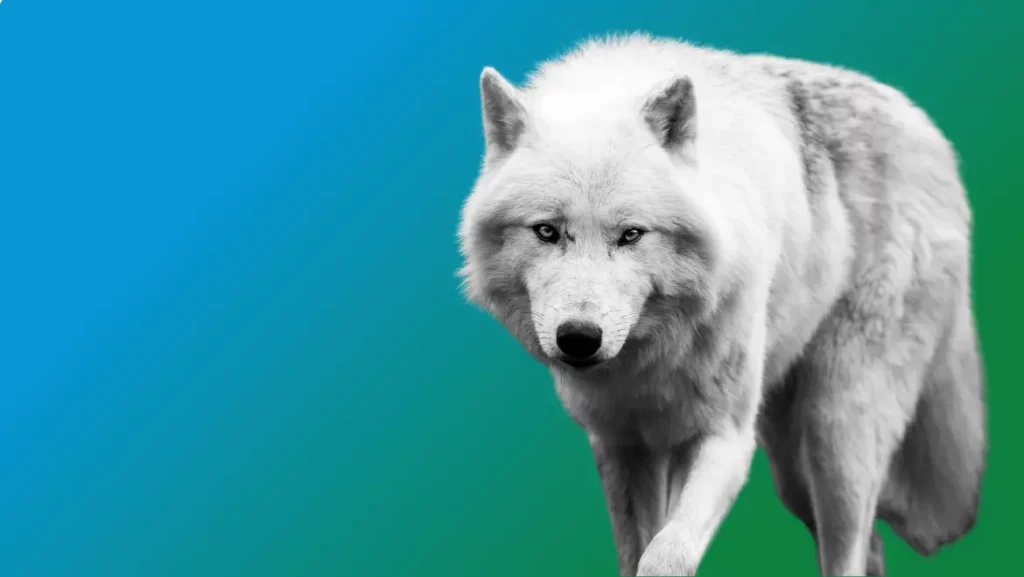
The white wolf does not announce itself. It appears at the edge of the treeline, in the corner of a dream, in the stillness that arrives when you finally stop running from yourself — and something in you recognises it before your mind has caught up. It rarely comes close at first. It sits at a distance, entirely still, and watches.
This is about the white wolf spiritual meaning — not the biology of arctic wolves. And it is one of the most consistently misread animals I work with. People expect it to arrive with power and noise. It almost never does. It arrives with silence, and with a clarity that has stripped everything unnecessary out of the room. That is its first teaching, and most people miss it because they are still waiting for the second.
In my practice, the white wolf tends to arrive for people who are being asked to lead something they feel unprepared for — and who are trying to earn the authority rather than settle into it. When people journey to it, the pattern that repeats is this: the wolf holds its distance for as long as they are reaching for it, and comes close the moment they stop.
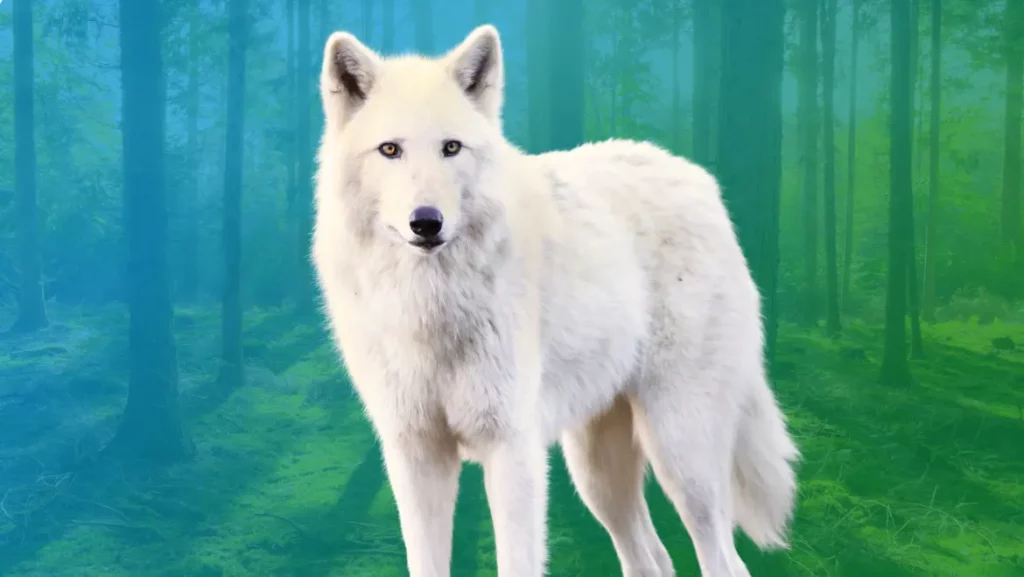
The Bridge: What Wolf Biology Teaches About the White Wolf Spirit Animal
Most wolf symbolism in circulation is built on a wolf that does not exist. The real animal is stranger, quieter, and far more useful as a guide.
- There is no “alpha” fighting his way to the top. The dominance-hierarchy model came from captive, unrelated wolves forced together in enclosures — and the biologist most responsible for popularising it, David Mech, spent decades afterwards trying to retract it. A wild pack is a family: a breeding pair and their offspring. The leaders lead because they are the parents. Authority in wolf medicine is not seized. It is structural, relational, and quiet — and that single correction changes everything this animal has to say to you about leadership.
- It hunts by endurance, not ambush. Wolves test a herd, follow, assess, and commit only when the odds have shifted. Most hunts fail. The medicine is not ferocity — it is patient, unglamorous persistence and the willingness to walk away from a bad attempt without calling it a defeat.
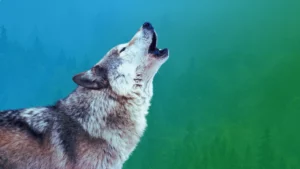
- The howl is not for the moon. It is for the pack. Wolves howl to locate each other across distance, to reassemble, to say where are you and here I am. When you find yourself howling into a life that does not answer, that is the medicine speaking, and it is a question about your people, not your ambition.
- The whiteness is real, and it is contextual. Arctic wolves are white because white is what survives on snow — the colour is not purity, it is fit. Elsewhere, a white wolf is a rarity, and rarity is precisely why nearly every tradition that encounters a white animal treats it as a messenger. When the white wolf comes to you, it is not because you are pure. It is because something is being said that must not be missed.
White Wolf Symbolism Across Traditions
Norse: the wolf at the edge of order
Norse material holds two wolves at once and refuses to choose. Odin is accompanied by Geri and Freki, wolves who eat at his side — companions of the god of wisdom and of the dead. And there is Fenrir, bound by a ribbon the gods could not have made by force, who will break loose at Ragnarök. The wolf is both the intimate of wisdom and the thing that ends the world, and the tradition does not resolve the tension. That is exactly right. Wolf medicine is wild intelligence: it can be lived alongside, but never domesticated, and anyone who thinks they have tamed it has simply stopped paying attention.
Anishinaabe: Ma’iingan, the brother
Rather than gesturing vaguely at “Native American tradition,” it is worth naming one precisely. In Anishinaabe teachings, Ma’iingan — the wolf — walks with Nanabozho at the beginning, naming the world with him; the two are brothers, and it is understood that what happens to the wolf will happen to the people. This is not a symbol. It is a stated kinship with real ethical consequences, and it is the single most serious thing anyone has ever said about this animal.
Japan: Ōkami, the guardian of the fields
In Japan the wolf — Ōkami, a word that shadows the word for “great god” — was venerated as a protector of crops against deer and boar, with shrines such as Mitsumine dedicated to it. The Japanese wolf is now extinct. The shrines remain. There is no gentle way to say what that means, and it belongs in an honest article about this animal: the guardian was worshipped and hunted by the same people.
The wolf and the moon
The pairing is not literal — wolves howl by day too — but it points at something real. The moon governs what is cyclical, hidden, and cannot be forced. The white wolf works in phases: it does not push, it waits, and then it commits completely. One of its core teachings is the ability to read your own cycles — to know when you are in a dark-moon phase (gathering, inward, resting) and when you are being called to act and be seen. Most of us exhaust ourselves fighting these rhythms. The wolf does not.
The Shadow: The Lone Wolf, and the Trap of Purity
This animal has two shadows, and our culture has romanticised both of them into invisibility.
- The lone wolf is not a hero. It is a wolf in trouble. In the wild, a lone wolf is a disperser — an animal that has left its family and not yet found another, crossing hostile territory, and dispersal carries high mortality. It is a transitional state, not an identity. The romanticised lone wolf — self-sufficient, needing no one, above the pack — is in shamanic terms a person in avoidant retreat calling it strength. Purposeful solitude is medicine. Permanent solitude is a wound wearing the medicine’s clothes. The test: can you go back? If the answer is no, you are not choosing.
- Whiteness as spiritual bypass. The white wolf’s colour attracts people who want to be pure — and there is a version of this medicine that quietly feeds perfectionism, self-purification, and the belief that the goal of inner work is to become clean. It is not. The wolf is a predator. It is warm, hungry, and covered in the blood of something. The white wolf that appears to you is not asking you to transcend your appetite. It is asking you to stop lying about it.
- Loyalty that has become enforcement. Pack medicine is real and precious, and its shadow is the person who uses the language of loyalty to police everyone around them. The pack is a family, not a court.
- Intuition used as a weapon. The white wolf’s gift is knowing before you can explain. Its distortion is certainty without accountability — “I just have a feeling about this person” as a licence to never examine your own projections.
A white wolf that growls or blocks your path in a dream is, in my experience, almost never attacking. It is stopping you — from a direction, from a person, from a decision you have already half made and are not examining. A wolf that keeps its distance no matter what you do is not rejecting you; it is showing you what your reaching looks like from the outside. And a white wolf that is starving or wounded is a serious dream and deserves to be written down the moment you wake, not interpreted quickly — it usually concerns something in you that has been isolated for far longer than you have admitted.
The Path of the Paws
42 hand-illustrated oracle cards, one for each animal guide — drawn from the same practice these articles come from. A way to sit with an animal instead of only reading about it.
Order your deck →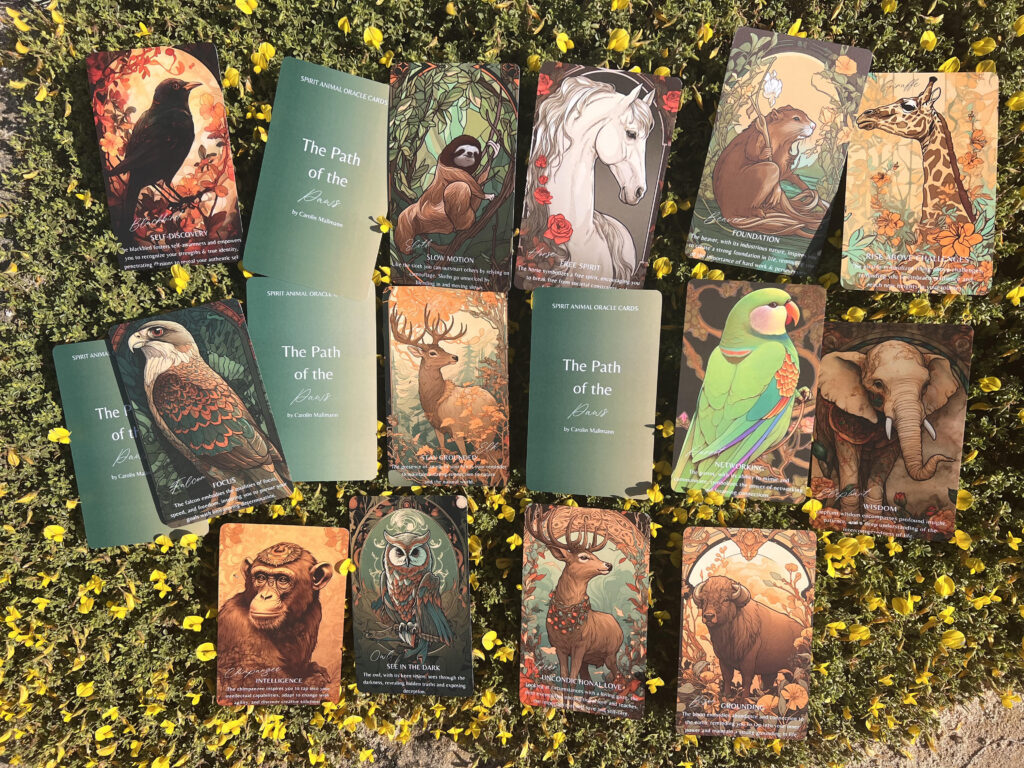
How to Journey to the White Wolf
Shamanic work is not a substitute for medical or psychological care. If this is new to you, begin with the beginner’s guide to shamanic journeying.
- Prepare properly. Twenty to thirty minutes undisturbed, low light, a journal within reach for when you return. Do not do this in the ten minutes before a meeting.
- Bring one intention, not a list. “I ask to meet the spirit of the white wolf and receive whatever teaching is ready for me.” One is enough. The wolf will choose what it addresses, and it is not interested in your agenda.
- Journey to open, high, cold ground. I most often meet this animal in the Upper World — windswept, exposed, bright. Go up through the canopy of a tree, through cloud, and out onto open terrain.
- Wait. Do not seek. This is the whole practice with the white wolf. Do not hunt for it, do not call it, do not walk toward it when it appears. Sit down. How long it takes to approach is itself the message, and the moment you stop reaching is usually the moment it moves.
- Notice whether it is alone or with a pack. A solitary white wolf and a white wolf at the head of its family are giving you two different teachings — one about your own clarity, one about your place among your people.
- Receive without interpreting. Resist analysing mid-journey. Let images and sensations land without commentary; the meaning-making can wait until you are back and writing.
- Afterwards, track one week of overrides. Each time you silence a clear inner signal in favour of what seems logical or socially acceptable, write it down. That list is the white wolf’s actual teaching, and it will be longer than you expect.
Affirmations for White Wolf Medicine
- “My authority comes from knowing myself, not from proving myself.”
- “I trust what I know before I can explain why I know it.”
- “I go into solitude to hear myself — and I come back.”
White Wolf Spirit Animal: Questions People Actually Ask
What does it mean when a white wolf appears in your dream?
Read three things: the distance, the eyes, and whether it is alone. A white wolf that watches without approaching is asking you to stop reaching. A wolf that makes and holds eye contact is confirming something you already know and have refused to act on. A wolf that leads you somewhere is worth following in the dream and worth writing down immediately on waking.
Is the white wolf a good or bad omen?
Good — but it is a clarifying omen, not a comforting one. The white wolf does not give you strength; it strips away what is unnecessary until the strength you already had becomes visible. That process can feel like loss while it is happening. It is not.
What is the difference between the white wolf and the grey wolf spirit animal?
The wolf spirit animal in general carries pack, instinct, loyalty and the hunt. The white wolf carries a narrower and sharper medicine: clarity, intuition trusted before it can be justified, and authority that comes from self-possession rather than effort. If the wolf that came to you was unmistakably white, that distinction is not decorative — it is the message.
What does it mean if the white wolf keeps its distance?
It is the most common report I hear, and it is not a rejection. The white wolf holds its ground for as long as you are trying to earn it. It comes close when you settle. If that pattern is showing up in your journeys, it is almost certainly showing up in your life as well — and that is the actual subject of the encounter.
How do I know if the white wolf is my spirit animal?
Persistence, not preference — whether the image keeps returning uninvited, particularly at threshold moments. For a structured way to test it rather than guess, work through the A–Z spirit animal guide or sit with the Path of the Paws oracle deck and let the animal find you.
The white wolf is the part of you that already knows. It is not waiting for you to become worthy of it. It is waiting for you to sit down.