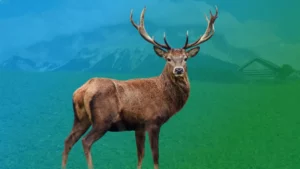
When the deer arrives in a journey, it almost never comes close. It stands at a distance that feels deliberate — near enough that you can see the twitch of its ears, far enough that you cannot reach it. It watches you. And the moment you move toward it, it moves too, keeping the gap exactly as it was. People come out of these journeys frustrated, convinced they did something wrong. They did not. The distance is the message.
This article is not about deer biology. It is about what it means when the deer keeps appearing — in a journey, in a dream, on a road at dusk, three times in a week when you had not thought about deer in years. If you came here to identify an animal, you are in the wrong place. If the deer has been following you and you want to know why, stay.
In my practice, the deer tends to arrive for people who have been running so long that stillness has become frightening. It does not chase them. It does not comfort them. It simply refuses to leave — and it refuses to be caught.
Deer Spirit Animal: What It Actually Means
The deer spirit animal is commonly reduced to a single word — gentleness — and that reduction is why most people learn nothing from it. Gentleness, in the deer’s sense, is not softness. It is not the absence of strength. It is engagement without force.
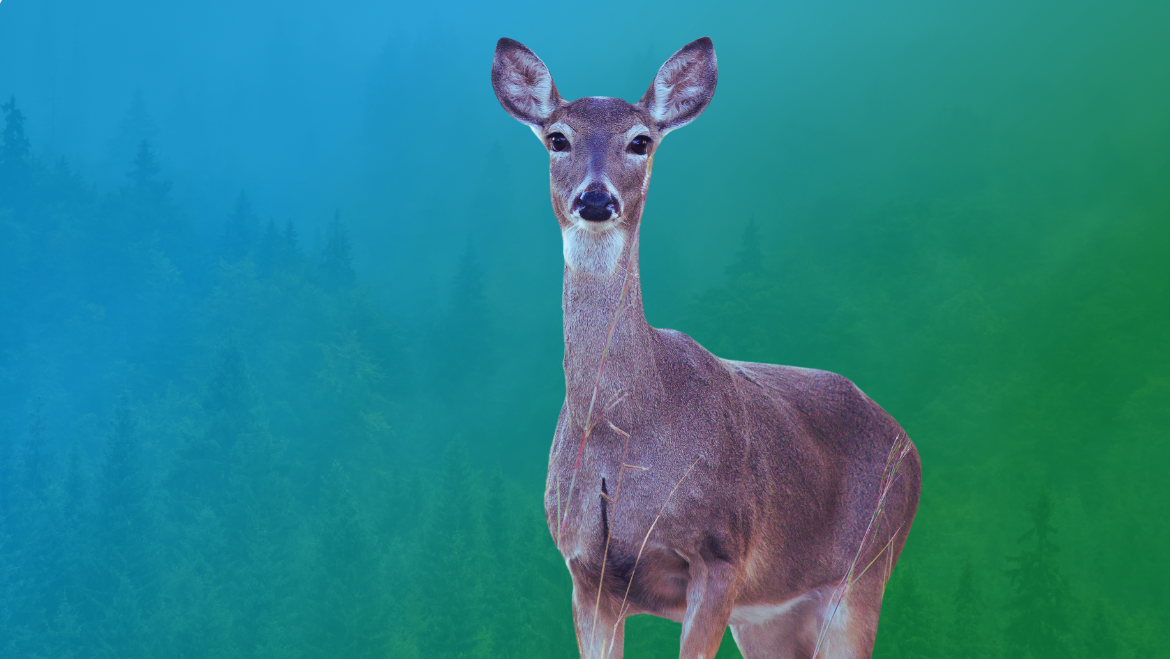
A deer standing in a clearing is not relaxed. It is in a state of total, active attention: ears rotating independently, nostrils reading the air, the whole body available for motion in a fraction of a second. It is simultaneously the most alert and the least aggressive creature in the forest. That combination — complete presence with no coercion in it — is the medicine, and it is far harder to practise than any act of force.
The most common misunderstanding I encounter is that people expect the deer to make them feel safe. It does not. It teaches you to stay open while you are afraid. That is a very different thing.
From the Animal to the Message: Where Deer Symbolism Comes From
Every honest piece of animal symbolism is anchored in the real creature. The deer’s meaning is not invented — it is read directly off how the animal actually lives.
It is prey, and it does not hide. The deer lives its entire life on the menu of every large predator in its range. It has no armour, no venom, no claws. Its survival depends on perception and timing alone. And yet it grazes in the open, raises its young in the open, and moves through the world without pretending it is anything other than what it is. This is the root of its spiritual message: vulnerability is not the same as helplessness. The deer is proof that you can be soft-bodied in a hard world and still not be prey to everything.
Its eyes are set for width, not depth. Positioned on the sides of the skull, they give the deer close to 300 degrees of vision — it sees almost everything around it at once, but with poor depth perception directly ahead. Symbolically, this is precise: deer people perceive the whole field, feel the emotional weather of a room instantly, and often cannot see the one thing directly in front of them. If the deer has come to you, the question is rarely what am I missing out there? It is what am I refusing to look at right here?
The antlers are shed every single year. The stag drops its crown in winter and walks the world diminished for months before the new growth begins, tender and blood-filled under velvet. Nothing in nature is a cleaner image of transformation: what you shed is not lost — it is returned to the ground and rebuilt into what comes next, always larger than before. The deer does not grieve its antlers through the winter. It simply is what it is in each phase, without resistance to the current one.
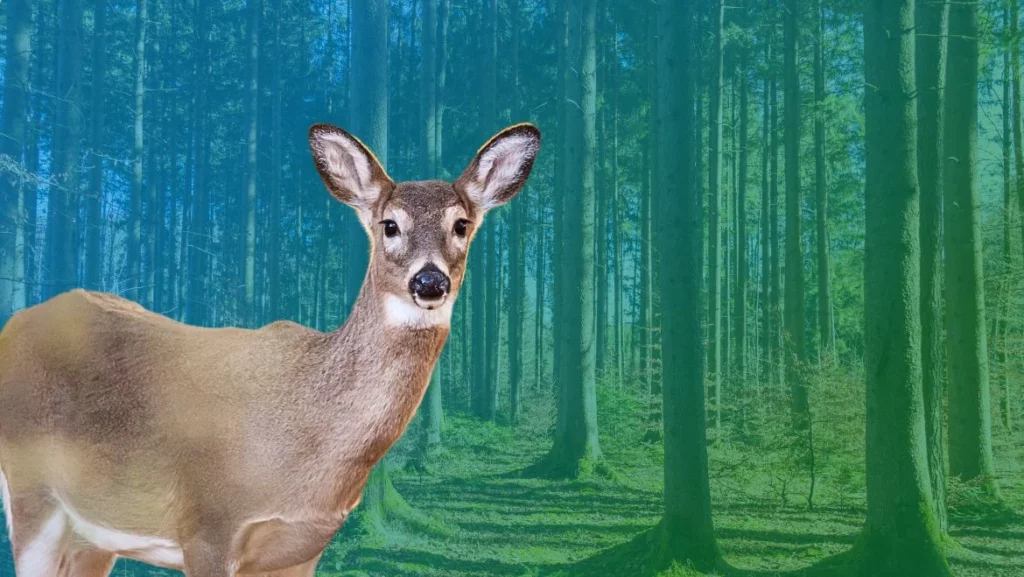
Deer Symbolism Across Cultures
The deer is one of the few animals that carries a strikingly consistent role across traditions that never met: it is the creature that leads you across — from the ordinary world into the one behind it.
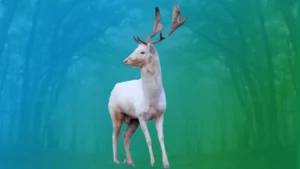
Celtic tradition. In Irish and Welsh story the deer — and above all the white stag — is the classic threshold animal. A hunter follows it, the forest changes, and he never returns to the world he left. The Fianna cycle turns on this repeatedly. The deer is never the prize in these stories; it is the door. If you are being led somewhere by something you cannot catch, you are inside a very old pattern.
Wixárika (Huichol) tradition, Mexico. Kauyumari, the Blue Deer, is the guide who moves between the human world and the world of the spirits and who is understood to have shown the people the sacred path. Here the deer is explicitly a teacher and intermediary — not a symbol of timidity, but of access.
Shinto, Japan. The deer of Nara are regarded as messengers of the kami, and have been protected as sacred for centuries around the Kasuga Grand Shrine. Again: the deer carries word between worlds.
Buddhism. The Buddha gave his first teaching in the Deer Park at Sarnath, and two deer flanking the wheel of dharma remain one of the tradition’s oldest images — the deer as the being whose stillness makes it possible to hear something true.
Across all of these, the deer is not the destination. It is the one that walks ahead of you and glances back to see whether you are still following. For a closely related but distinct medicine — sovereignty rather than passage — see the white stag spirit animal, and for the deer’s larger, more solitary cousin, the elk spirit animal.
The Shadow of the Deer Spirit Animal
This is where most deer articles stop, and it is where the real work starts. The deer has a shadow, and it is one of the most quietly destructive of any spirit animal I work with — precisely because it looks like virtue from the outside.
Gentleness that has become appeasement. The deer’s gift is engagement without force. Its shadow is the person who has removed force from their life so completely that they can no longer say no, hold a boundary, or take up space. They call it kindness. It is often fear wearing kindness as a coat. The tell is simple: genuine gentleness leaves you settled; appeasement leaves you exhausted and quietly resentful.
Sensitivity that has become surveillance. The deer’s alertness is a gift until it never switches off. Hypervigilance is deer medicine in its collapsed form: the nervous system permanently scanning for the predator, reading every micro-expression, adjusting continuously to keep everyone else calm. If you feel other people’s moods before you feel your own, this is your shadow, not your sensitivity.
Flight as a way of life. A deer runs, and then it stops and grazes. It does not carry the fright with it. Humans do. When people journey to the deer while living in chronic flight, the animal often refuses to come near them at all — and they experience that refusal as rejection. It is not. You cannot be met at a speed you are not travelling at.
The frightening deer. Occasionally the deer appears menacing — antlers lowered, blocking the path, or wounded and staring. In my experience the threat is almost never external. It is what happens when a person meets the part of themselves they have spent years managing: the anger they were told was too much, the need they decided was shameful. A deer that will not let you pass is usually asking you to stop running from your own softness, not from it.
How to Journey to the Deer Spirit Animal
This is a practice you can do alone, in about thirty minutes. Do not do it on a day when you are trying to get somewhere. The deer will not meet urgency.
- Prepare the ground. Sit or lie down somewhere you will not be interrupted. Drumming at a steady, monotonous beat helps — around 200 beats per minute, or a recording of it. Close your eyes.
- Enter through a forest edge. Not a cave, not a descent — the deer belongs to the margin. See the place where a field meets a treeline. Stand there. Let it become detailed: the light, the temperature, the smell of the ground.
- State one question, not three. “Deer, what am I running from?” is enough. Say it once, then stop asking.
- Do not approach. This is the whole practice. When the deer appears at a distance, stay exactly where you are. Sit down if you can. The instinct to close the gap is the instinct that keeps the gap open.
- Let it come, or let it not come. Sometimes it walks straight in and presses its head against your chest. Sometimes it grazes and ignores you for the entire journey. Both are answers. Being tolerated by something wild is not nothing.
- Come back and write immediately. Before you interpret. Record what the deer did — where it stood, where it looked, what it refused. The behaviour carries the message; your interpretation usually carries your defences.
Integration, for the week after: once a day, do one ordinary thing at half speed — walking to the kitchen, eating, washing your hands. Notice what rises when you take the rush out. That is the deer’s actual curriculum, and it is much harder than the journey.
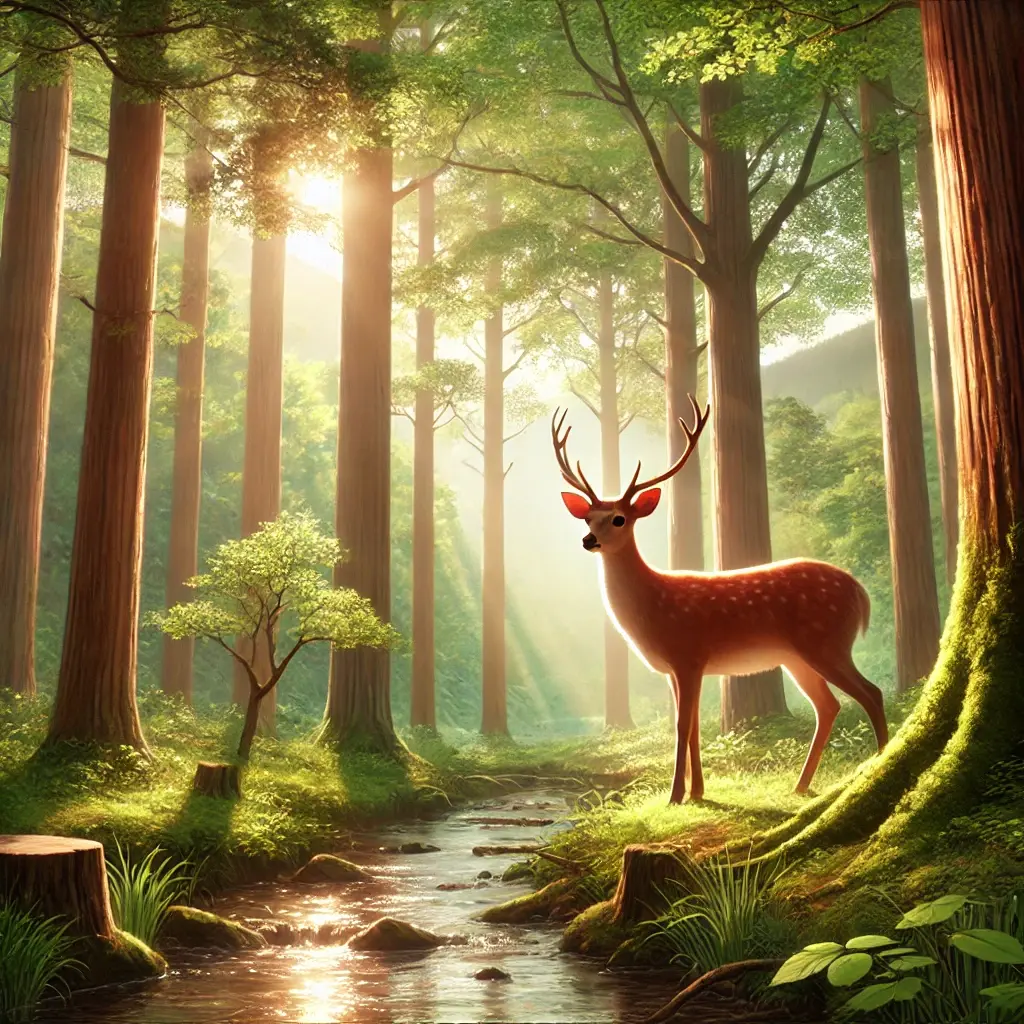
The Doe and the Fawn: Two Distinct Medicines
The doe carries a different message from the stag. Her awareness is not focused like a predator’s — it is distributed, relational, permanently attuned to the well-being of everything around her. She is the medicine most highly sensitive people need to receive: the recognition that feeling what is happening in a room before anyone speaks is not a defect. It is a form of intelligence the doe has been practising for millennia. Her instruction is not feel less. It is stop apologising for what you feel, and start using it.
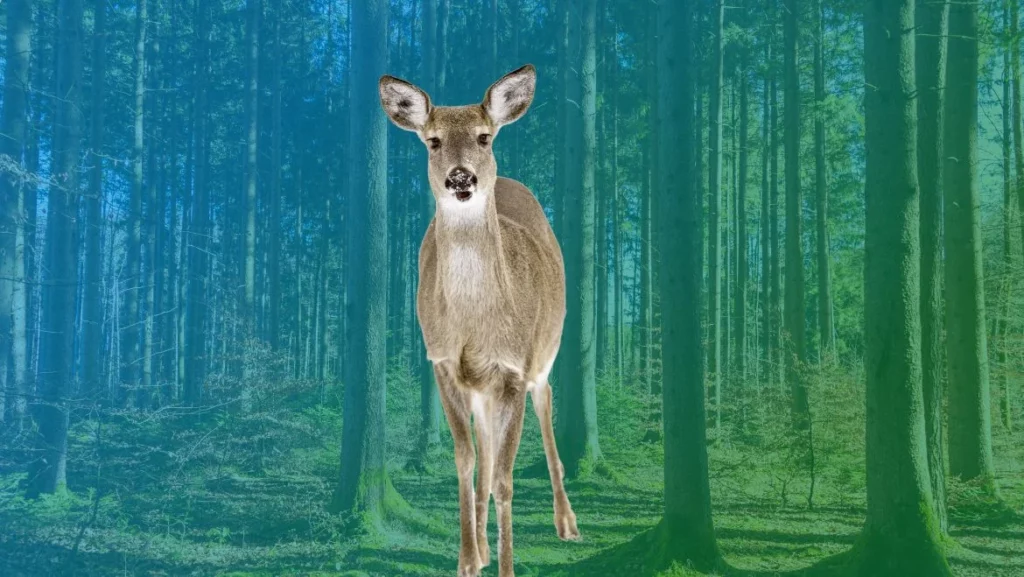
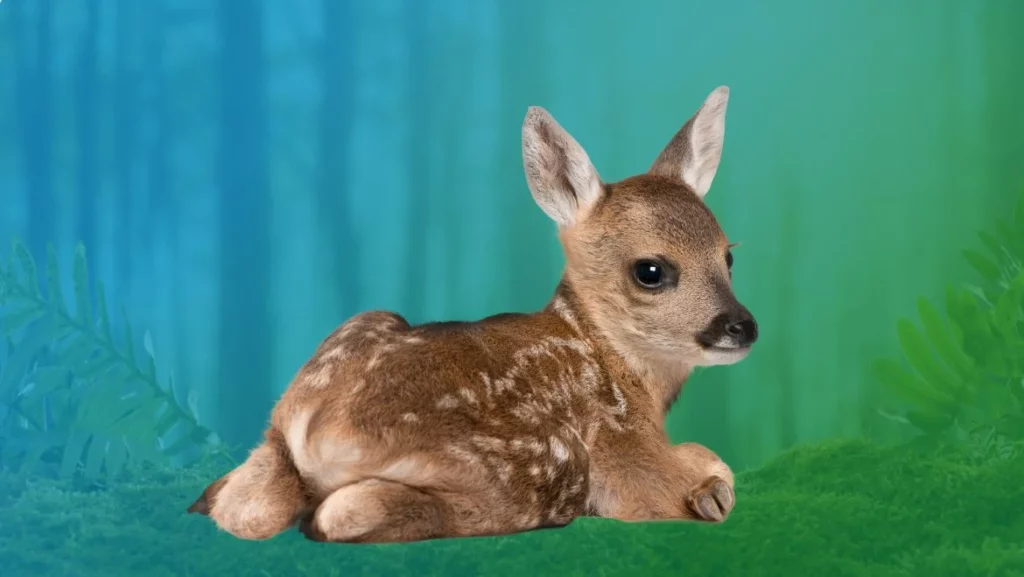
The fawn appears when something in you is genuinely new and not yet able to defend itself — a capacity, a boundary, a way of being that has not been tested. The fawn’s demand is specific and often unwelcome: do not rush it, and do not make it prove itself before it has grown. A fawn in a dream is rarely about innocence lost. It is about something fragile that is asking not to be pushed into the open too early.
The Path of the Paws
42 hand-illustrated oracle cards, one for each animal guide — drawn from the same practice these articles come from. A way to sit with an animal instead of only reading about it.
Order your deck →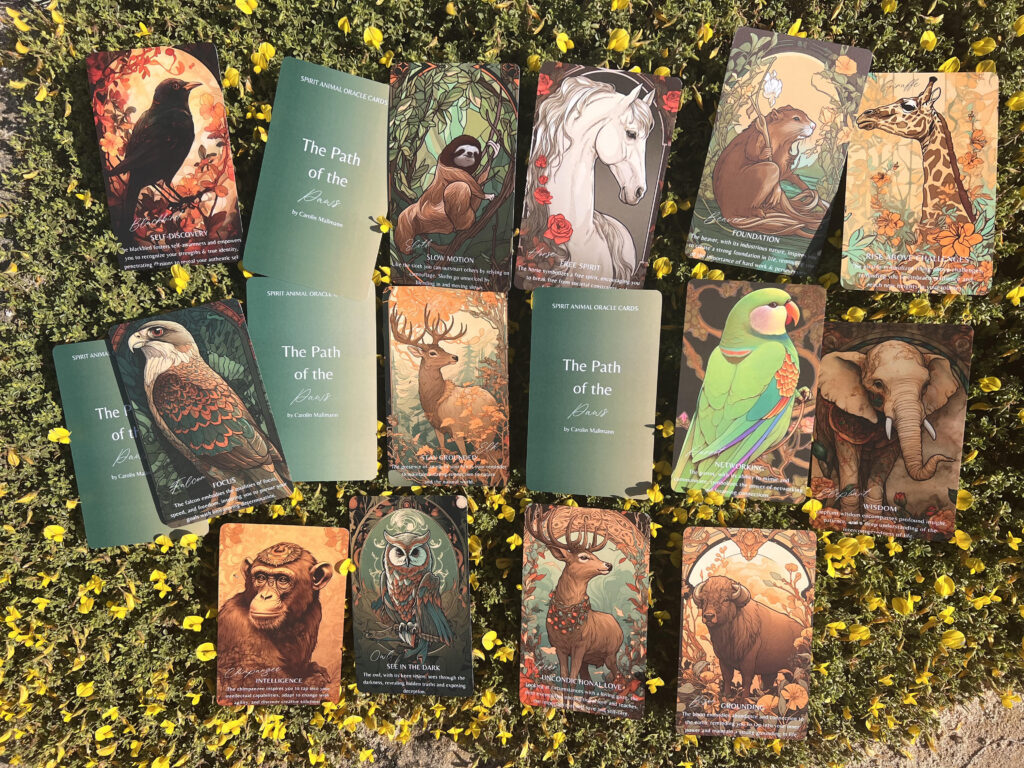
Deer Spirit Animal FAQ
What does it mean when a deer crosses your path?
A deer crossing your path is traditionally read as an invitation to slow down and pay attention to what you have been outrunning. In practice, notice what you were thinking about in the seconds before you saw it — that is usually the subject of the message. A single sighting is weather. A pattern of sightings is a conversation.
Is the deer a good or bad omen?
Neither. The deer does not deal in luck. It is a threshold animal — it shows up when something is about to change or when you are standing at an edge you have not admitted to yourself. That can feel like grace or like exposure, depending on how long you have been avoiding the edge.
What does a deer in a dream mean?
Read the behaviour, not the animal. A deer that flees points to something in you that is not ready to be approached. A deer that stands and holds your gaze is asking for contact you have been avoiding. A wounded deer usually points to your own sensitivity, injured and still functioning. A fawn points to something new and unprotected.
What is the spiritual meaning of a white deer?
In Celtic and Northern European tradition, the white deer marks the boundary of the Otherworld — its appearance signals that the ordinary rules have thinned. It is the rarest form of the deer’s message: not “slow down” but “you are already across the line, whether you have noticed or not.”
How do I know if the deer is my spirit animal?
Repetition and disproportion. The deer appears more often than chance accounts for, and it produces a reaction out of proportion to the event — a tightening in the chest, tears without a story attached. If you want a structured way in, work through the A–Z guide to spirit animals, draw from the Path of the Paws oracle deck, or take the journey work step by step in the four-week spirit animal course.
The deer will not chase you and it will not perform for you. It waits at the edge of the field until you are still enough to be approached. That is not passivity. That is the most patient form of insistence there is.
Is the Deer Your Spirit Animal?
Check the boxes that resonate with your spirit and current life journey.