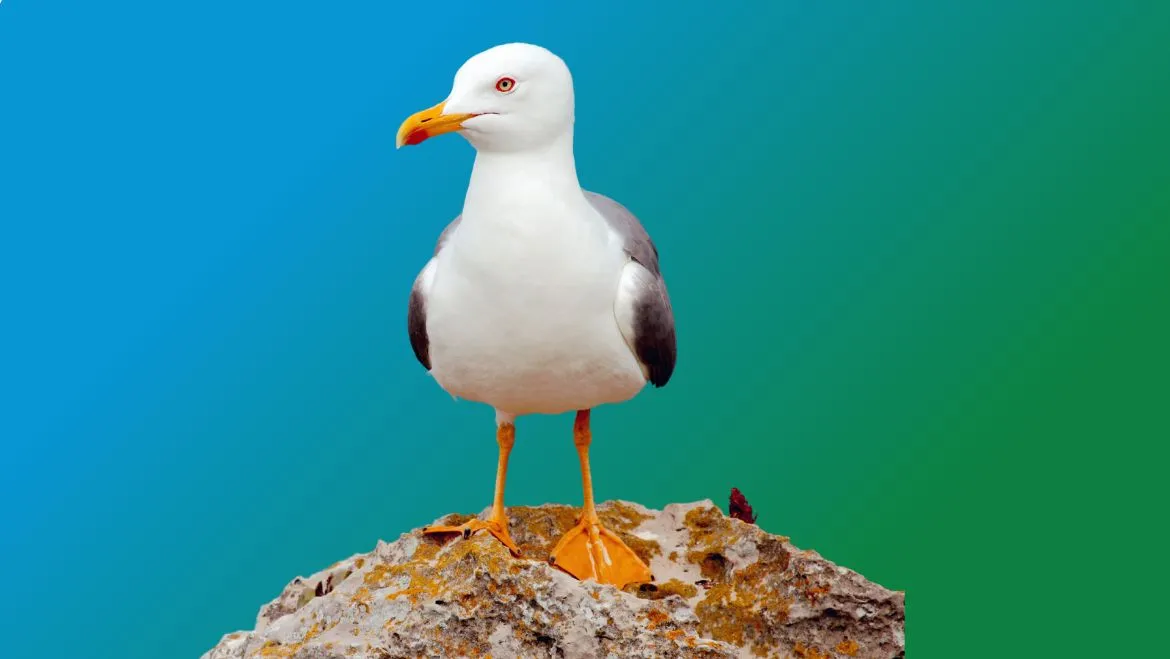
People rarely journey to the seagull. It tends to arrive uninvited — loud, sideways, refusing the dignity most of us expect from a spirit animal. It does not glide in like the eagle or land with the gravity of the owl. It hangs in the air, motionless against the wind, screams once, and drops.
And almost everyone who meets it has the same reaction: this can’t be my guide. The seagull is too common. Too opportunistic. Too undignified. That reaction is the first piece of information the seagull gives you — because it is usually not about the bird at all.
This page is about what the seagull means — in journeys, in dreams, and in the strange persistence with which it shows up at the edges of a life in transition. If you came looking for bird facts, this is the wrong page. If a seagull has been following you, stay.
From Wind to Wisdom: What the Real Bird Tells Us About the Seagull Spirit Animal
Symbolism that is not anchored in the real animal is decoration. So look at the actual bird.
A gull does not fight the wind. It reads it. That motionless hover above a cliff edge is not strength — it is the bird finding the precise angle at which an opposing force holds it up. This is the seagull’s core teaching, and it is subtler than “freedom”: the thing pushing against you is the thing that can carry you, if you angle yourself correctly. The gull does not need the wind to change direction. It changes its own.
Gulls are also among the most adaptable birds alive. They live at the boundary of sea, land, and sky — and they eat what is there. Fish, crabs, waste, whatever the tide brings. Some species drop shellfish onto rocks to break them open. Some drum their feet on wet ground to imitate rain and bring worms to the surface. This is not scavenging as failure. It is intelligence unbothered by dignity.
And gulls drink salt water. They have glands above their eyes that filter salt from what they take in and expel it. They can survive on the thing that would kill most birds.
Hold those three facts together and the seagull’s message is unmistakable: you can live at the boundary. You can metabolise what is bitter. You do not need better conditions — you need a better angle. In my practice, this animal arrives most often for people in the middle of an unwanted transition, who are waiting for circumstances to improve before they begin.
Seagull Symbolism and Spiritual Meaning Across Traditions
The gull belongs to no single tradition, which is fitting for a bird that belongs to no single element. But it appears, again and again, wherever people live between land and sea.
Celtic and Gaelic coasts. Along the Atlantic fringe — Ireland, the Hebrides, Brittany — seabirds were widely understood as carriers between worlds, the sea being the road to the Otherworld. Gulls following a boat were read as souls, or as company for the souls being carried. The bird’s cry over water is one of the oldest sounds associated with grief and crossing.
Norse and North Sea seafaring cultures. To sailors, gulls were navigational truth: land is near, and it lies that way. A bird seen after weeks of open water was not a symbol of freedom — it was the promise of ground. The seagull as spirit animal carries that specific gift. It shows up when you cannot yet see land, and it insists that land exists.
Coastal Salish and other Pacific Northwest nations. In several tellings from this region, it is Seagull — not Raven — who first holds the daylight in a box, and Raven who must trick him into releasing it. I name this carefully, because the story varies between nations and I would rather say less than misattribute. But the shape of it matters: the gull is the one who hoards the light, and must be moved to let it go.
Modern maritime lore. Sailors across many coasts held that gulls carried the souls of the drowned — which is why killing one was taboo. The superstition survives because it names something people felt: the gull is a witness. It watches the shoreline of a life.
What runs through all of it is threshold. The seagull is never a creature of the deep, and never a creature of the settled land. It is the animal of the in-between — and that is exactly the moment in which it tends to find you.
The Shadow of the Seagull
Every gift has a failure mode, and the seagull’s are unusually easy to spot — which is why so many people dislike this bird. Its shadow is visible from the outside.
Adaptability becomes rootlessness. The bird that can live anywhere sometimes belongs nowhere. The most common pattern I encounter with seagull people is a life of constant relocation — cities, jobs, relationships — always framed as freedom, always beginning again just before things would have required depth. The gull’s shadow does not look like fear. It looks like an adventure that never quite lands.
Resourcefulness becomes taking. A gull will snatch food from a hand without hesitation. Ungrounded, this becomes the person who is always slightly ahead of the exchange — who takes the opportunity, the credit, the last of someone else’s energy, and calls it survival. It is worth asking honestly: am I resourceful, or am I helping myself?
The voice becomes noise. The gull’s cry carries for miles. Its shadow is the person who is loud but not heard — who has learned that volume gets attention and has forgotten that it does not get contact.
When the seagull turns menacing. A seagull that dives at you, screams at you, or blocks your path in a journey or recurring dream is almost never an outside threat. In the pattern I see most often, it accompanies a period in which a person has been taking without acknowledging it — or, more often, a period in which they have been circling a decision for so long that the decision has begun to circle back. Seagulls scream loudest near the nest. What are you defending that you have not admitted you want?
Practice: Journeying to the Seagull at the Edge
The seagull answers questions about transition. It is a poor guide for stillness and an excellent one for the moment you are between two shores. If this is your first journey of this kind, work through the step-by-step guide to finding your spirit animal first.
- Name the crossing before you begin. Not “what should I choose?” but: what am I between? The seagull needs a shoreline to work with.
- Enter at a boundary. Begin the journey standing where two things meet — waterline, cliff edge, harbour wall. Feel wind on the side of your face. The seagull comes to edges, not to rooms.
- Do not chase it. Face the wind. The gull will not come closer if you reach. Turn into whatever is pushing against you in the journey and let it hold you. This is the whole practice, compressed.
- Ask to be shown the angle, not the answer. How do I hold myself against this? The seagull deals in position, not in outcomes.
- Ask what you are meant to eat. It sounds strange, and it is one of the most useful questions this animal answers. What in your current circumstances — including what is bitter — is actually nourishment you have been refusing on grounds of pride?
- Listen for the cry. If the gull calls, note where you were looking when it did. That direction is the message.
- Integrate at water. Within a day, go to any water — sea, river, even a full basin. Say out loud the one thing you are ready to stop carrying. Wash your hands. Walk away without looking back at it.
People often report that the seagull does not stay. It delivers, and it goes. That is not rejection — it is the nature of a threshold guide. Its work is finished when you have crossed.
Seagull Spirit Animal: Common Questions
Repeated seagull sightings point to transition rather than to any single event. Something in your life is between two shores — an ending that has not finished, a beginning that has not been claimed. The seagull tends to arrive during the waiting, not after it, and it insists that land exists even when you cannot see it.
Neither. Sailors read gulls as the promise of land, and also as the souls of the drowned — both readings at once, which is honest. The seagull does not predict. It reports on where you are standing: at an edge. Whether that is good news depends entirely on whether you are ready to cross.
Watch what the bird is doing. A gull hovering motionless against the wind speaks of a force you are resisting that could hold you up instead. A gull screaming or diving at you usually points to something you are defending without admitting you want it. A gull flying out to sea and disappearing often marks the end of a chapter you have already left but not yet grieved.
In my practice, it comes to people in unwanted transitions — those waiting for conditions to improve before they begin. It is also a frequent guide for people who have grown proud in a way that is starving them: unable to accept help, an ordinary job, or an imperfect opportunity, because it does not match the story they tell about themselves.
If the seagull is circling you, look also at its relatives on this coast — the dolphin, which plays where the gull scavenges, and the eagle, which takes the height the gull refuses. The full A–Z guide to spirit animals will place it among the rest.
Is the Seagull Your Spirit Animal?
Check the boxes that resonate with your spirit and current life journey.
What are you between right now — and what would change if you turned to face the wind instead of waiting for it to drop?
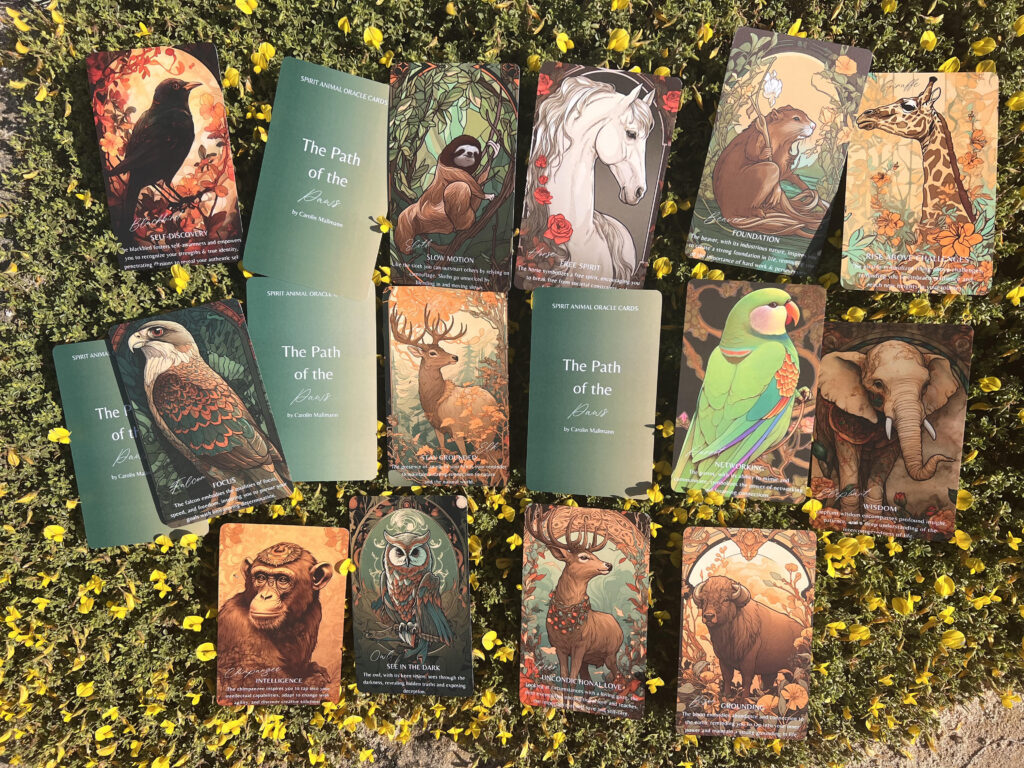
The Path of the Paws
42 hand-illustrated oracle cards, one for each animal guide — drawn from the same practice these articles come from. A way to sit with an animal instead of only reading about it.
Order your deck →