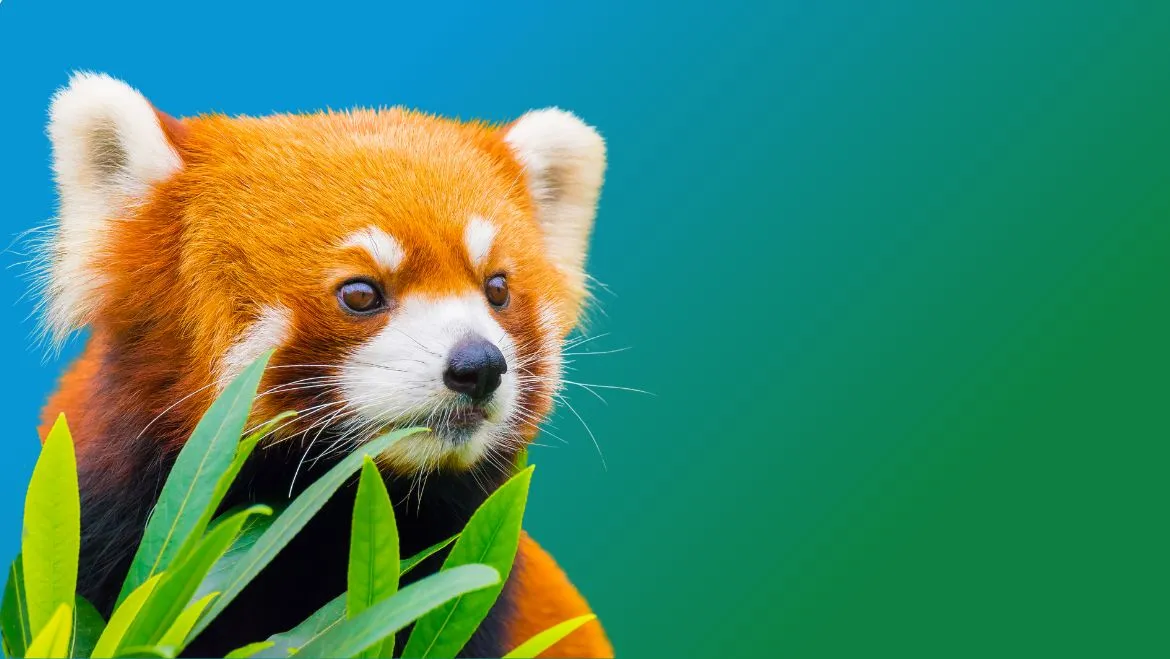
The red panda does not come down to meet you. When people journey to this animal, they almost always find it above them — draped along a branch, tail hanging, watching without any apparent intention of moving. It does not perform. It does not approach. And the most common thing people report afterwards is a strange, unexpected embarrassment: they had wanted the animal to want them, and it simply did not need to.
That is the beginning of the red panda spirit animal‘s message, and it has almost nothing to do with cuteness. This is not a page about a charming forest creature or a Pixar film. It is about what it means when this animal starts appearing in your dreams, your journeys, or with that uncanny persistence at the edges of an ordinary week. In my practice, the red panda tends to arrive for people who have spent years making themselves easier to categorise — shrinking into a group, a role, a family expectation — and who are now, quietly, running out of room.
The Biology Behind the Red Panda’s Spiritual Meaning
Everything this animal has to say is written in how it actually lives, and the facts are stranger than the symbolism usually admits.
The red panda (Ailurus fulgens) is the only living member of its entire family. Not a bear. Not a raccoon. Not a giant panda. Taxonomists spent more than a century trying to file it somewhere convenient and eventually had to give it a family of its own, occupied by exactly one creature. It has no close living relatives. There is no group it belongs to. And it is not diminished by that — it is thriving in its own narrow band of the Himalayan cloud forest, doing something no other animal on earth does.
Then there is the diet, which is quietly the most radical thing about it. The red panda is a carnivore — a member of the order Carnivora, with a carnivore’s gut — that lives almost entirely on bamboo, one of the least nutritious foods available. It cannot digest cellulose properly. It extracts almost nothing. To survive, it eats for up to thirteen hours a day and then conserves energy with a ferocity that looks, to us, like laziness: curled into a ball, tail wrapped over the face, metabolism dropped. It is not lazy. It is solving a survival problem with rest.
Hold those two facts together, because that is the whole bridge. Here is an animal that belongs to no category, living on a food it was never designed for, in a habitat that offers it very little — and its strategy is not to fight harder. It is to take what it needs slowly and refuse to waste energy on anything else. When the red panda arrives for someone in my practice, that is nearly always the exact shape of the problem they are in.
Red Panda Symbolism: The Fire Fox and the Cloud Forest
The red panda’s home is the eastern Himalaya and the mountains of southwest China — Nepal, Sikkim, Bhutan, Assam, Myanmar, Yunnan — and it is worth naming these places rather than gesturing vaguely at “ancient wisdom.”
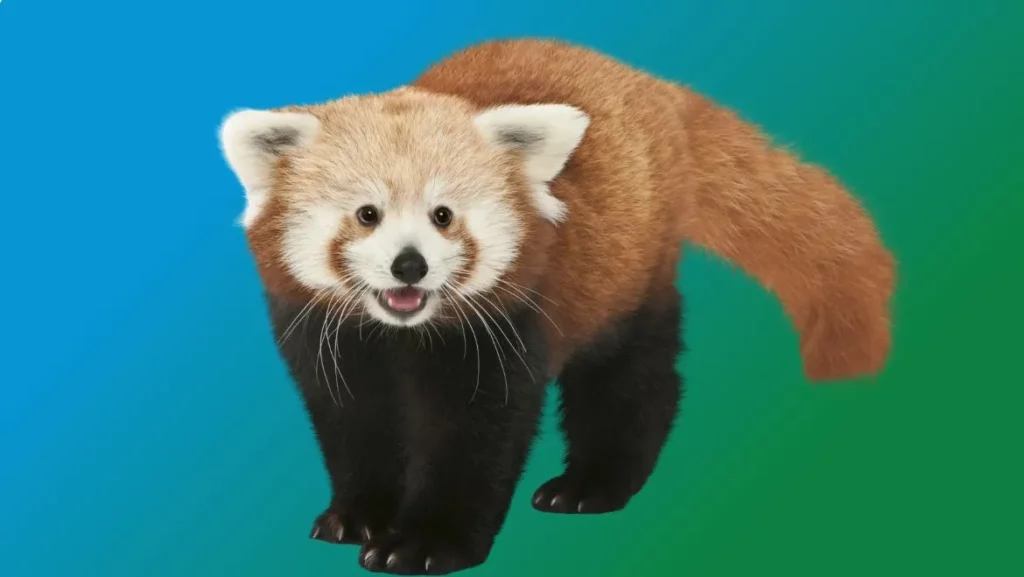
In Nepali, one of its names is habre; in parts of the region it has long been known as the firefox — the small burning thing in the branches. Among some communities in the eastern Himalaya, its pelt and its bushy, ringed tail were used in ceremonial dress, and the animal was treated as a bringer of good fortune to a household. What is consistent across the traditions of its range is not a grand cosmology but something more modest and more useful: the red panda is regarded as a creature of the in-between. It lives in the cloud forest — the belt of mountain where the trees are permanently wrapped in mist, neither fully lowland nor fully alpine. It is neither predator nor prey in any simple sense. It is neither a bear nor a fox nor a cat, though it has been called all three.
This is the symbolism that actually holds: the red panda is the guardian of the unclassifiable. Not the outsider who rages at the door, but the one who quietly stops trying to get in — and finds that the branch was always enough.
There is one more layer, and it is the one people forget. The red panda is endangered. Fewer than ten thousand are thought to remain in the wild, and their forests are being fragmented into islands too small to hold a breeding population. This is not incidental to its medicine. When this animal appears for you, it carries a quality of precariousness — of something rare and irreplaceable that will not survive being neglected much longer. That thing, in my experience, is usually the part of the person that never fitted anywhere.
The Shadow of the Red Panda
Every gift has a distortion, and this animal’s is one of the hardest to catch, because it looks so much like a virtue.
The retreat that never ends. The red panda’s genius is conservation — it withdraws, curls up, waits. But withdrawal that was once wisdom becomes, at some point, a life lived entirely in the branches. The most common shadow I encounter with this animal is a person who has correctly recognised that the world is hostile to their particular strangeness, and has responded by never coming down again. Solitude that began as protection has hardened into a place where nothing can reach them, including help.
Uniqueness as a wall. “Nobody understands me” can be true and still be a hiding place. The red panda in shadow uses its own singularity as a reason never to risk being known — because being known would mean discovering whether the singularity survives contact. That is the actual fear, and it is rarely spoken aloud.
Gentleness that is really avoidance. This is the one people resist most. The red panda’s softness is often adopted by people who are, underneath, extremely angry — and who have learned that softness is the only version of themselves that has ever been welcome. If you are always the gentle one, always the accommodating one, ask what happened to the other one.
When it appears distressed. A red panda that appears thin, frightened, or trapped in a dream — or a forest in the dream that is burning or being cut — is not, in my experience, a warning about the outside world. It is almost always about a habitat you have allowed to shrink: the time, the space, the relationships that once let the rarest part of you feed. Fragmented forest, fragmented self. The question the animal is asking is direct: what has been cutting your forest, and why have you been calling it necessary?
A Journey to Meet the Red Panda Spirit Animal
This animal will not be summoned, and it will not be impressed. The practice below is built for that. Allow twenty minutes and do it somewhere you will not be interrupted — the red panda does not appear for people who are half-listening for a knock at the door.
- Go up, not down. Most journeys descend. For this one, enter the middle world and find yourself in a mountain forest at dawn, in mist, with the trees above you. Climb, or simply rise.
- Sit down and stop looking for it. This is the actual instruction, and it is the one people fail. The red panda appears to those who have given up on being found interesting. Sit on the forest floor. Wait.
- Ask one question, and ask it honestly: “What part of me have I been starving because it does not fit anywhere?”
- Notice what it is eating. If the animal shows itself, watch what it does rather than waiting for it to speak. This one teaches through demonstration — through what it takes, what it refuses, and how long it rests.
- Ask it what it conserves energy for. Not what it avoids. What it is saving itself for. There is a difference, and it is the entire lesson.
- Return, and write it down before you explain it away.
The integration: this week, protect one hour of your forest. One hour that produces nothing, pleases nobody, and belongs entirely to the part of you that has no category. If your first reaction to that sentence is to think of a reason it is not possible — that reaction is the diagnosis, and the red panda has just done its work.
If you are still working out which animal is walking with you, the A–Z guide to spirit animals is the place to keep looking, and the Path of the Paws oracle deck is built for exactly this kind of slow, unhurried enquiry. If solitude is the thread you are pulling on, the cat spirit animal is worth reading alongside this one.
Red Panda Spirit Animal: Common Questions
What does the red panda spirit animal mean?
It means singularity without apology. The red panda is the only living species in its family — it belongs to no group and needs none. As a guide it speaks to people who have never quite fitted, and its message is not “find your tribe” but something harder: your worth was never contingent on belonging to a category in the first place.
What does it mean when a red panda appears in a dream?
A calm red panda resting high in a tree usually points to a solitude that is currently healthy — rest that is genuinely restoring you. A red panda that is thin, frightened, or in a damaged forest points the other way: a part of your life that once fed you has been cut back too far, and something rare in you is running out of habitat.
Is the red panda a good omen?
It is a gentle guide, but gentleness is not the same as easy. In the eastern Himalaya it has long been associated with good fortune, and its arrival is rarely frightening. But its central question — what have you been starving in yourself in order to fit? — is not comfortable, and it is not meant to be.
What does the red panda teach about rest?
That rest is a strategy, not a reward. The red panda survives on a food that gives it almost nothing, and it does so by conserving energy with total discipline. Its teaching is not “slow down because you deserve it.” It is: you are living on thin fuel, so stop spending yourself on things that give nothing back.
The red panda has no relatives, no category, no group to return to. It sits in the mist, at the top of a tree, in a forest that is disappearing — and it is entirely, unmistakably itself. If it has come to you, that is not a coincidence, and it is not a compliment. It is an instruction.