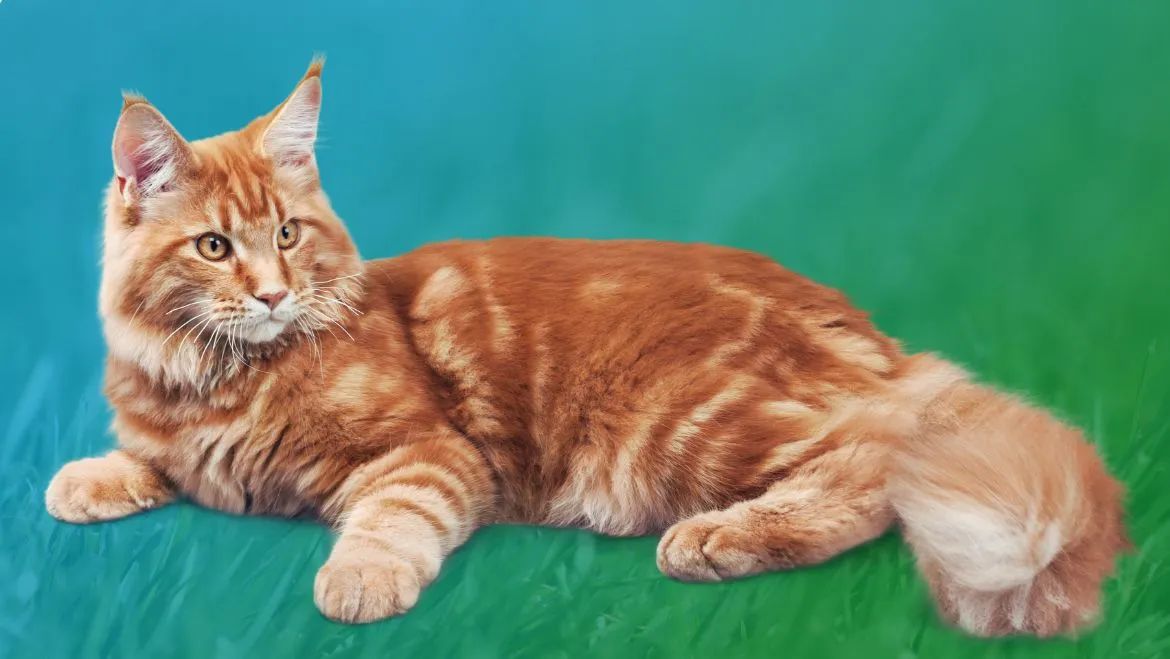
When the cat arrives on a journey, it almost never arrives to you. It is simply there — already sitting, already looking at something you have not noticed yet, tail moving once. It does not greet you. It does not explain why it has come. And when people try to approach it, it usually gets up and walks a few steps away, then sits down again, exactly at the distance it has chosen.
People find this maddening, and then, if they stay with it, they find it clarifying. Because that is the entire teaching of the cat spirit animal, delivered in the first ten seconds. This page is about what the cat means when it appears — in dreams, in journeys, in that unaccountable way it starts turning up everywhere — and it is not about pets. In my practice, the cat arrives most often for people who have spent their lives being available, and who are only now discovering that they were never asked to be.
The Biology Behind the Cat’s Spiritual Meaning
The symbolism only holds if it is anchored in the real animal, and with the cat the real animal is more interesting than the myth.
Begin with the one fact that changes everything: the cat is the only common domestic animal that domesticated itself. Dogs, cattle, sheep and horses were taken, bred, shaped. Cats moved into human grain stores of their own accord roughly ten thousand years ago in the Near East, because that is where the rodents were, and they have never fully surrendered the arrangement. Genetically, the domestic cat is barely distinguishable from its wild ancestor. It is not a tamed animal living among us. It is a wild animal that decided we were useful, and it has kept the option to leave.
That is the bridge to its medicine, and it is not a metaphor — it is a description. The cat’s independence is not aloofness. It is a relationship entered voluntarily and renegotiated daily. When this animal appears for someone, the question it brings is almost always the same: which of your bonds did you actually choose, and which did you simply never leave?
Then there are the senses. A cat’s hearing extends well beyond the human range, into ultrasonic frequencies — the sound of a mouse’s movement inside a wall. Its whiskers register air currents fine enough to map a room in total darkness. Its eyes gather light so efficiently that it functions at levels where we are effectively blind. When traditions say the cat “sees what we cannot,” they are not being poetic. They are describing an animal that is genuinely perceiving a world running underneath our own. And that is the honest, grounded root of the cat’s association with intuition: it is not magic. It is a nervous system tuned to the frequencies most of us have learned to filter out.
Cat Symbolism and Cultural Context
Egypt: the cat as protection, not decoration
In ancient Egypt the goddess Bastet was depicted as a cat or a lioness-headed woman, and her domain was not “grace.” It was protection of the home, of women, of children, and of the dead — alongside a fierce, martial edge inherited from her older leonine form. The cat in Egypt guarded the granary from the snake and the rat, which is to say it guarded the survival of the household. Its sacredness came from function. It was honoured because it was effective.
Norse and Celtic: the cat that will not be driven
In Norse material, Freyja — goddess of love, war, and seiðr, the practice of magic — rides in a chariot drawn by cats. Consider how strange that image is: the one deity most associated with sorcery is carried by the one animal that cannot be made to pull anything. It is a statement about the nature of magical power itself — that it is coaxed, never commanded. In Irish and Scottish folklore the Cat Sìth is a large black cat of the Otherworld, a creature of thresholds and of the dead, treated with respect precisely because it could not be controlled.
Japan: the cat that decides
The maneki-neko, the beckoning cat, is often reduced to a lucky trinket, but the folk tale behind it is sharper: a cat raises its paw and a passing traveller turns aside to see — and in doing so escapes a lightning strike, or a bandit, or ruin. The cat does not give fortune. It changes the direction of attention, and everything else follows from that. Alongside it, Japanese tradition also carries the bakeneko and nekomata, cats that become something else entirely with age — a reminder that this animal was never considered safe, only worth having.
Medieval Europe: the cost of being unowned
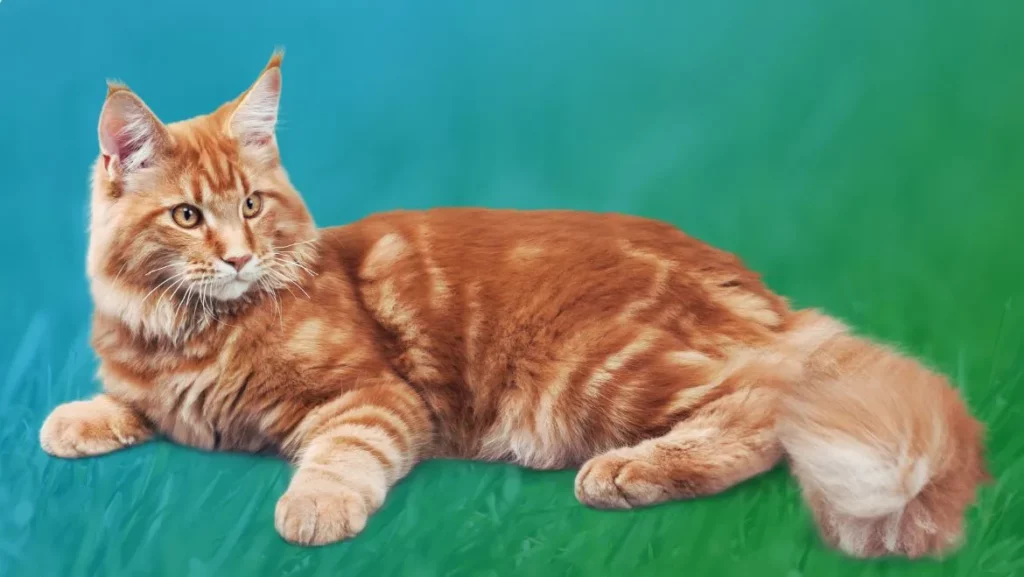
And then the dark chapter, which should not be skipped. In late medieval Europe, cats — black ones especially — were associated with witchcraft and killed in enormous numbers. It is worth saying plainly what that was: an animal was persecuted for the specific crime of being independent, nocturnal, female-coded and unownable. If you have ever been punished for not being biddable, the cat has been there before you. That history is part of its medicine, and it is why this guide arrives so frequently for people who learned early that their own autonomy made others uncomfortable.
The Shadow of the Cat Spirit Animal
The cat’s gifts are boundaries, discernment and self-possession. Every one of them has a distortion, and the distortions are hard to see because they look so much like strength.
The boundary that became a wall. This is the most common cat shadow I encounter. A person learns — usually correctly, usually painfully — that being available on demand cost them something. So they stop. And then they keep stopping, until the discernment that was meant to protect a life has quietly replaced it. The cat’s boundary is permeable by invitation. If nothing has been invited in for years, that is not a boundary. It is a door that has rusted shut.
Self-sufficiency as a pre-emptive strike. “I don’t need anyone” is very rarely a statement of fact. It is usually a statement of history. The cat in shadow refuses connection before connection can refuse it — and calls the resulting isolation freedom.
Watching instead of living. The cat’s perception is extraordinary, and perception can become a hiding place. Some people who work with this guide have turned themselves into permanent observers of their own lives — endlessly reading the room, never entering it. Intuition that never commits to an action is not wisdom. It is surveillance.
When the cat turns hostile. If a cat appears in a recurring nightmare — attacking, hissing, refusing to be touched, or clawing you — do not read it as an omen of enemies, which is the old and lazy interpretation. In my experience, the hostile cat is almost always a boundary of your own that you have been overriding. Something in you has been saying no for a long time, politely, and you have been walking straight through it. The cat is what happens when the polite refusal gives up. And the dream of a cat that is starving, caged, or shut outside in the cold is the same message from the other direction: a part of you that requires autonomy to survive has been locked out of your own life.
A Journey to Meet the Cat
This animal cannot be summoned, and the practice below is designed around that fact rather than against it. Allow twenty minutes. Do it at night if you can.
- Lower the light before you begin. Not total darkness — dusk. The cat works in the range where you can almost see, and the body should be there too.
- Set an intention the cat will respect. Not “come to me.” Ask: “Where have I been saying yes with my mouth and no with my body?” Say it aloud once, then stop asking.
- Travel to a threshold, not a landscape. A doorway, a wall, the edge of a garden at night, the place where the house ends and the dark begins. The cat lives on thresholds and will not meet you in the middle of a field.
- Do not call it. Do not reach. Sit down. Look away from where you expect it. Cats approach what is not approaching them — this is true of the animal and true of the spirit, and it is the single instruction people most reliably ignore.
- Follow its gaze. When it comes, it will be looking at something. Look where it is looking, rather than at the cat. What it is watching is usually the actual message.
- Ask it what it would refuse. Then ask the harder version: “What would you refuse that I have been accepting?”
- Thank it and return. Write it down before you soften it into something more polite.
The integration, and it is the whole point: within the next seven days, say no to one thing you would normally have absorbed. Do not explain it. Do not apologise for it. Do not offer an alternative to make it easier for the other person. Say no, and then notice what rises in you — because that reaction, not the refusal, is where the cat has actually been pointing all along.
If you are still working out which guide is walking with you, the A–Z guide to spirit animals is the place to keep looking, and the Path of the Paws oracle deck was made for exactly this kind of quiet enquiry. If the shadow section above hit something, shadow spirit animals takes it further.
Is the Cat Your Spirit Animal?
Check the boxes that resonate with your spirit and current life journey.
Cat Spirit Animal: Questions People Actually Ask
What does it mean when a cat crosses your path?
The folklore is contradictory and largely regional — a black cat is unlucky in some countries and lucky in others, which should tell you how much weight to give it. What is more useful is the pattern: a cat crossing your path is an interruption. It changes the direction of your attention, exactly as the beckoning cat of Japanese folklore does. The question worth asking is not “is this bad luck?” but “what was I walking straight past?”
Is the cat a good or bad omen?
Neither, and the traditions prove it — the same animal was sacred in Egypt and burned in medieval Europe. The cat does not predict. It reflects your relationship with your own autonomy. If it feels threatening, that is worth looking at closely, because in my experience the threat is usually your own refusal arriving in a form you cannot ignore.
What does a cat in a dream mean?
A calm cat that allows contact usually points to intuition that is currently available to you. A cat that hisses, claws, or attacks generally points to a boundary you have been overriding — your own, not someone else’s. A starving, caged, or shut-out cat points to a part of you that needs autonomy in order to survive and has been locked out of your life.
What does the black cat mean spiritually?
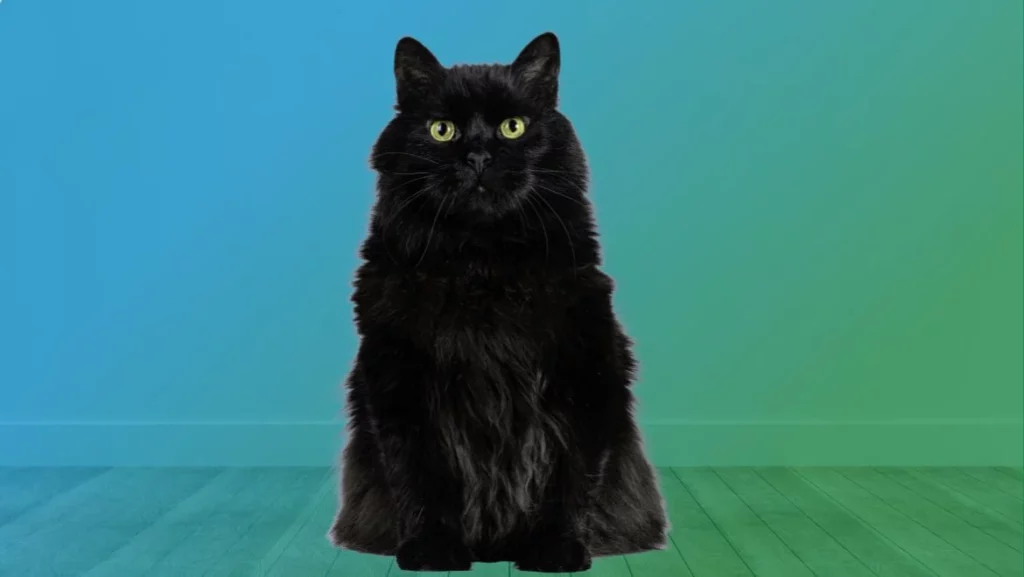
The black cat carries the history of being punished for being unownable. Spiritually, it tends to arrive for people who learned early that their independence made others uncomfortable, and who have been managing that discomfort ever since. It is not an omen of misfortune. It is, more often, an invitation to stop apologising.
The cat came into the human world on its own terms, ten thousand years ago, and it has never once agreed to be owned. If it has come to you now, that is the offer it is making — and it will wait, at exactly the distance it has chosen, until you understand that the offer was always yours to accept or refuse.