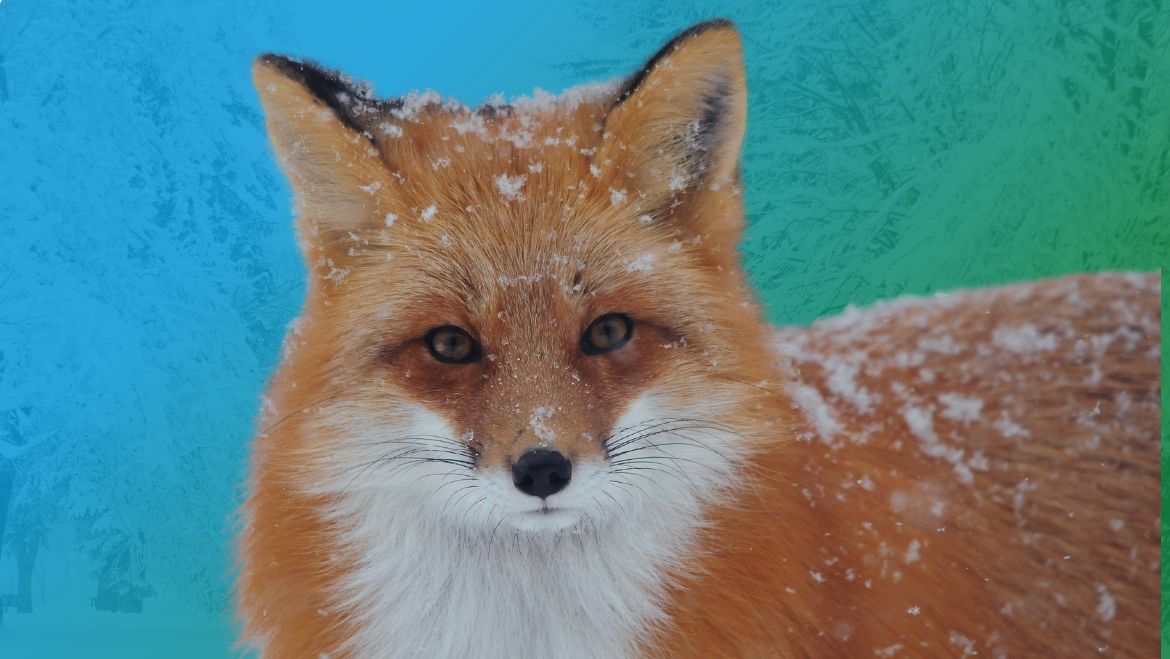
The fox does not move through the world the way other animals do. It moves through the edges — the places where forest meets field, where night meets dawn, where the seen world and the unseen press against each other most thinly. This is not accidental. The edge is where the fox is most at home, and it is exactly what makes it one of the most distinctive guides available to us.
This page is about the fox spiritual meaning — what it means when the fox keeps appearing, in journeys, in dreams, at the edges of an ordinary day. It is about meaning, not biology. If you came to identify a red fox, you are in the wrong place. In my shamanic practice, the fox tends to arrive for people who are navigating complexity — situations where a direct approach would fail, where the terrain has to be read rather than forced, where intelligence and timing matter more than power. It is not a guide for the straightforward path. It is a guide for the labyrinth. If a fox has been circling your life, stay.
The Bridge: What Fox Biology Teaches About Fox Medicine
Honest animal medicine is anchored in the real creature, and almost everything the fox means is written into how it actually hunts and lives.
- It hunts by hearing and scent. A fox locates a mouse under snow by sound alone, then pounces on something it cannot even see. Fox medicine is the ability to perceive what the eye cannot — to trust the information that arrives through channels other than the obvious one.
- It lives on the edge, and thrives there. The red fox is most active at dawn and dusk and has colonised the margins of the human world — city, suburb, field-edge. It does not need wilderness; it finds its edge wherever it lands and makes that edge home. Those who carry fox medicine often function the same way: as bridges between people, perspectives, and worlds.
- It waits before it commits. The fox does not pounce the instant it senses prey. It watches, it times, it moves only when the moment is exactly right. Its deepest teaching is often the discipline of knowing when not to act.
The Fox in Mythology
What is striking about the fox across world mythology is that it consistently occupies the same role — the one who moves between categories, who cannot quite be pinned down, who operates by different rules than everyone else. This is not simply “cleverness.” It is a fundamentally different relationship with reality.
In European tradition, Reynard the Fox — the great medieval trickster cycle — depicts a fox who consistently outmaneuvers kings, wolves, and bears not through force but through an almost supernatural capacity to read the situation and find the move no one else has seen. Reynard perceives the hidden structure of every encounter and acts on it before others even know it is there.
In Japan, the Kitsune is among the most complex beings in the Shinto tradition. Fox spirits accumulate tails as they age — up to nine — and with each tail comes expanded power and wisdom. The oldest, nine-tailed Kitsune are considered among the most spiritually advanced beings in existence, capable of perceiving what humans cannot and moving freely between worlds. They serve as messengers of Inari, the deity of rice and abundance — which tells us the fox in Japanese tradition is not simply a trickster, but a sacred intermediary between the human and the divine.
In Chinese tradition, the Húli Jīng — the fox spirit — is similarly multifaceted: capable of great harm and great loyalty, of seduction and devotion, of illusion and genuine love. Its dual nature is the point. The fox carries the full complexity of existence — the recognition that what enchants and what deceives are sometimes the same force, differently applied. Among several Native American nations the fox appears as a teacher figure tied to discernment and strategic intelligence; where the coyote’s cleverness often tips into chaos, the fox’s tends toward purposeful navigation. These are living traditions belonging to the peoples who hold them, and I reference them with respect rather than any claim to their ceremonies.
What the Fox Spirit Animal Actually Brings
The fox’s medicine is frequently described as “cunning” — but that word does not quite capture it. The most common misunderstanding I encounter is that cunning means deception. What the fox actually offers is something more precise: peripheral vision. The capacity to see what is happening at the edges of a situation, in the spaces others are not looking, in the gap between what is said and what is meant. When people journey to the fox, they often report that it does not approach them directly — it circles, reading the perimeter of the situation rather than charging at its centre.
Reading the unseen. Because the fox hunts by sound and scent, it develops in those who work with it exactly this quality: the ability to receive information through channels other than the obvious ones. Intuition, yes — but a specific, targeted kind. Not a general feeling, but a precise perception of what is hidden in plain sight.
The art of timing. Strategic patience — knowing when not to act — is often the most important medicine the fox brings, particularly for people who default to immediate action under pressure.
Camouflage as wisdom. The fox’s ability to blend into its environment is not about hiding or being inauthentic. It is discernment — knowing when to be visible and when to observe, when to speak and when to simply watch and gather more. The fox teaches this not as strategy but as attunement.
The Path of the Paws
42 hand-illustrated oracle cards, one for each animal guide — drawn from the same practice these articles come from. A way to sit with an animal instead of only reading about it.
Order your deck →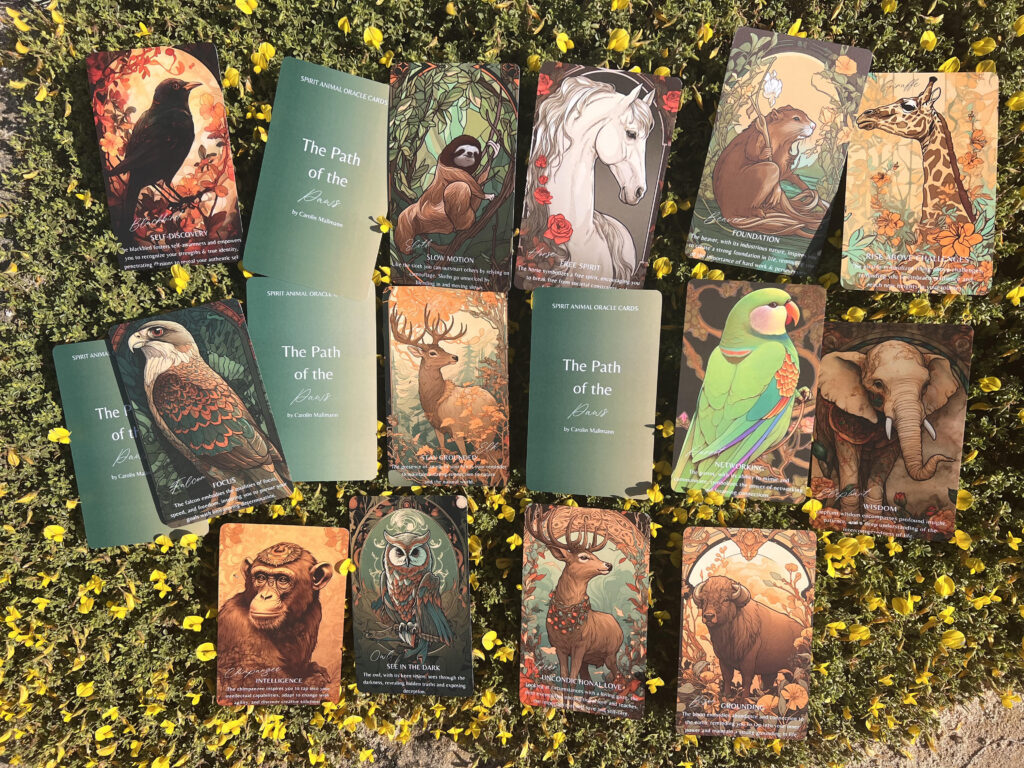
The Shadow of Fox Medicine
The fox is romanticised as the clever one, and that is exactly why its shadow is easy to miss. Its gifts have precise distortions, and this is where an honest reading separates from a flattering one.
- Cleverness turned against yourself. The same peripheral vision that reads a room can be turned inward as self-deception — the endlessly clever story that keeps you from seeing something simple and painful head-on. When the fox in a journey or dream feels sly or untrustworthy, it is often pointing at exactly this.
- Manipulation dressed as strategy. Fox medicine curdles when reading people becomes managing them — staying at the edges not to perceive but to avoid ever being seen or held accountable.
- Living permanently on the edge. The gift of the threshold becomes a trap when you can no longer commit to anything or anyone — forever adaptable, forever uncatchable, at home nowhere. The fox thrives on the edge; its shadow is the person who has forgotten how to come in from it.
How to Journey to the Fox
Shamanic work is not a substitute for medical or psychological care. If you are new to this, begin with the step-by-step guide to finding your spirit animal and return here.
- Come with a specific situation, not a general question. The fox works with particulars. “Help me understand my purpose” will not engage it the way “Help me see what I am missing in this specific situation” will. Bring the labyrinth, not the open field.
- Journey at the edge of things. Move toward the edges of environments — where forest meets clearing, land meets water, light meets shadow. This is the fox’s natural territory in the spirit world, and it is most accessible at liminal times like dawn and dusk.
- Follow without directing. The fox will almost certainly begin moving immediately, and not necessarily where you expect. Follow it. It does not take the direct path — it takes the path that reveals something.
- Note what it does with its senses. Watch whether the fox stops to listen, to scent the air, to observe from a distance. These pauses are the message — they point to the faculty you need to develop or the information you need to gather before acting.
The Red Fox: Fire and Perception
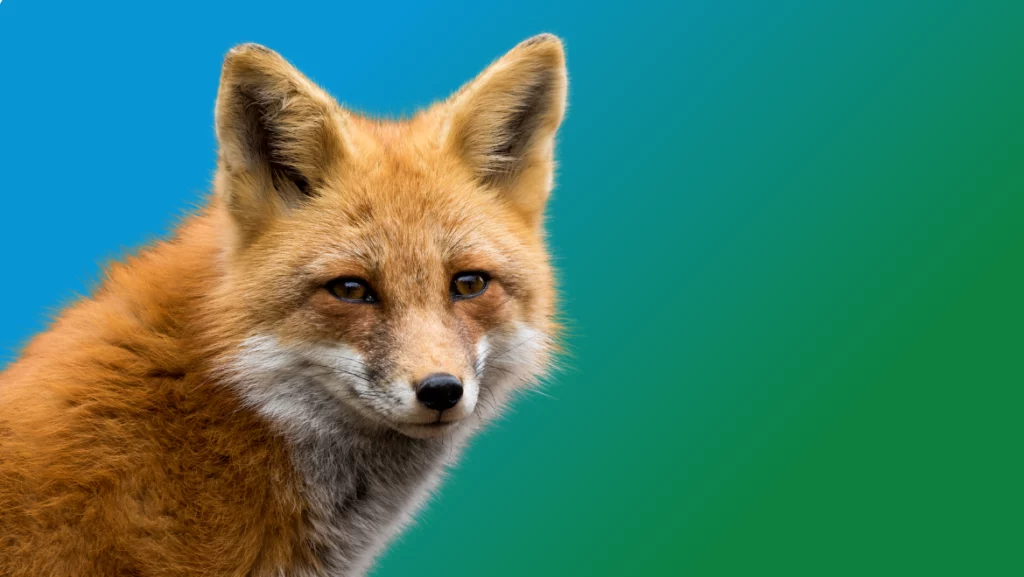
Of all the fox variants, the red fox carries the most concentrated version of fox medicine. Its colour — that particular burnt orange that catches light differently at different angles — is itself significant. Red in shamanic traditions is associated with vitality, with the life force, with the energy that animates. The red fox is not a passive observer; it brings an active, alive quality to the fox’s perceptive gifts — the capacity to not only see what is hidden but to act on it with fire and precision. It is also the fox that has most successfully colonised the human world, and that adaptability is worth noting: the red fox does not require wilderness. It finds its edge wherever it lands and makes that edge into home.

The Fox in Dreams
A fox appearing in dreams is almost always drawing your attention to something you have been missing at the periphery of a situation — something visible but not yet seen, present but not yet acknowledged. A fox watching you from a distance asks you to develop the same quality: to step back from the centre and observe from the edges before acting. A fox moving through your dream without acknowledging you is showing you something happening in your life whether or not you are paying attention to it.
A fox that makes direct eye contact carries the intensity of the Kitsune encounter — something is seeing you clearly, and the question is whether you are willing to be truly seen in return. A fox leading you somewhere should be followed even if you do not recognise the destination; note carefully where it takes you. And if the fox feels threatening or deceptive, do not dismiss it — that is the shadow pointing at self-deception, or at cleverness being used in ways that do not serve you.
Working with Fox Medicine in Daily Life
Practice peripheral attention. Once a day, in a conversation or situation, deliberately shift your focus from the centre to the edges. What is happening in the body language of the person who is not speaking? What is not being said? What is present in the room that everyone is tacitly agreeing not to address? This is the fox’s way of reading the world, and it can be practised directly.
Develop strategic patience. The next time you feel the impulse to act immediately under pressure, wait one full breath cycle before responding. Then another. The fox does not act on the first impulse — it waits until it knows exactly where to move and when.
Honour the dawn and dusk. If the fox has been appearing for you, spend time outside at these liminal hours — even briefly. These are the times when the membrane between ordinary and non-ordinary reality is thinnest, and the fox’s medicine is most accessible.
Affirmations for Fox Medicine
- “I see what is happening at the edges — the information that matters is often not at the centre.”
- “I wait until I know. Then I move with complete commitment.”
- “I am a threshold being — I belong to the space between, and I know how to navigate it.”
Fox Spirit Animal: Questions People Actually Ask
What does it mean when a fox crosses your path?
It usually means something at the edge of a situation is asking for your attention — information you have been overlooking, or a lateral move you have not considered. The fox rarely points at the obvious centre of a problem. When it crosses your path, the question to sit with is: what am I not seeing because I am staring straight ahead?
Is the fox a good or bad omen?
Neither, and that is its nature. The fox is a threshold animal, and its message depends on what it does and where you are. It generally signals that intelligence, timing and perception — rather than force — are what the moment calls for. It only tips toward warning when it appears sly or deceptive, which usually points to self-deception rather than outside danger.
What does a fox in a dream mean?
Read what it is doing. A watching fox asks you to step back and observe before acting. A leading fox should be followed — note where it takes you. A fox that meets your eyes is asking whether you are willing to be truly seen. And a threatening or sly fox is the shadow, pointing at a place where your own cleverness is keeping you from a simple truth.
What is the difference between fox and coyote medicine?
They share the trickster role but move differently. The fox’s cleverness tends toward purposeful, precise navigation — finding the quiet way through. The coyote’s tends toward disruption and the lesson hidden inside chaos. If your guide is the sharper, quieter strategist, that is fox; if it is the one blowing your plans up to teach you something, read the coyote spirit animal next.
If the fox has been circling your life, treat it as an invitation to read the edges rather than force the centre. To meet the wider range of guides, explore the A–Z spirit animal guide, or sit with the Path of the Paws oracle deck and let the fox find you.