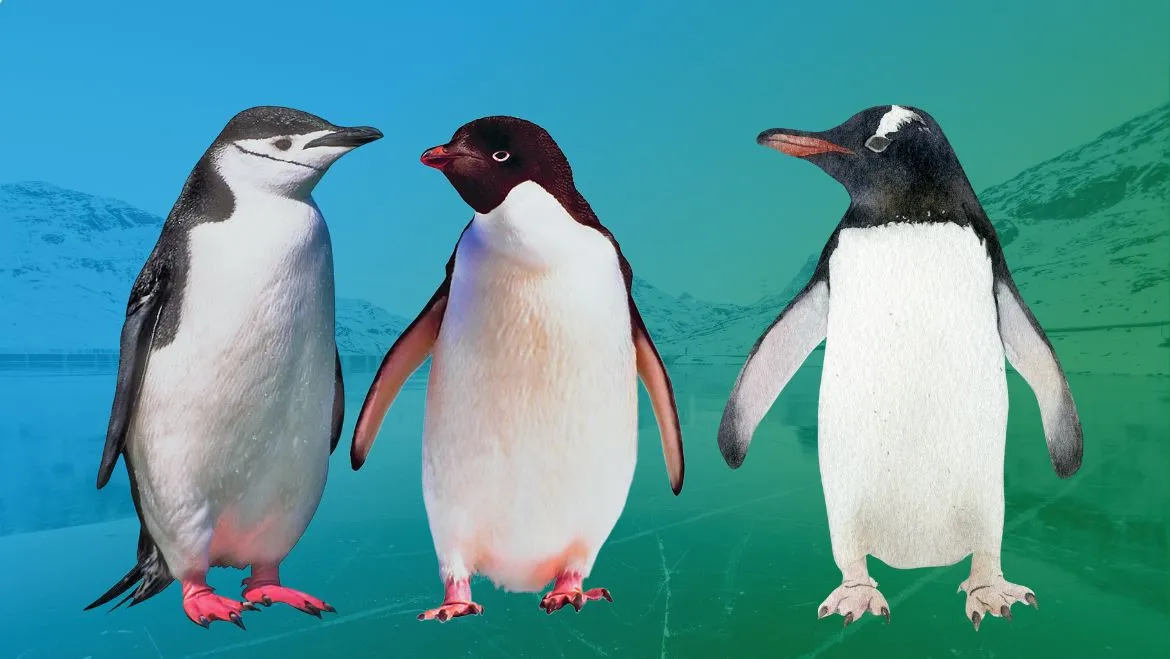
The penguin is one of the few animals people are embarrassed to have met. They come back from a journey and say it almost apologetically — it was a penguin — as though they had been hoping for a wolf and got a cartoon. And then they describe what it was actually doing, and the room goes quiet. Because the penguin they met was not sliding on its belly. It was standing in the dark, in a wind that would kill a human being in minutes, not moving, holding something on its feet.
This page is not about species, habitat and diet. It is about the penguin spirit animal — what it means when this bird keeps arriving, in dreams, in journeys, at a time in your life that is colder than you are letting on.
In my practice, the penguin does not come for people who need cheering up. It comes for people who are enduring something long, unglamorous and unfinished — and who have decided, somewhere along the way, to do it by themselves.
The Bridge: What the Real Bird Teaches About Penguin Spiritual Meaning
Nothing about this animal is decorative. Every symbolic claim below is load-bearing, and it rests on what the emperor penguin actually does.
- It traded flight for depth, and its bones prove it. Most birds have hollow bones. The penguin’s are dense and solid — heavy, so it can sink. That weight is why an emperor can dive beyond five hundred metres and hold its breath for twenty minutes. It can go where no other bird can go because it accepted a weight it can never put down. Read that twice if you are carrying something.
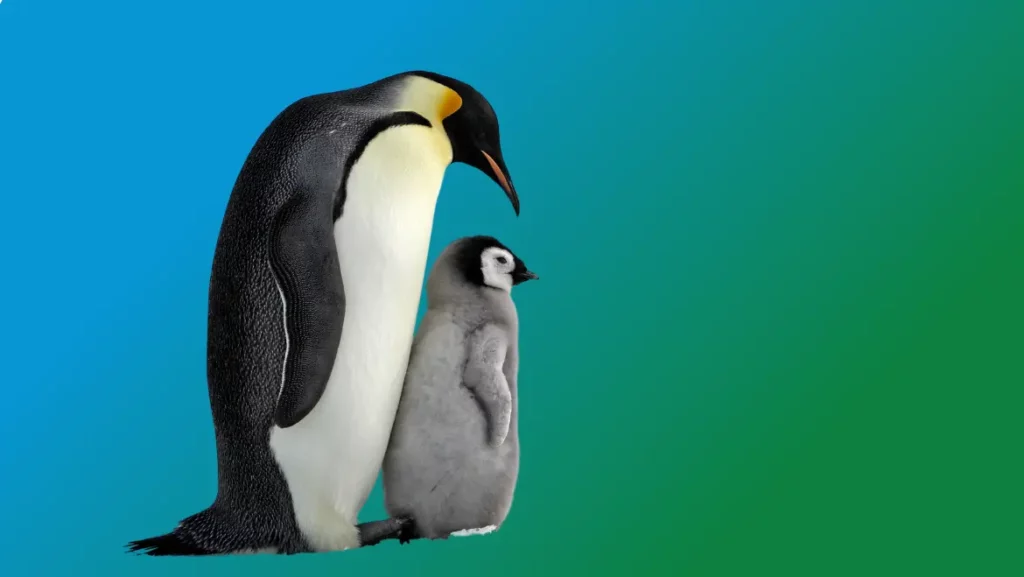
- The male incubates in the dark, on his feet, without eating. The female lays a single egg and returns to the sea. The male balances that egg on his feet under a fold of skin and stands through the Antarctic winter — roughly sixty-five days, in temperatures down to minus forty, in near-permanent darkness — fasting the entire time and losing a large share of his body weight. He does not build anything. He does not achieve anything. He stands, and he holds, and that is the whole job.
- The huddle is not a metaphor. It is a heat engine. Thousands of birds press together; inside the huddle it can reach body temperature while outside the wind is lethal. And it moves — in slow travelling waves, every few seconds, so that birds on the freezing windward edge are gradually carried into the warm interior and out again. Nobody is stationed at the edge forever. Nobody owns the middle.
- If the egg touches the ice, it dies in seconds. The handover from female to male is the most dangerous moment of the year. What the penguin is protecting is not protected by strength. It is protected by not fumbling.
So: an animal that gave up the sky, took on weight, stands in the dark without eating, holds one fragile thing on its feet for two months, and survives only because it is willing to move both into and out of the warm centre. That is the penguin. The tuxedo joke can wait.
The Huddle: Reciprocity, Not Rescue
Most human writing about community is about being supported. The huddle is not about being supported. It is about rotation — and the rotation is the entire teaching.
There is no penguin who heroically stands at the windward edge so that the others can be warm. There is also no penguin who sits permanently in the middle. The bird that has just been warmed drifts out and takes the wind; the bird that has been freezing is carried inward. Warmth is not distributed by merit, or by need, or by anyone’s decision. It is distributed by movement.
The two failures I see most often in people carrying this medicine are mirror images. One is the person who will only ever be at the edge — the giver, the reliable one, the one who is always taking the wind for everybody and quietly dying of it. The other is the person who has been in the warm interior of a group for years without noticing that someone else is out in the dark holding it up. The penguin’s question is not “are you supported.” It is: are you in the rotation, in both directions?
Penguin Symbolism Across Traditions
Here honesty matters more than volume. The penguin has almost no presence in the great mythological systems — no Norse penguin, no Celtic penguin, no Egyptian penguin. It lives where almost no humans have ever lived. Anyone who hands you an ancient penguin legend is very likely inventing it, and I would rather write less and write it true.
What does exist is this. Among the Māori of Aotearoa, the little blue penguin — the kōrarā — belongs to the coastal world of Tangaroa and appears in place names and traditional knowledge of the shoreline; the yellow-eyed hoiho is a taonga species, a treasure with its own obligations of care. Among coastal Fuegian peoples of Tierra del Fuego — the Yaghan and the Selk’nam — penguins were part of the actual world of hunting and survival in the far south. And in the Færoes and the north Atlantic, the bird that carried this shape and this name for European sailors was the great auk, which was called a penguin long before anyone met a real one, and which we hunted to extinction in 1844.
That absence of ancient myth is itself the penguin’s message. This is not an animal that arrives clothed in centuries of borrowed meaning. It arrives naked, from the coldest place on earth, with a body that tells you everything it knows. You cannot look this one up. You have to watch what it does.
The Shadow: When Endurance Becomes an Identity
This is the section the penguin articles never write, because the bird is charming and the truth is not.
- The fast that never ends. The male penguin starves for two months — and then it stops. He hands over, he walks to the sea, he eats. The human distortion is the fast with no end date: the person who has been holding on, going without, standing in the dark for so long that the enduring has quietly become who they are. If you cannot say when your winter ends, you are not being resilient. You are stuck. The penguin fasts. It does not starve on principle.
- Standing outside the huddle and calling it strength. A penguin alone in the Antarctic wind dies, and it does not die nobly — it just dies. The most common penguin distortion I encounter is the highly capable person who has stopped asking for anything, has told nobody how bad it is, and has confused being cold with being strong.
- The crush of the huddle. The other direction is real too. Huddles can press so tight that birds are trampled. Some communities — families, congregations, teams, marriages — keep you warm by not letting you leave, and the warmth is genuine and so is the crushing. Not every huddle is good. Ask whether yours moves.
- The dropped egg. The hardest one, and I will say it plainly: penguins that lose an egg or a chick have been observed attempting to take another’s. Grief that has nowhere to go reaches for a substitute. In people this is the second child expected to replace the first, the new partner slotted into the shape of the last, the project loaded with a meaning it never asked for. If the penguin has come to you in loss, it is not asking you to be brave. It is asking what you are about to pick up that is not yours.
A penguin that appears alone in a recurring dream, on ice, in wind, is rarely a threat and almost always a diagnosis — isolation the dreamer has chosen and is describing as independence. A penguin that appears drowning, oiled, or unable to reach the water tends to arrive when a person has been cut off from the one thing that actually restores them, and has been managing without it for far too long.
How to Journey to the Penguin
Shamanic work is not a substitute for medical or psychological care. If you are new to this, begin with the beginner’s guide to shamanic journeying before attempting the practice below.
- Name the winter. Out loud, before the drum: what is the long cold thing you are currently standing in? The illness, the caring, the waiting, the work that has no visible end. The penguin does not respond to vague requests. It responds to a named season.
- Journey to ice, at night, with wind. Do not soften the landscape. If you arrive somewhere pleasant, you are not in penguin territory yet.
- Find the huddle, and notice where you stop. Almost everyone stops. Note the exact distance at which you halt, and what you feel there. That distance is the honest measure of how far you have moved from the people who would warm you.
- Go in — and then let yourself be carried back out. This is the step people skip. Entering the warmth is only half the medicine. Feel yourself drift to the windward edge and take the cold for someone else. A penguin journey that is only about receiving has not finished.
- Look at your feet. Ask the penguin to show you what you are currently balancing on them — the one fragile thing you are keeping off the ice. Look at it. Ask whether it is still alive, and whether it is still yours to hold.
- Ask for the date. “When does this winter end, and what will I do on the first day of the sea?” Even an approximate answer changes the nature of the endurance.
- Do one thing within a day. Tell one person, honestly, how cold it has been. That is the practice. Everything else is commentary.
If you are not yet sure which animal is walking with you, work through the A–Z spirit animal guide or sit with the Path of the Paws oracle deck — and if endurance in the cold is the theme of your year, the polar bear carries the solitary version of the same winter.
Affirmations for Penguin Medicine
- “I am allowed to be warmed. Needing the huddle is not a failure of character.”
- “I take my turn at the edge, and I let myself be carried back in.”
- “This winter has an end. I am fasting, not starving.”
Penguin Spirit Animal: Questions People Actually Ask
It means you are in a long winter, and how you are carrying it matters more than whether you can bear it. The penguin does not ask for endurance — you already have that. It asks whether you are in the rotation: giving warmth and also receiving it. In my practice this animal almost always arrives for people who are managing something difficult alone and calling that strength.
Read the temperature and the company. A huddle of penguins points to warmth that is available to you and that you are not currently taking. A single penguin alone on ice is the isolation dream — and the question it asks is whether you are outside the huddle by circumstance or by decision. A penguin holding an egg on its feet points to something fragile in your keeping that you have told no one about.
It is a demanding one, and it is not the cheerful sign people expect. The penguin arrives with the cold already in progress. What it brings is not rescue but a method: hold the fragile thing, stay in the rotation, know when the fast ends. That is good news only if you are willing to stop doing it alone.
The penguin did not fail to fly. It exchanged flight for solid, heavy bones, and those heavy bones are precisely what let it dive further than any other bird. The medicine is exact: the weight you carry is not the reason you cannot rise. It is the reason you can go deep. Stop apologising for it.
Two moves, in both directions of the rotation. Offer real warmth to one person you have not supported lately — not a message, something that costs you. Then ask for something real from someone able to give it, in the one area where you have been standing outside the huddle. The penguin’s practice is not endurance. It is reciprocity, done deliberately, twice.
An Ethos of Respect
The exploration of animal symbolism is a bridge between our modern lives and the older wisdom of the natural world, and we walk it with respect for the traditions it touches. The term “spirit animal” has specific and profound roots in a number of Indigenous cultures, and we use “animal guide” or “kindred spirit” wherever we are describing a personal connection rather than a cultural practice. Our aim is an intuitive and honest relationship with the animal world — celebrating what nature teaches, without appropriating ceremonies that are not ours to hold. If you would like a structured way in, begin with how to find your spirit animal.
The penguin will not tell you the winter is nearly over. It will tell you that you were never supposed to stand in it alone.