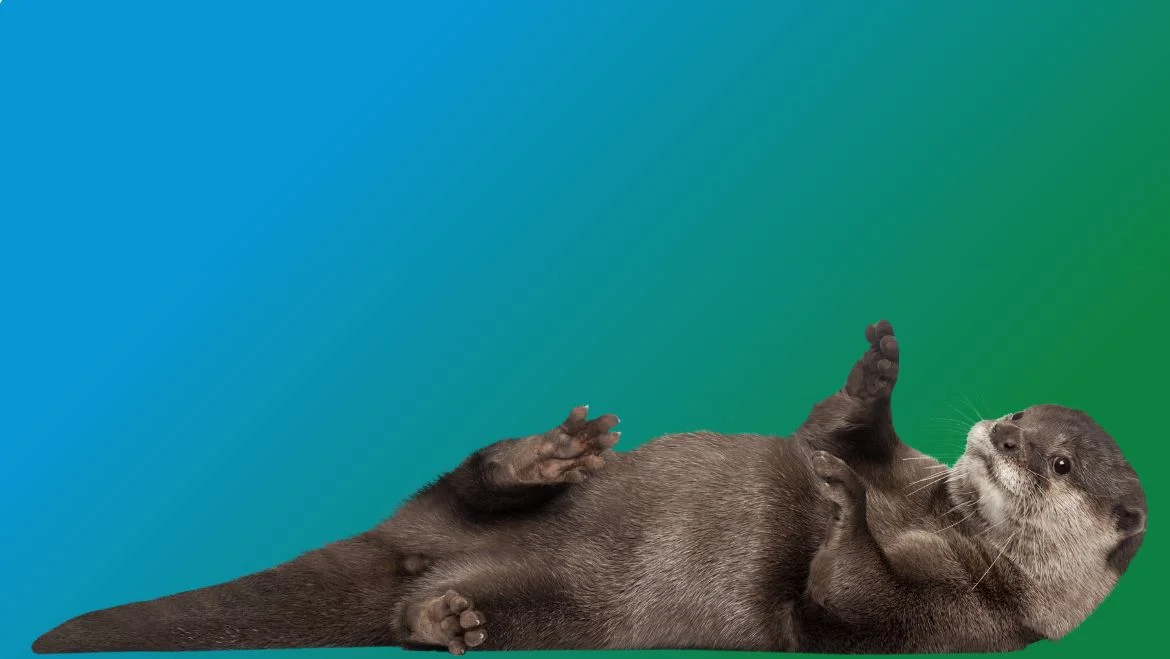
The otter arrives on a journey the way it moves through water — rolling, turning, unhurried, apparently delighted by the whole business of being alive. People almost always smile when it comes, and then feel faintly embarrassed by how good it makes them feel. And then, if they stay, they notice something underneath the play: a complete, unwavering competence. The otter is not being frivolous. It is doing serious work, and it happens to look like joy.
This page is about the otter spiritual meaning — what it means when this bright, playful creature keeps appearing in your dreams, your journeys, or at the edges of an ordinary week. It is not a page about river ecology. If you came for animal facts, you are in the wrong place. If the otter has been surfacing in your inner life, stay.
In my practice, the otter does not arrive for people who need to lighten up in some vague way. It arrives for people who have quietly filed joy under “later” — who have decided that play is what you earn once the serious work is finally done, and have therefore never once let themselves have it.
The Bridge: What the Real Animal Teaches About the Otter Spirit Animal
Honest animal medicine begins with the living creature, and the otter’s is more disciplined than its reputation suggests.
- Its play is not idleness — it is training. Otters slide, wrestle, juggle stones and chase each other, and every bit of it builds the coordination, bonds and skills that keep them alive. Play is how the otter learns and stays flexible. When it arrives for someone whose life has become all function and no play, the message is not “relax.” It is: you are becoming brittle, and play is the thing that keeps you supple enough to survive.
- It keeps its own tool. A sea otter often carries a favourite rock in a loose pouch of skin under its arm and uses it, again and again, to crack open shellfish. It is one of the few tool-using mammals — and its resourcefulness is entirely practical. Joy and competence live in the same body.
- It holds on so it will not drift apart. Sea otters raft together and hold hands as they sleep so the current cannot separate them. This is the image everyone knows, and it is the heart of the medicine: the otter does not survive alone. Connection is not decoration for it. It is how it gets through the night.
- Its grooming is survival, not vanity. The otter has no blubber; it survives cold water only by keeping its dense fur immaculately clean and full of insulating air. The endless preening that looks like self-indulgence is, in fact, the thing keeping it alive. Not all care of the self is vanity.
Otter Symbolism Across Traditions
Wherever otters live between river and shore, people have read them as helpers of the water — and, in a few traditions, as something more ambiguous.
Celtic and Gaelic tradition: the loyal helper of the water
In Irish and Scottish lore the otter is a benevolent water-creature — in the story of Saint Cuthbert, otters come out of the sea to warm and dry the saint’s feet after his night of prayer in the cold water. Elsewhere a “king otter” with a rare white pelt is said to grant protection to whoever possesses it. The otter here is the friendly intelligence of the water: a helper that moves easily between the human world and the deep, and that tends to arrive when you are cold and depleted.
Norse: the otter and the cursed gold
Norse tradition holds the darker thread. The dwarf Ótr liked to take the shape of an otter, and when he was killed for his pelt, the gods had to fill and cover the skin with gold to pay the ransom — gold that carried a curse and set the whole tragedy of the Nibelung treasure in motion. Read as medicine, it is a warning: the otter’s carefree ease is precious, and it is exactly the kind of thing that greed and carelessness destroy.
Pacific Northwest nations: the otter at the edge of two worlds
Among several Pacific Northwest peoples the otter is tied to laughter, family and the water — and, in some Tlingit and neighbouring traditions, the land-otter beings (the kushtaka) are figures of real caution, said to lure the lost and the drowning away from their own lives with the appearance of comfort. I name this with care, as an outsider: these are living beliefs, not folklore to be flattened. But the shape of it is worth holding — the otter is joyful, and its joy has an edge, because the sweetest ease can also be the thing that carries you away from where you belong.
The Shadow of the Otter
The otter is the most sentimentalised guide there is, which is exactly why its shadow slips past unnoticed for years.
- Performed lightness. The most common otter shadow I meet is the person who is the joy in every room and has not been asked a real question about themselves in years. Relentless good cheer used as a wall. If you are always the fun one, the easy one, the one who never needs anything, the otter is asking who is actually allowed to see you when the play stops.
- Play as avoidance. Its opposite failure. Play is medicine until it becomes the thing you do instead of the hard conversation, the decision, the grief. The eternal child who keeps everything light because weight is unbearable is not free. They are hiding in the shallows.
- Holding on so as not to drift. The hand-holding that keeps otters together is beautiful — until it becomes the grip of someone who cannot bear to be alone for a single night, and mistakes that fear for love. Attachment is the otter’s gift and its trap.
- Lured by the easy current. The kushtaka warning, made personal: the seductive comfort that quietly carries you away from your own life. The pleasant distraction, the soft option, the ease that feels like freedom and is actually drift. A dead or trapped otter in a dream usually points here — to joy that has been stranded, or a lightness in you that has quietly gone under.
How to Journey to the Otter
Shamanic work is not a substitute for medical or psychological care. If you are new to this, begin with the step-by-step guide to finding your spirit animal and return here.
- Ask an honest question first. Not “help me be happier” but: where have I been treating joy as something I have to earn? The otter answers questions about play, connection and the emotional water you live in.
- Enter through moving water. A river, an estuary, a rocky coast. Let a steady drumbeat carry you to the waterline and go in. The otter belongs where water meets land — the seam between the emotional and the everyday.
- Let it play with you. Do not interview it. The otter teaches through movement — follow it, roll with it, let it take you somewhere. Notice the exact moment you feel you “should” be doing something more serious. That moment is the message.
- Watch what it keeps. Ask the otter to show you its stone — the one resourceful, practical thing it carries under its arm. Then ask what your equivalent is: the small competence you already have that would crack the shell you have been struggling with by force.
- Ask who is holding your hand. In the raft, who is beside you so you do not drift in the night? If nobody comes, that is not a failed journey. It is the most important thing the otter had to show you.
- Play on purpose this week. One thing, chosen deliberately, with no outcome, no metric, no usefulness at all. If your first reaction is that you do not have time, that reaction is the diagnosis — and the otter has just done its work.
The Path of the Paws
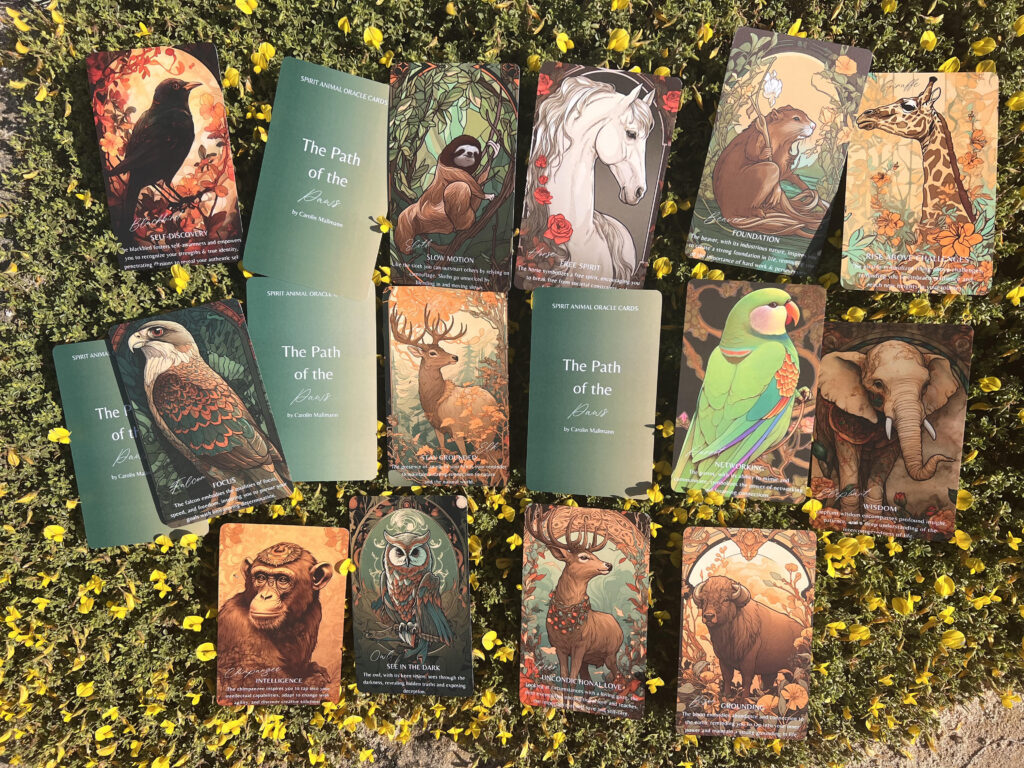
42 hand-illustrated oracle cards, one for each animal guide — drawn from the same practice these articles come from. A way to sit with an animal instead of only reading about it.
Otter Spirit Animal: Questions People Actually Ask
What does it mean when an otter appears in your life?
It usually points to play, joy and connection — and specifically to something you have been withholding from yourself. The otter does not arrive to make you cheerful on the surface. It tends to show up when your life has become all work and no water, and it is asking you to remember that play and rest are not rewards but necessities.
Is the otter a good or bad omen?
Overwhelmingly good — a bright, benevolent, encouraging sign in most traditions where it appears. But it is not toothless. The Norse and Pacific Northwest threads remind us that carefree ease is precious and can be lost, or can quietly carry you away from your own life. It is a good omen that asks you to protect your joy rather than squander it.
What does an otter in a dream mean?
Watch what it is doing. A playing otter is usually a call to bring more lightness and connection into your life. Otters holding hands or rafting together points to your relationships and whether you are letting yourself be held. A stranded, trapped or lifeless otter is the one to take seriously — it points to joy that has been beached, or a lightness in you that has gone under.
What is the spiritual meaning of otters holding hands?
Sea otters hold hands so the current cannot separate them while they sleep — and as a symbol it speaks directly to attachment, trust and the refusal to face the night alone. Its healthy form is genuine connection; its shadow is a grip born of fear. The otter asks which one you are living, honestly.
How do I know if the otter is my spirit animal?
It tends to claim people who are playful, warm and community-minded — and, very often, people who use lightness to keep others at a comfortable distance. Look for repetition you cannot explain away. To work with it deliberately, walk through the A–Z guide to spirit animals, sit with the Path of the Paws oracle deck, or read the dolphin spirit animal next if joy and the emotional deep are the thread you are pulling on.
Is the Otter Your Spirit Animal?
Check the boxes that resonate with your spirit and current life journey.
The otter will not tell you to stop working. It will show you that the animal who plays hardest is also the one who never drifts alone in the dark — and ask, gently, when you last let yourself do either.