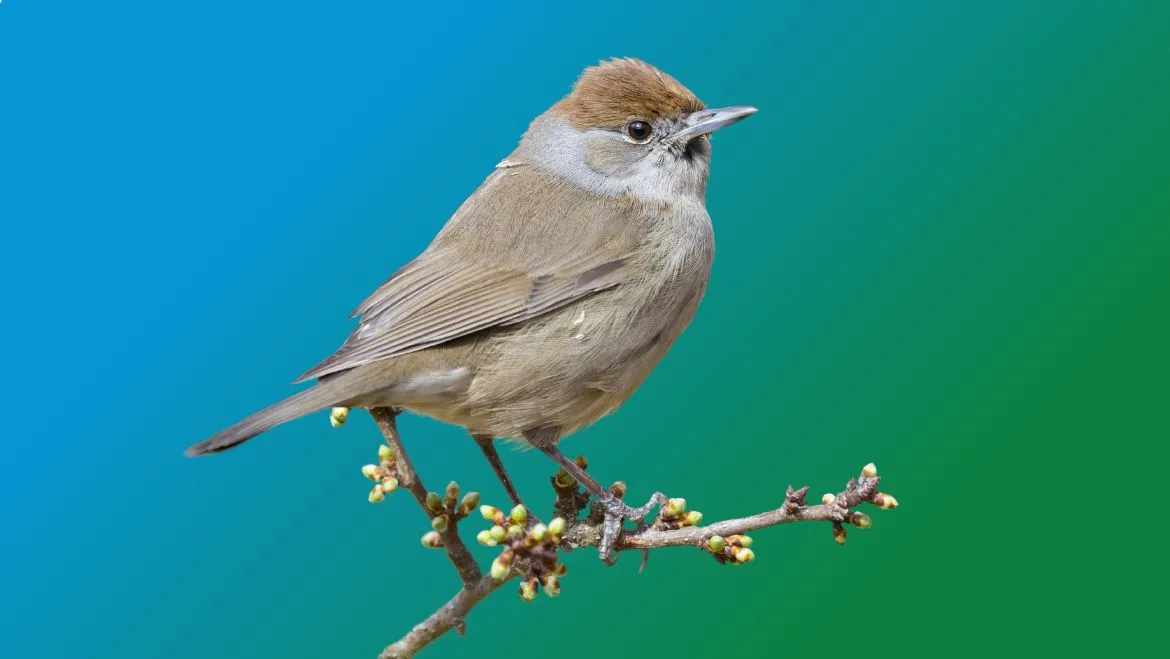
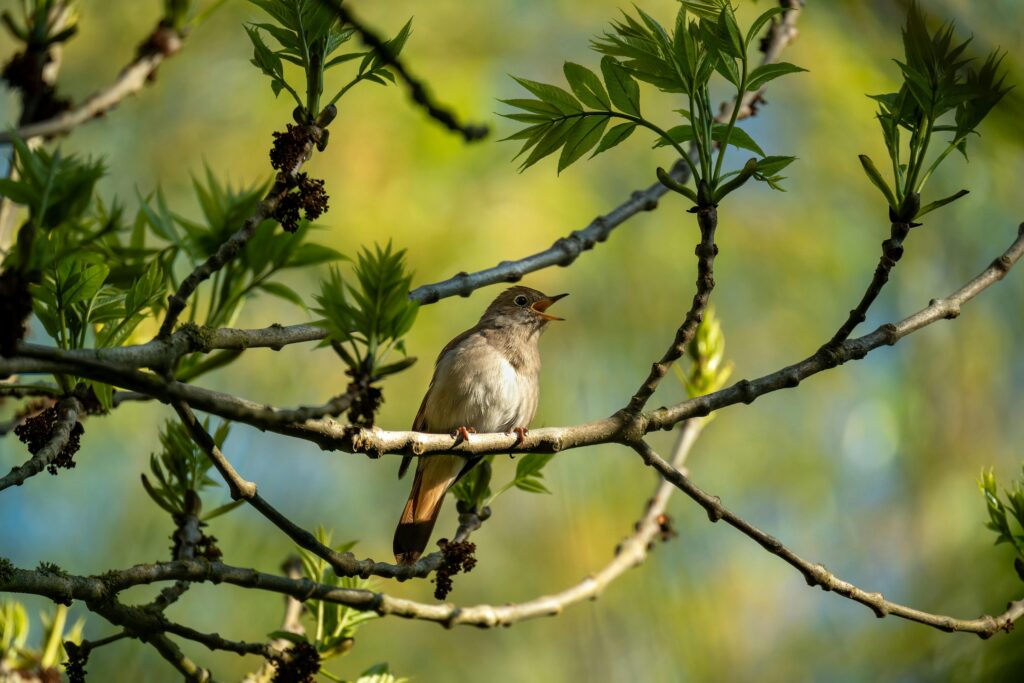
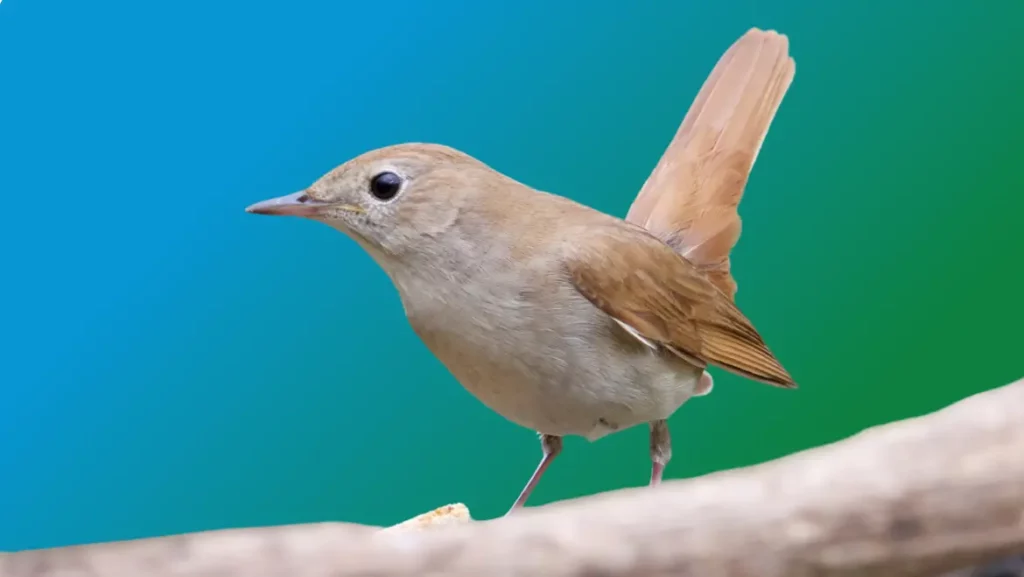
You almost never see the nightingale first. You hear it — a torrent of song pouring out of a dark thicket at an hour when every other bird has gone silent. And when people meet it in a journey, they report the same surprise: they went looking for something dazzling to match the voice, and found a small, plain, brown bird that could easily be mistaken for a sparrow. The whole of it is in the sound. Nothing is in the display.
This page is about the nightingale spiritual meaning — what it means when this bird keeps arriving in your dreams, your journeys, or in a stretch of your life that has gone dark and quiet. It is not about birdwatching. In my practice, the nightingale arrives for people who have something to say and have been saying it only to themselves — the ones with a real voice, a real song, who have decided the conditions are not yet right to let it out. It is the guide of the expression that has been held back, and it does not arrive gently.
The Bridge: What the Real Bird Teaches About the Nightingale Spirit Animal
Everything the nightingale means comes out of what the real bird actually does, and each fact carries the medicine more precisely than the poetry does.
- It sings in the dark. Very few birds do. The nightingale pours out its fullest song at night, into conditions where it cannot be seen and where most creatures have fallen silent. It does not wait for the light to be heard. If your voice has been waiting for better circumstances, easier rooms, a more receptive audience, the nightingale has already made the opposite choice: it uses the darkness itself as the medium that carries the sound furthest.
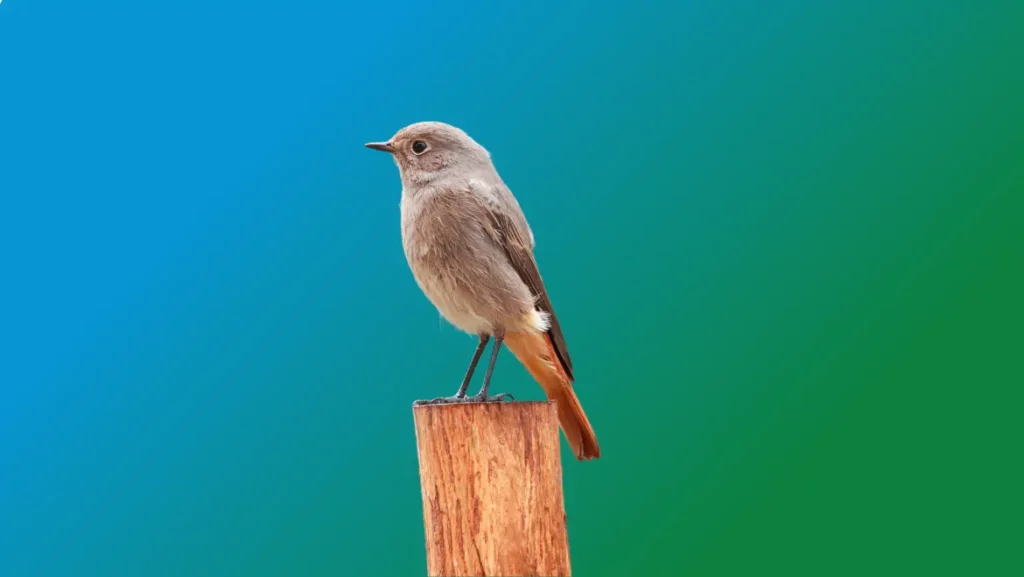
- Its plumage is unremarkable, and that is the point. A drab, brown, easily overlooked bird carries one of the most complex voices in nature. The nightingale is heard for what it says, not seen for how it looks. This is the guide of everyone whose gift is not visual, not obvious, not the kind that photographs well — and who has been quietly overlooked in favour of showier things.
- Its song is built, not inherited. A male nightingale develops a vast repertoire — many dozens of distinct song types, recombined and improvised, learned and refined over its life. This is a voice that is composed, not simply switched on. Originality, in this bird, is a practice, not a birthright — which is worth knowing for anyone who believes their creativity is either innate or absent.
- It sings louder against the noise. Nightingales in noisy places have been found to raise their volume to be heard over the din. It does not give up when the world is loud, and it does not simply repeat itself — it insists, more clearly. The response to a world that is not listening is not silence. It is a clearer song.
Put these together and the sentimental “beautiful singer” fades. What is left is a plain bird that declares itself in the dark, to no audience, in a voice it built itself, and sings louder rather than quieter when nothing seems to be listening.
Nightingale Symbolism Across Traditions
Greek: Philomela, and the voice reclaimed
The oldest and darkest thread is the Greek myth of Philomela, who was silenced by a brutal act meant to keep her from speaking the truth of what was done to her — and who, in the end, was transformed into a nightingale and found her voice again in song. I mention it carefully, because it is a story about violence and silencing, and it is not decorative. But it is the deepest root of this bird’s meaning: the nightingale is the voice that could not be permanently silenced — the truth that finds a way to be sung even after someone tried to take the speaking of it away. When this bird arrives for a person who has been silenced, that lineage is doing the work.
Persian and Sufi: the nightingale and the rose
In Persian poetry the bulbul, the nightingale, sings its heart out for love of the rose — an image that Sufi tradition reads as the soul’s yearning for the divine. The song is longing made audible; the beauty of it comes from the ache underneath. Here the nightingale teaches that real expression is not performance — it is longing given a voice, and that the most moving thing you can say is usually the thing you most ache to say.
The living song and the mechanical one
In Hans Christian Andersen’s tale, an emperor sets aside a real nightingale in favour of a jewelled mechanical one that sings the same song on demand — until he is dying, and only the living bird, returning freely, can sing him back toward life. The teaching is exact and it is the nightingale’s warning to anyone whose voice has become a product: a song that is performed to order is not the same as a song that is freely given, and only the living one heals.
Across all of them the nightingale is the same animal: the voice that sings from longing, in the dark, and cannot finally be silenced or faked.
The Shadow: When the Song Will Not Come, or Will Not Stop Performing
A guide this closely tied to the voice has a shadow that lives, precisely, in the throat.
- The bird that will not sing. This is the most common form I meet. A person carries the nightingale’s gift — they have something genuinely their own to say — and they have decided the conditions are not right yet. Not this room, not these people, not this year. The shadow is not silence forced from outside; it is silence chosen and then rationalised, until “I’ll speak when it matters” has quietly swallowed a decade.
- The song tuned to applause. The opposite distortion, and Andersen’s mechanical bird made real: the voice becomes performance, calibrated entirely to the response it gets. If you can no longer tell whether you believe what you are expressing — whether you are singing your longing or singing for the room — this is where you are.
- Beauty used to avoid contact. A voice this lovely can become a way of never being truly reached. Expression that is always graceful, always composed, never raw, can be its own kind of hiding — admired at a distance, and never actually met.
- Longing that has curdled into melancholy. The nightingale’s song comes from ache, and the shadow of that is a person who has become attached to the sadness itself — who sings the wound so beautifully, and so often, that the wound is no longer moving toward anything. Longing is meant to point somewhere. When it only circles, it has stopped being medicine.
A nightingale that appears caged in a recurring dream is one of the clearest images this bird produces — a voice built for open thickets kept in a box, and it usually points to a situation, a role, or a relationship in which the person’s expression has been shut in. A nightingale that is silent, or cannot sing tends to arrive when someone has swallowed a truth for so long it has stopped struggling to get out. And a nightingale singing in the dark while the dreamer is afraid is one of the most hopeful: something in you is ready to be voiced, precisely now, in the hard part, and the dream is confirming it.
How to Journey to the Nightingale
This practice is tied to the hours the bird itself uses. Do it after dark if you can. Shamanic work is not a substitute for medical or psychological care; if you are new to this, begin with the beginner’s guide to shamanic journeying.
- Set the intention as a confession, not a request. Say aloud: “There is something I have not sung. Show me what it is.” The nightingale responds to honesty about what has been withheld, not to a wish to be more confident in general.
- Enter through a dark thicket at night. Not open sky, not daylight. Dense cover, low light, the hour when everything else has gone quiet. This is the nightingale’s working condition, and your journey should meet it there.
- Listen before you look. Do not search the branches for the bird. Wait until you hear the song, and only then find its source. Reversing this order matters more than it sounds — the voice comes first, the sight second.
- Ask it to sing your sentence. Ask the nightingale to sing the thing you have not been able to say. Do not translate it while it sings — let it be sound first, and notice where you feel it in your body.
- Ask what it costs, and what it costs not to. “What happens if I say it — and what has it already cost me to keep it in?” The nightingale does not promise the singing will be safe. It only tells you the hour is right.
- Afterwards, say one true sentence out loud, to one person. Not the whole truth — one sentence. The nightingale does not sing a finished symphony; it sings a phrase, waits, and sings another. If you have been waiting for the courage to say everything at once, you have misunderstood the bird.
If it is the voice at the threshold rather than the voice in the dark that you recognise, the blackbird spirit animal carries a closely related medicine — song sung at dawn and dusk rather than in full night. For a structured way to test which guide is with you, work through the A–Z spirit animal guide or sit with the Path of the Paws oracle deck and let the animal find you.
Nightingale Spirit Animal: Questions People Actually Ask
What does it mean when a nightingale appears to you?
It almost always points to something unsaid — a truth, a creative work, a feeling you have been holding in. The nightingale sings in the dark, and it tends to arrive when you are in a dark stretch yourself and have been keeping quiet. Its message is not “be more confident.” It is that your voice carries further right now than you think it does.
Is the nightingale a good or bad omen?
Overwhelmingly a hopeful one — across traditions it is the bird of song, love, and the persistence of beauty in dark times. But it is not a passive omen. The nightingale brings the reminder that beauty and truth can be voiced in the hardest hours, and then it waits to see whether you will actually sing.
What does a nightingale in a dream mean?
Read what is happening to its voice. A singing nightingale usually points to something in you ready to be expressed. A silent or caged one points to a voice that has been shut in — a truth held down until it stopped fighting. A nightingale singing in the dark while you are afraid is a confirmation: now is the hour to speak, precisely in the difficult part.
What is the difference between the nightingale and the blackbird spirit animal?
Both are plain-looking birds with extraordinary voices, and both carry the medicine of expression. The blackbird sings at the thresholds of the day — dawn and dusk, the in-between hours. The nightingale sings in full darkness. If the bird that came to you sang at the edges of the day, read the blackbird; if it sang deep in the night, it was the nightingale.
The nightingale does not wait for the light, and it does not wait for an audience. It sings from the dark thicket because the song is true and the hour is now — and it is asking you, quietly, what you have been keeping in your own throat.