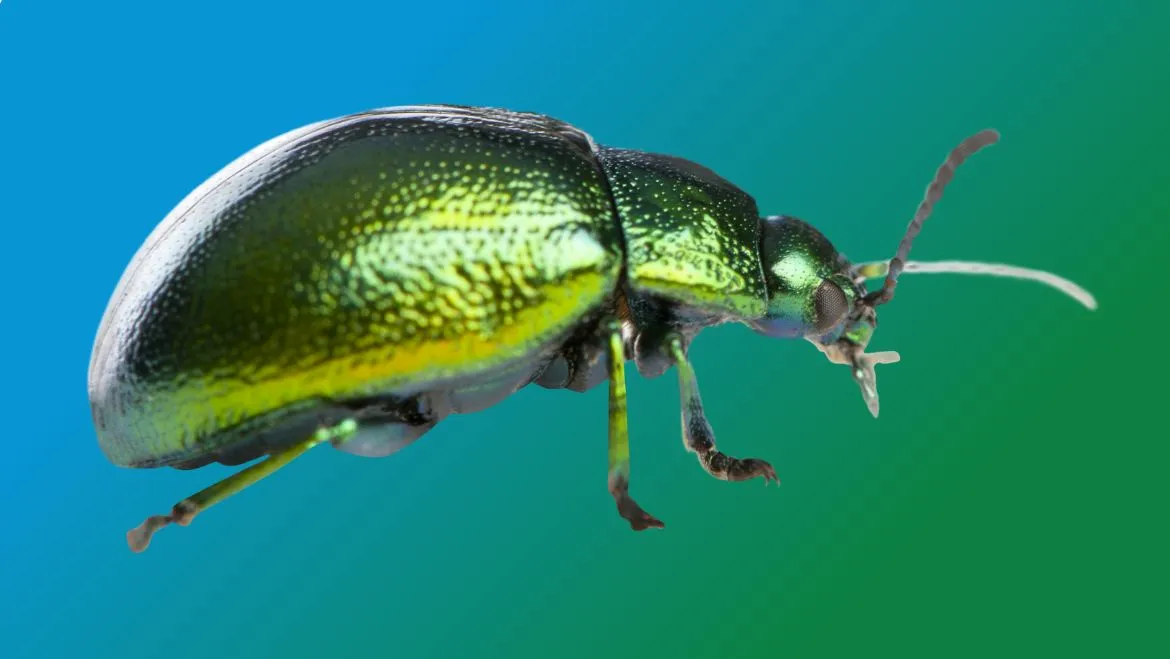
The insect world does not arrive in a journey the way a wolf or a bear does. It arrives as a texture — a dry rustle at the edge of the dark, a many-legged patience, the sense of being watched by something too small to command fear and too old to dismiss. Almost everyone flinches first. Then, if they stay, they notice the insect is not interested in them at all. It is simply working, the way it has been working for longer than anything with a spine has existed.
This page is about the bug spiritual meaning — what it means when insects keep appearing in your dreams, your journeys, on the wall you have walked past a hundred times and suddenly cannot ignore. It is not about entomology. If a beetle, an ant, a moth, or a whole swarm has been turning up and you want to know why, stay.
In my practice, the bug tends to arrive for two kinds of people. The first have been overlooking the small, repeated, unglamorous work their whole life is quietly built on, waiting for something grand enough to be worth their attention. The second have been buried by exactly that small work — a hundred tiny things, none of them large enough to name, all of them together too much to carry. The insect is the guide of the small. It comes when the small has become the whole story.
The Bridge: What Insect Biology Teaches About the Bug Spirit Animal
Symbolism that is not anchored in the real creature is decoration. And the real insect is stranger, older, and more instructive than almost anything else alive.
- It wears its structure on the outside. An insect has no internal skeleton; the exoskeleton is armour, shape and support all at once, and to grow the creature must periodically split it open and climb out, soft and defenceless, until a new shell hardens. The medicine is exact: there is no growth without a period of being unarmoured. Whatever has been holding you together may also be what you now have to shed.
- Many insects do not grow up. They dissolve and re-form. In complete metamorphosis the larva does not sprout wings — it breaks down into an undifferentiated interior and is rebuilt into a different creature entirely. If you are in a phase that feels less like progress than like coming apart, the insect is the oldest witness there is to the fact that dissolution and transformation are the same event.
- No single one matters; the collective is everything. No ant builds the colony. No bee makes the hive. Insects accomplish enormous things through small, identical, endlessly repeated acts. Their teaching is the reverence our culture refuses to give: that the humble, invisible, repeated effort is not lesser work — it is the work that actually holds the world up.
- They are the oldest and the most necessary. Insects have been here for some 400 million years — longer than flowers, longer than reptiles, far longer than us — and life as we know it collapses without them: pollination, decomposition, the base of nearly every food web. The creature you swat is quietly running the machinery you depend on. Being overlooked and being essential are, for the insect, the same condition.
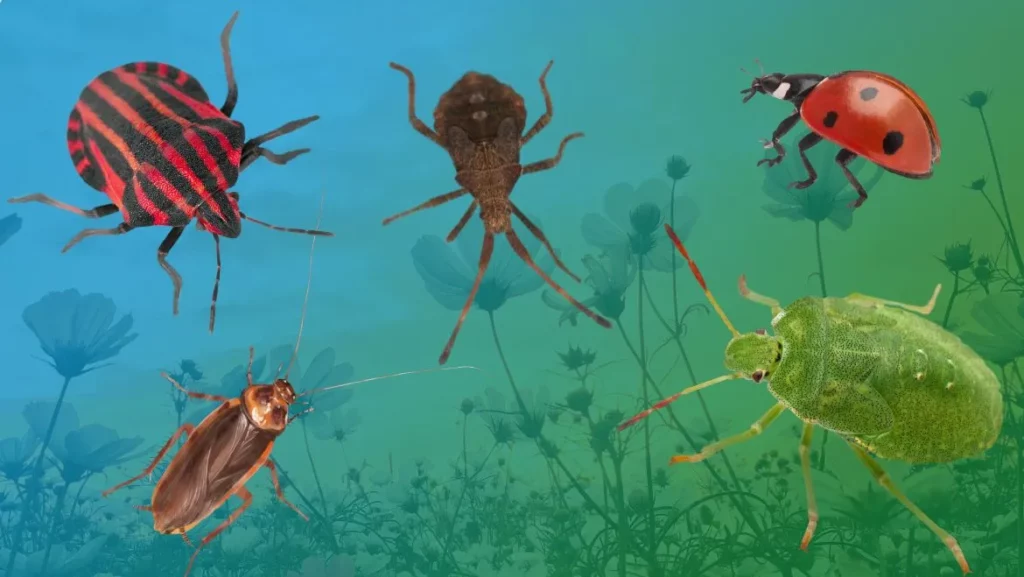
Bug Symbolism and Spiritual Meaning Across Traditions
Because insects are everywhere humans have ever lived, almost every culture that noticed them reached for the same handful of meanings — and the consistency is what makes them archetypal rather than merely local.
Ancient Egypt: the scarab and the rolled sun
The dung beetle, rolling its ball across the sand, was read by the Egyptians as the mirror of Khepri, the god who rolls the sun across the sky each morning. The scarab became one of the most enduring amulets in the ancient world — placed over the hearts of the dead — precisely because a lowly beetle, working in the dirt with something everyone else discarded, was understood to be turning waste into renewal. There is no grander statement anywhere of the insect’s central teaching: the sacred is being done, right now, by the thing you find beneath you.
Greece and China: the cicada and the song of return
The cicada, which spends years underground before emerging to sing and die, carried the theme of resurrection in both the Greek and Chinese worlds. In Greece it was linked to immortality and to poetry — the tireless voice that keeps singing. In ancient China, carved jade cicadas were placed on the tongues of the dead to promise rebirth, and the living cricket was kept for luck and for its courage. The insect that lives most of its life in the dark and unseen, then sings, is the patron of everyone whose long buried work has not yet been heard.
The bee: sacred labour across the ancient Mediterranean
From the priestesses of Artemis at Ephesus, who were called melissae — bees — to the honey offered to the dead across Egypt, Greece and the Near East, the bee was the insect raised to the highest place: an emblem of ordered community, of sweetness produced through collective devotion, of a society in which the individual serves the whole without being erased by it. The bee is the redemptive answer to the swarm’s shadow, which we will come to.
The ecological teaching: the indispensable and the ignored
Beneath all the mythology sits one plain fact the traditions were circling: insects do the work no one watches. They pollinate, they decompose, they feed nearly everything else. A world without lions would grieve; a world without insects would end. That is the bug’s deepest medicine, and it is aimed with unusual precision at people who have been made to feel small: you are not being asked to become visible in order to matter. You already matter, in exactly the ways no one is looking at.
The Shadow: When the Small Things Swarm
The bug has one of the most physical shadows of any guide, and it does not arrive as one large threat. It arrives as many small ones.
- Being overwhelmed by the small. The most common distortion I encounter is the person who is not defeated by one catastrophe but eaten alive by a hundred tiny demands — emails, obligations, minor emergencies — none of which can be refused because none is big enough to justify refusing. Insects in a nightmare, crawling, multiplying, covering a surface, very often track exactly this: not one problem, but the swarm of small ones that has quietly become unbearable.
- The thing that "bugs" you. The word is not an accident. A single insect you cannot locate — the mosquito in the dark room, the fly you cannot get out — is the perfect image of the low, nagging irritation you have refused to name and deal with directly. It will not let you sleep until you turn on the light and look at it.
- Losing yourself in the colony. The insect’s genius is collective, and its shadow is dissolution into the collective — the person who has no idea what they want because they have only ever known what the hive wants. Belonging is real medicine. Disappearing into the group is not the same thing.
- Infestation as an inner image. Recurring dreams of insects in the walls, under the skin, in the house, usually point to something the dreamer knows is spreading and has decided not to look at — a resentment, a habit, a truth breeding quietly in the structure of a life. The bug is in the house because something has been left in the dark long enough to multiply.
How to Journey to the Bug Spirit Animal
Shamanic work is not a substitute for medical or psychological care. If you are new to this, start with the beginner’s guide to shamanic journeying before attempting the practice below.
- Name which it is before you begin. Not "help me feel calmer" but: am I ignoring the small work that matters, or am I being buried by the small things that don’t? The insect answers that question with unusual directness, but only if you ask it.
- Descend, and go small. Enter the Lower World through soil, a crack in stone, the roots of a tree — and then allow yourself to shrink until the insect world is at your scale. This animal will not meet you as a giant looking down. It meets you when you are the same size as it is.
- Let the specific one come. Do not go looking for "a bug." Wait, and see which insect actually arrives — ant, beetle, bee, moth, spider, dragonfly. The species is the message, and the one that comes is rarely the one you would have chosen.
- Watch what it is doing, not what it looks like. Building, carrying, digging, waiting, transforming, swarming — the behaviour carries the teaching. Resist the urge to interpret while you are still in the journey.
- Ask one question on the way out: what small thing, done faithfully, would change everything — and what small thing am I letting breed in the dark?
- Integrate within a day. Do one small, humble, repeatable thing — or turn on the light and deal with the one irritation you have been swatting away for weeks. Insect medicine that stays in the journey does not take root.
Which Insect Came to You?
The bug speaks through specifics. If a particular insect has been insisting on your attention, its own medicine is the actual message.
- Ants speak to community, coordination, and the strength of small consistent effort — and their shadow asks whether you are carrying the colony alone.
- The spider — not strictly an insect, but always present in this realm — is the weaver of structure and self-authored reality, the creature of the web you are living inside.
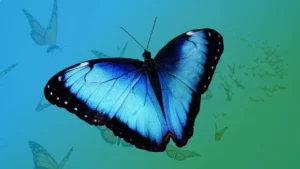
- The butterfly and the moth both carry transformation — the butterfly through the protected dark of the chrysalis and into the light, the moth through the open dark, navigating by a light it cannot help but follow.
- Beetles carry the scarab’s medicine of renewal and beginning again; a beetle often marks that something is quietly starting over.
- Dragonflies, among the oldest flying creatures on earth, are bridges between water and air, the seen and the unseen — messengers of a shift already underway.
Bug Spirit Animal: Questions People Actually Ask
What does it mean when a bug keeps appearing?
Repeated insect encounters point to the realm of the small — the details, the humble work, the many little things you have either been ignoring or drowning in. The bug does not comment on the grand arc of your life. It comments on the ground-level, repeated, easily dismissed reality that the grand arc is actually made of.
Is a bug a good or bad omen?
Neither, and the reflex to call it bad is worth noticing. Across traditions the insect is overwhelmingly a symbol of renewal, resurrection, luck, and sacred labour — scarab, cicada, bee, cricket. The discomfort many people feel is not information about the animal; it is our own difficulty with the small, the overlooked, and the things that multiply in the dark.
What does an insect in a dream mean?
Read the number and the action. A single insect usually points to one specific small thing — an irritation, a detail, a message. A swarm points to overwhelm, to many small pressures that have become one large weight. Insects in the house or the body point to something spreading that has not been looked at. And an insect transforming — a chrysalis, a moulting shell — points to a change already underway beneath the surface.
Why am I so afraid of the bug as a spirit animal?
Because the animals we recoil from most in ordinary life are frequently the ones carrying the medicine we most need. Fear of insects is very often fear of the small, the swarming, the loss of control — which is precisely the territory the bug has come to help you face. You do not have to like this guide. You only have to be willing to stop swatting it away long enough to hear it.
How do I know if the bug is my spirit animal?
Persistence, and a reaction out of proportion to the size of the creature. If insects keep arriving uninvited and keep unsettling you more than a small animal should, take it seriously. For a structured way to work with it, use the A–Z spirit animal guide or sit with the Path of the Paws oracle deck and let the specific insect find you.
The bug will never be anyone’s favourite guide, and it does not need to be. It has outlasted every grander creature by knowing one thing our culture keeps forgetting: that almost everything that matters is small, repeated, unwatched — and still holding the whole world up.