People usually ask me what shamanism is as though there were a single sentence waiting at the end of the question. After more than two decades of practice, the honest answer is that shamanism is less a belief you hold than a relationship you live: with nature, with the unseen, and with the parts of yourself you have not yet met. It is very probably the oldest spiritual practice of humanity, and it survives not because of doctrine but because it does something people still need: it puts you back into contact with a living world.
This guide can never be complete. Shamanism most likely emerged in Siberia and is now practised, or at least called by that name, all over the world. What I can offer is a clear, grounded map: where it comes from, what its core principles actually are, what practitioners do, and why so many people in the modern West are quietly finding their way back to it.
What Is Shamanism, in Plain Terms?
The short answer: shamanism is a practice rather than a belief system. A person deliberately shifts their state of consciousness, most often with the steady beat of a drum, travels in what practitioners call non-ordinary reality, and comes back with guidance or healing for a particular person or question. It has no scripture, no founder and no membership, and recognisable versions of it have been documented on every inhabited continent.
At its core, shamanism is about connection: to nature, to the spirit world, and to the inner depths of a life. The shaman is understood as an intermediary between the ordinary, physical world and the unseen one, someone who can enter altered states of consciousness deliberately and travel into other realms to bring back healing, guidance and wisdom for their community. The word itself is Evenki, the language of a Tungusic people of Siberia: saman, built on a root meaning to know, so literally the one who knows.
It is worth being precise about one thing straight away: not everyone who studies shamanism is a shaman. In traditional societies the shaman held a specific, demanding role within a community. Most people in the West who work this way, myself included, more accurately call themselves shamanic practitioners. The distinction matters, and respecting it is part of doing this work honestly.
What Shamanism Is Not
People understand shamanism faster when they hear what it is not. Almost everyone who writes to me arrives carrying at least one of these five assumptions.
- It is not a religion. No god to accept, no founder, no holy book, no clergy, nothing to join and nothing to be thrown out of. That is why practising Christians, Buddhists and committed atheists sit in the same circle without anyone having to give anything up.
- It is not a belief system you have to sign up to. Nobody asks you to believe in spirits before you begin. You are asked to try something and to notice honestly what happens. I would rather work with a sceptic who journeys than with a believer who never does.
- It is not the same as energy healing. Reiki and similar modalities work on a person’s energy field with the practitioner in ordinary consciousness. Shamanic work starts by leaving ordinary consciousness and asking the helping spirits what is needed. The two sit together peacefully. They are not the same method.
- It is not channelling. In channelling, a being speaks through the person, who often remembers nothing afterwards. In a journey I stay entirely myself: I go, I ask, I remember, I come back and I report. If I cannot tell you afterwards what I saw and what I inferred, something went wrong.
- It is not psychedelics. Plant medicines belong to particular traditions, mostly South American, held there inside strict cultural containers. The North Asian traditions the word shaman comes from journey on rhythm, and so does everything I teach. I have written separately about shamanism without psychedelics, because so many people assume the two are inseparable.
One more, and it is the one I feel most strongly about: it is not a personality. Not feathers, not a new name, not a photograph of someone looking mysterious in the woods. Most of the practice is unglamorous. You sit on the floor, you drum, you keep notes, and you do it again next week.
Where Shamanism Comes From
The oldest burial that researchers widely read as a shaman’s is about 12,000 years old: Hilazon Tachtit, in what is now Israel. Cave art that many people interpret as shamanic reaches back tens of thousands of years further, but that reading is an interpretation rather than a settled fact. What we can say is that practices of this kind took early and lasting shape in Siberia and Central Asia, where people used trance states (induced by drumming, dancing and singing) to enter what they experienced as the spirit world and to communicate with the forces of nature. The term “shaman” reached the West through Russian encounters with Siberian peoples in the sixteenth and seventeenth centuries, and only gradually became the umbrella word we now apply, sometimes loosely, to practices all over the globe.
What is striking is how widely the same underlying pattern appears, across Siberia, Asia, the Americas, Africa and Australia, among cultures that never met. Each adapted it to its own landscape and needs: Siberian practitioners journey by drum, while many Amazonian traditions work with plant medicines such as ayahuasca. Despite the differences, the shared elements are unmistakable: a belief in an unseen world inhabited by spirits, and a specialist who can move between that world and this one on the community’s behalf.
The academic study of shamanism took shape in the late nineteenth and early twentieth centuries. The historian of religion Mircea Eliade famously described it as a set of “archaic techniques of ecstasy,” underlining its global reach. Later, the anthropologist Michael Harner distilled the shared elements of many traditions into what he called Core Shamanism (the journey, the spirit helpers, the healing techniques) and made them accessible to Western students through his book The Way of the Shaman. Much of the practice taught in the West today descends from that lineage.
Traditional Shamanism and Core Shamanism Are Not the Same Thing
This is where most introductions go quiet, and it is the distinction that decides what any teacher is actually offering you, including me.
Traditional shamanism lives inside a specific culture, language and lineage. The songs belong to a people. The spirits are named, and the names have histories. The shaman is recognised by a community, usually after an illness or a calling that nobody chose, followed by years of apprenticeship to a living teacher. The role carries obligations to the living and the dead, and it cannot be bought or completed in a weekend. I trained for a period with shamans in Siberia and inside a Mongolian lineage, and the clearest thing I took away was how much of it I was never going to carry: the language, the ancestors, the land.
Core shamanism is something else, and it is honest about being something else. In the 1960s and 70s the anthropologist Michael Harner compared practices from many unrelated cultures and kept the methods that appeared almost everywhere: the drumbeat, the journey, the three worlds, the helping spirits, the retrieval of what was lost. He left out the culturally specific material on purpose, so that what remained could be learned without borrowing anyone’s ceremonies. I trained in core shamanism with the Foundation for Shamanic Studies, which Harner founded, and completed a three year apprenticeship in North America. Core shamanism is the framework I teach in, and it is deliberately culture-free.
Which brings me to what I am asked about most. I do not call myself a shaman. I call myself a shamanic practitioner. Not out of modesty, and not because the training was thin, but because that word belongs to the communities who confer it, and no European programme has the standing to hand it out. A practitioner is someone who has learned the methods and works with them carefully. That is accurate, and I would rather be accurate than impressive.
The Core Principles of Shamanism
Beneath the enormous variety of practices, a few principles recur so consistently that they can fairly be called the foundation of the shamanic worldview.
- Everything is alive and interconnected. Humans, animals, plants, rivers, stones: all are understood to be imbued with spirit and bound together in a single web of life. Every action ripples through the whole, which is why living in relationship, rather than in dominance, sits at the centre of the ethic.
- Reality has more than one layer. The shamanic cosmos is usually divided into the Lower, Middle and Upper Worlds, realms beyond the physical, inhabited by ancestors, spirit guides and other beings, which the practitioner learns to visit consciously.
- Consciousness can be shifted, on purpose. The heart of the practice is the deliberate, controlled entry into an altered state (through drumming, dance, fasting, or in some traditions sacred plants) in order to perceive and act in those other realms.
- Healing means restoring balance. Shamanic healing addresses far more than the body: it works with soul loss, spiritual blockage, and the recovery of vitality, always with the aim of returning a person, and their community, to harmony.
- Experience outranks doctrine. Unlike traditions built on scripture, shamanism trusts direct, personal encounter. Your own journey, your own contact with the spirit world, is the teacher. No one can have that experience for you.

What Shamanic Practitioners Actually Do
Principles become real through practice. These are the methods at the centre of the work, the ones I return to most often with the people I sit with.
The Shamanic Journey
The journey is the most fundamental practice: a trance state, usually carried by steady drumming, in which the practitioner travels into non-ordinary reality to seek wisdom, guidance and healing from spirit allies. It is a learnable skill, not a special gift, and it is where most people begin. If you want to understand the mechanics of it, start with the guide to what shamanic journeying is.
The Three Worlds
Most shamanic journeys move through one of three realms, and knowing which one you are working with shapes everything.
- The Lower World is not “lower” in any moral sense. It is the deep, earthy, primal realm reached by descending, through a cave, a root, a tunnel. It is the home of power animals and ancestral wisdom, a place of grounding and healing rather than danger.
- The Upper World is the luminous, celestial realm of higher spirit teachers and guides, reached by rising, and sought for inspiration, blessing and advanced spiritual knowledge.
- The Middle World mirrors our own. It is the spiritual dimension of this physical reality, home to the spirits of land, trees, water and living things, and the place where much practical work with the here and now is done.
What a Journey Actually Looks Like, Step by Step
Descriptions of journeying usually stop at vocabulary, which helps nobody decide whether to try it. Here is the mechanical version, as it happens in a room with real people in it.
- You lie down and cover your eyes. Floor, blanket, a scarf or an eye mask. Lying down matters more than people expect, because it lets the body stop holding itself up.
- You state one question. One, not five, and phrased so an answer could arrive. “Show me what I need to see about my work” travels. “Should I take the job” mostly does not.
- The drum starts, at roughly four to seven beats per second. Quicker than a heartbeat, and quick enough that the analytical mind stops trying to follow it. After a minute or two most people stop hearing the individual beats.
- You go to your opening. For the Lower World this is a real place you have seen with your own eyes: a hole under a tree in a wood you know, a well, the sea. You go down through it. For the Upper World you find something that rises, a tree, smoke, a rope of light, and you go up. You do not invent the opening. You remember it.
- You arrive somewhere, and you behave normally. You look around. You ask whoever is there whether they are your helper. You ask your question, in plain language. You wait. You accept what comes even when it is a smell, a sentence or one still image rather than a film.
- The drum call-back brings you home. A recognisable change in the rhythm, usually four sharp series of beats. You return the way you came, through the same opening, and open your eyes.
- You write it down before you speak. Within a couple of minutes, in detail, without interpreting yet. Journeys fade like dreams. The meaning tends to arrive days later, and it arrives to the person who kept the notes.
The first time, most people get fragments. That is normal and it is not failure. What changes with practice is less the vividness than the trust: you stop editing the material on the way in. The full practice guide, including what to do when you get nothing at all, is here: shamanic journeying.
Soul Retrieval
In the shamanic understanding, trauma and shock can cause part of the soul to dissociate, to leave in order to survive something unbearable. Soul retrieval is the work of journeying to recover those lost parts and restore a person to wholeness. It is one of the most profound pieces of this tradition, and you can read about it in depth in the guide to soul retrieval.
Power Animals and Spirit Guides
Many traditions work with power animals, spirit guides in animal form that protect, strengthen and counsel the people they walk with. A practitioner may journey to find someone’s power animal and bring its guidance back to them. This relationship is at the heart of my own work; the whole territory is mapped in the A to Z spirit animal guide, and if you would like to meet your own, begin with finding your spirit animal.
Drumming, Chanting and Ceremony
For shamans the drum is often revered as the heartbeat of the earth. Its steady, repetitive rhythm both induces the trance state and acts as a bridge between worlds, carrying the practitioner’s awareness out and back. Chanting, song and ritual work in the same way, not as performance, but as calls to the spirits and as vessels for healing and transformation. Cleansing rites, offerings, and seasonal ceremonies round out the practice, all built on the same reciprocal relationship with the unseen.
A Note on Divination
Shamans have long used forms of divination (reading natural signs, casting bones or stones, communing directly with spirits) to gain insight and diagnose what is out of balance. I want to be honest here, because it is often blurred: many popular divination tools (oracle cards, crystals, runes, the I Ching, pendulums, scrying, tea-leaf reading) are not part of ancient Siberian shamanism at all. They come from other traditions entirely. They can be genuinely useful contemplative tools, and we share knowledge about them in that spirit. But calling every intuitive practice “shamanic” muddies something worth keeping clear.
The Path of the Paws
42 hand-illustrated oracle cards, one for each animal guide — drawn from the same practice these articles come from. A way to sit with an animal instead of only reading about it.
Order your deck →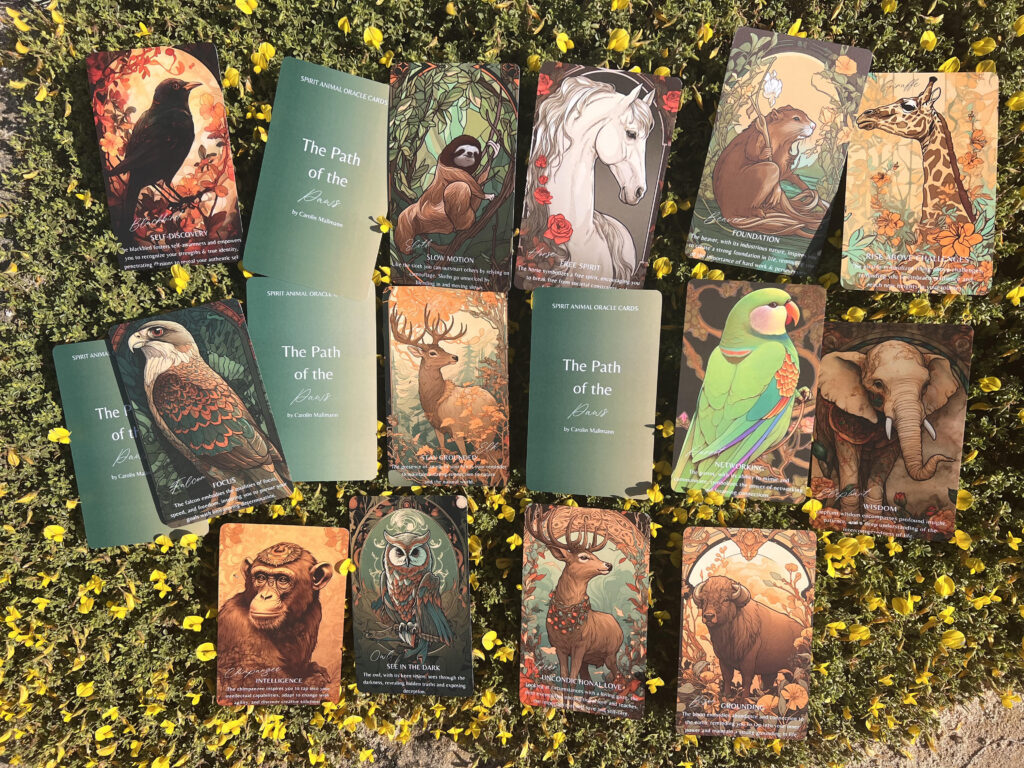
The Role of the Shaman
In traditional societies the shaman was never simply a ritual technician. They were, all at once, the community’s healer and its mediator with the spirit world; the keeper of its stories, songs and ancestral wisdom; a counsellor and leader in times of conflict or change; and often a steward of the land itself. To be a shaman was to hold responsibility for the balance between the human world and the natural and spiritual worlds: the very balance that so many people today feel has gone missing.
That role, and the question of who is entitled to the name, is a subject of its own. If it interests you, the companion page on what a shaman is follows the person rather than the practice: the calling, the training, and what the work asks of someone who carries it.
The Question of Cultural Appropriation
I would rather write this badly than skip it, because it is the honest problem sitting underneath every European website about shamanism, including this one.
The concern is real and it is not new. Indigenous communities across the Americas and Siberia have spent decades watching outsiders take their ceremonies, sell them, and get them wrong in public. Sweat lodges have killed people who were run through them by teachers with no lineage. Sacred plants are marketed as retreats. Words that carry obligations in their own language are used as job titles in ours. When Indigenous elders say they are tired of this, they are describing something that has actually happened to them.
So where does that leave a German woman teaching shamanic practice from Portugal? My working answer has three parts, and I hold it as a practice rather than as a defence.
- Take the method, leave the culture. The drum, the journey and the relationship with helping spirits turn up in so many unrelated cultures that they look like a human capacity rather than anyone’s property. Specific songs, ceremonies, regalia and spirit names are not. I do not run sweat lodges, I do not use ceremonies I was not given, and I do not use sacred words from languages I do not speak.
- Do not take the title. The word shaman is Evenki. It reached European languages through Russian colonial contact with Siberian peoples, which is not a neutral history. Refusing the title costs me nothing except marketing, and it keeps the line visible.
- Look for your own ancestors first. Europe had its own practices, and most were burned, banned or forgotten: the seidr of the North, the wise women and cunning folk, the drum traditions of the Sami. Much of it is lost and cannot be reconstructed honestly. But wanting your own roots back is a different impulse from wanting somebody else’s, and it is usually the impulse people actually arrive with.
There is a counter-argument I take seriously, so I will state it rather than hide it. Some Indigenous teachers, including ones I have studied with, actively want these practices shared, because a practice that is not passed on dies. Others want them left alone. Both positions come from people with far more standing than I have, and they do not resolve into one rule. What I can do is stay in the discomfort of that instead of finding a formula that makes it disappear.
If you want a line you can use yourself, try these three questions. Are you learning a method, or performing an identity? Are you naming your sources, or blurring them so you sound more interesting? Would you be comfortable if the people whose tradition it is were standing in the room?
Shamanism in the Modern World
Far from being a relic, shamanism has seen a genuine resurgence, and in my experience it is not hard to see why. A great many people arrive at this work disillusioned with a purely materialistic, mechanistic picture of life, and hungry for something more directly felt. What they find is a practice that begins, almost always, inward. In more than two decades of guiding people through their first journeys, I have watched the same thing again and again: before shamanism connects someone to the wider spirit world, it reconnects them to the parts of themselves they had lost touch with.
That is why, for many Westerners, shamanism functions above all as a path of self-discovery and healing, and there is nothing lesser about that. Today it is often woven together with psychotherapy and holistic medicine, offering a way to address the emotional, spiritual and mental dimensions of well-being alongside the physical. It builds community, through drum circles and healing circles, in a culture where many feel isolated. And its deep reverence for nature speaks directly to a time of ecological crisis: the shamanic insight that the earth is sacred, and that we are responsible to it, is no longer a fringe idea but an urgent one.
A word of care, since the field is crowded and not always careful: shamanic work is powerful, but it is not a substitute for medical or psychological treatment, and it should be approached with respect for the living traditions it draws from. Done honestly, it does not promise miracles. What it offers is a grounded path back into relationship: with the world, and with yourself.
What You Can Expect if You Try It, and What It Will Not Do
People come to this work with hopes that are rarely said out loud, so let me be direct about what I have actually watched happen over more than twenty years.
What usually happens. People who journey regularly for a few months report the same small, unspectacular changes. They sleep differently. They notice the natural world again in a way they had not since childhood. They start deciding things from somewhere lower than the head. They find they have a place to bring a question that is not their own circular thinking. Many describe a sense of being accompanied. Whether you read that as contact with spirits or with a part of yourself, the effect on how someone lives is often the same, and I do not argue with people about which it is.
What often happens and is rarely mentioned. A period of things surfacing. Old grief, old anger, dreams that get busy for a while. Journeying tends to bring material up rather than settle it down, at least at first. That is why I ask people to go slowly, keep a journal, and have someone to talk to, and why I do not recommend starting intensive practice in the middle of an acute crisis.
What it will not do. It will not cure a disease. It will not replace medication, therapy or a psychiatric diagnosis, and any practitioner who suggests otherwise should be left immediately. It will not tell you what to do with your life in a clear voice on a Tuesday evening. It will not make you special, and it will not spare you the ordinary work of a human life: the conversations you are avoiding, the boundaries you have not set, the grief you have not sat with. Journeying can show you those things with unusual clarity. It cannot do them for you.
If you want to begin, begin small and cheaply. There is a full guide to how to learn shamanism, a structured foundation course in the Elements of Shamanism training, and if what you need is not learning but tending, shamanic healing sessions are where that work happens.
What the Evidence Actually Says
I am asked this often enough that it deserves a plain answer, in three honest categories.
What is documented. That shamanic practices existed and still exist across Siberia, Central and East Asia, the Americas, parts of Africa and Australia is not in dispute. It is among the better attested facts in the anthropology of religion, recorded in field accounts going back to the seventeenth century and gathered comparatively by Mircea Eliade and many after him. That monotonous percussion around four to seven beats per second shifts subjective experience is also reasonably well supported, and there is a small body of EEG work reporting changes in brainwave activity during drumming. That literature is modest and the samples are small. It should not be quoted as though it were settled.
What is subjective experience. Almost everything else. What you meet on a journey, what it says, whether it helped: these are first-person reports, mine included. First-person reports are real data about human experience and they are not proof of anything outside it. My training as a Certified NLP Trainer makes me more careful here rather than less, because I know how strongly attention, expectation and language shape what a person perceives and then remembers perceiving.
What nobody can prove. Whether spirits exist independently of the person experiencing them. I work as though they do, because the practice makes more sense from the inside that way and because the results in the room are better. That is a working position, not a finding, and I will not dress it up as one. Anyone who tells you science has confirmed the spirit world is selling something.
One thing here is not a matter of opinion: shamanic practice is not medical or psychological treatment and does not replace it. If you are unwell, see a doctor. If you are in mental distress, see a therapist or a psychiatrist. This work can sit alongside those things. It cannot stand in for them.
What Is Shamanism? Questions People Actually Ask
Is shamanism a religion?
No. Shamanism has no scripture, no central deity and no institution. It is a set of practices and a worldview (focused on direct experience, connection with nature, and journeying between worlds) that has coexisted with many different religions rather than competing with them. People of many faiths, and of none, work shamanically.
What is the difference between a shaman and a shamanic practitioner?
A shaman traditionally holds a specific, sanctioned role within a particular culture and community. A shamanic practitioner, the more accurate term for most people trained in the West, works with shamanic methods such as journeying and energy healing without claiming that inherited cultural title. The distinction is a matter of honesty and respect.
Do you need plant medicine to practise shamanism?
No. While some traditions, particularly in the Amazon, work with sacred plants, the classic Siberian and Core Shamanic path reaches altered states through drumming, rattling, chanting and dance. No substance required. The great majority of the practice taught and worked in the West is entirely drug-free.
Can anyone learn shamanic journeying?
In my experience, yes. Journeying is a learnable skill rather than a rare talent. Most people can reach a light trance with steady drumming and clear intention, and deepen it with practice. The best place to start is a simple, well-guided first journey; see the guide to shamanic journeying.
Where should a beginner start?
Begin inward and begin simply. Learn to journey, meet a power animal, and build a relationship with it before reaching for anything elaborate. Working with your own spirit animal is one of the gentlest and most rewarding ways in, and it teaches the foundational skill, trusting direct experience, that the rest of the practice is built on.
A few more that come up in almost every beginners’ circle.
What if I do not see anything when I journey?
Usually this is a misunderstanding about the word see. Perhaps a third of people are strongly visual. The rest get a sense of place, a body feeling, a phrase, a smell, or a knowing that something is there. All of those are journeys. What blocks people far more often than any lack of talent is checking mid-journey whether it is working. Take the first impression, even if it feels made up, and follow it. You can judge it afterwards, on paper.
Is shamanic journeying safe?
For most people, yes, and it is gentler than films suggest. You stay conscious, you can open your eyes and stop at any moment, and the drum brings you back. The sensible cautions are real ones: I would not start intensive practice during an acute psychiatric episode, during a psychotic illness, or in the first raw weeks of a bereavement, and with a history of dissociation I would work with a teacher rather than alone.
Do I need Indigenous ancestry to practise shamanism?
No, and a genetic entitlement to spiritual practice is a shaky idea in every direction. What you do need is clarity about what you are practising. Learning to journey with a drum is not the same as taking part in someone else’s ceremony. Learn the method, name where you learned it, and leave the cultural material with the cultures it belongs to.
Is shamanism the same as energy healing or Reiki?
No. The difference is where the practitioner’s consciousness is. Energy work is generally done in ordinary awareness, with the practitioner directing energy. Shamanic work begins by shifting consciousness and asking the helping spirits what is needed, so the practitioner follows instructions rather than issues them. Plenty of people are trained in both and combine them happily. They are still two different things.
How is a journey different from meditation or guided visualisation?
Meditation, broadly, empties and observes. A guided visualisation follows a script somebody else wrote. A journey does neither: you go somewhere with a question, meet something you did not script, and are often answered in a way you would never have chosen. The clearest marker in practice is surprise. If everything that happened was what you expected, you were probably imagining rather than journeying.
How long before this does anything?
Most people have a usable journey within one or two attempts with a good drum track and a clear question. Something shifting in daily life takes longer, and in my experience it is a few months of practising once or twice a week rather than one intense weekend. The people this work goes furthest with are almost never the most gifted. They are the ones who kept going after the boring week.
Comprehensive Shamanism Online Training
Join our empowering shamanism training series, “The Elements of Shamanism,” to learn shamanic practices through the lens of the elements: Water, Earth, Fire, and Wind. This course is perfect for anyone who wants to start their shamanic path to improve their own life. Through the online classes, you will learn key skills like shamanic journeying, connecting with spirit animals, and exploring your ancestral lineage.
“The Elements of Shamanism” is a course that invites you to embrace your personal power with some of the most important techniques of shamanism.