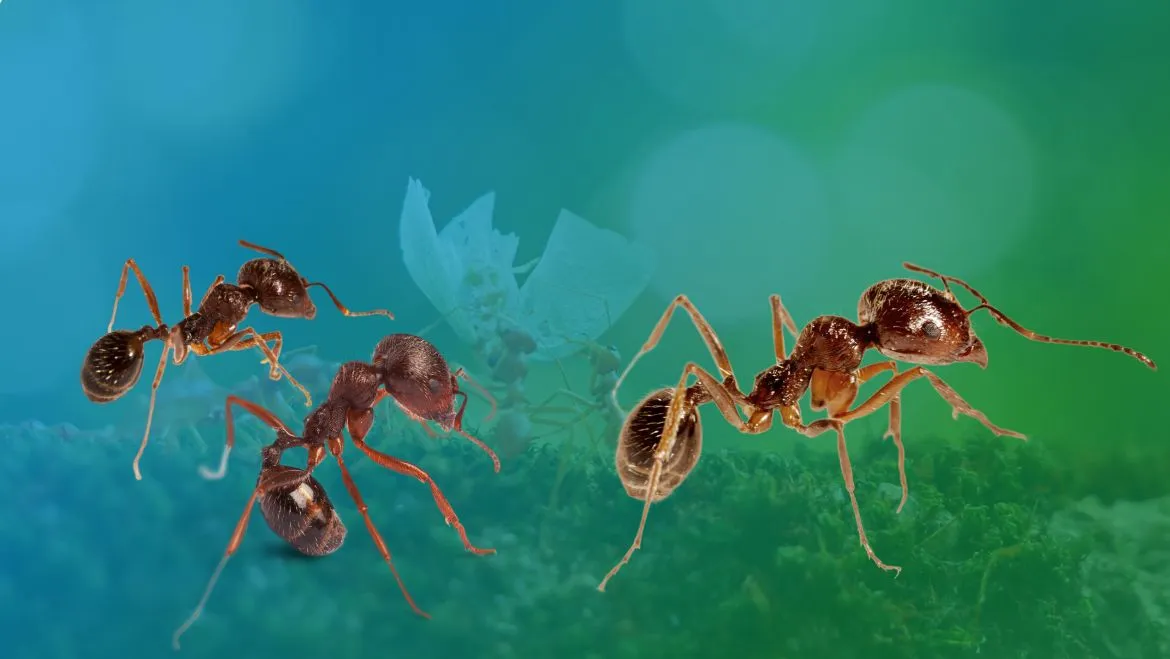
The ant does not arrive in a journey the way the big predators do. There is no dramatic entrance, no locked eye contact. It simply appears at your feet, already working, already part of a line that stretches out of sight in both directions. The first time I followed that line in a journey, the feeling was unmistakable: I was not meeting one creature. I was meeting a current — a single intelligence moving through thousands of small bodies, none of which had stopped to ask whether the work was worth it.
That is the signature of the ant spirit animal. It comes for people carrying more than they can name — the ones holding a family, a team, a project together through sheer relentless effort. In my practice, the ant tends to arrive for those who are strong, dutiful and quietly running out of themselves, and it brings a double message. On one side: your persistence is sacred, and you are part of something larger than you. On the other, harder side: you have forgotten you are allowed to be a person and not only a function.
Ant Spiritual Meaning: From Biology to Message
The ant’s spiritual meaning is unusually literal, because almost everything it does is already a teaching about effort and belonging.
- The colony is the organism. A single ant is nearly helpless; the colony behaves as one — a superorganism that thinks, defends and builds as a body. Ant medicine is the medicine of the part that serves the whole. Its first question is always: what am I truly part of?
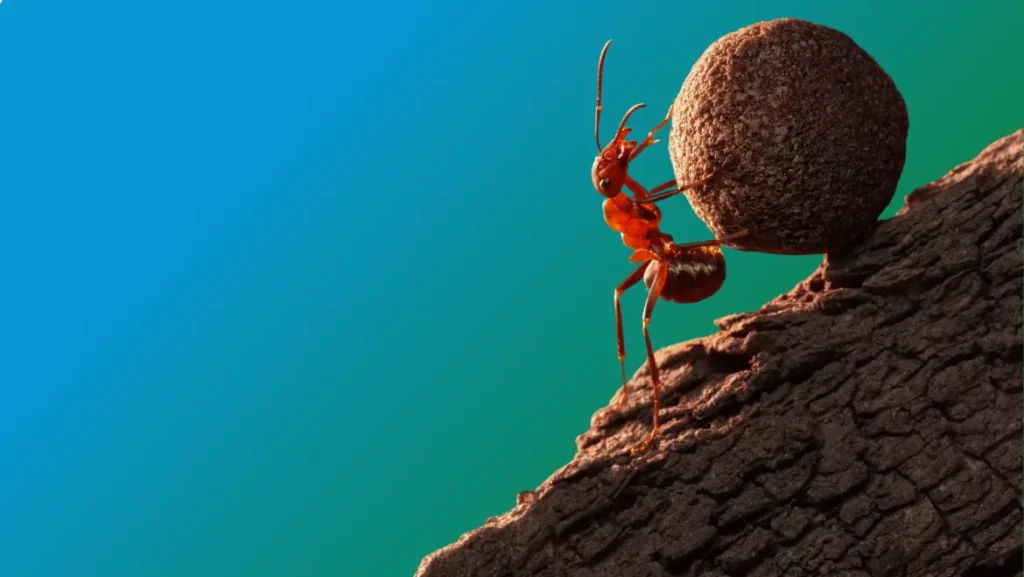
- It carries many times its own weight. Ants routinely lift and haul loads far heavier than themselves. This is not brute individual strength so much as a willingness to bear what is in front of them without argument.
- It follows a chemical trail. Ants navigate by pheromone paths laid down by those who went before. This is the gift of tradition and shared knowledge — and, in shadow, the risk of following a path simply because it is there.
- It farms and builds. Some ants tend aphids like livestock; others cultivate fungus gardens; all engineer their environment. The ant does not merely survive its world — it cultivates it, patiently, over generations it will never see complete.
So the ant’s real teaching is not simply “work hard”. It is: bear what is yours to bear, honour the path others laid for you, and build for a future beyond your own lifetime — while remembering that a body needs every kind of cell, not only the ones that carry.
Symbolism and Cultural Context
Few small creatures have been read as widely as the ant, and the traditions diverge in revealing ways.
In the Greek world, Aesop’s fable of the ant and the grasshopper made the ant the very emblem of foresight and industry rewarded — a moral that shaped European attitudes to work for centuries. In Hindu tradition, one of the most humbling stories in the Brahmavaivarta Purana shows the god Indra a long procession of ants and reveals that each was once a king, even an Indra, in a previous age. Here the ant is not a lesson in industry at all but in humility — a mirror for the ego that believes itself important and permanent.
In parts of Chinese moral tradition, the ant became a symbol of order, discipline and righteousness. And among a number of Indigenous peoples of the Americas, ants appear as patient builders and, in some Hopi accounts, as beings who sheltered and taught humanity in an earlier world — stories that belong to those nations and that I reference with respect rather than any claim to them. Across all of these, the ant holds a single deeper thread: it is the small, disciplined being whose meaning is always found in relationship to something larger — the colony, the cycle, the generations.
The Path of the Paws
42 hand-illustrated oracle cards, one for each animal guide — drawn from the same practice these articles come from. A way to sit with an animal instead of only reading about it.
Order your deck →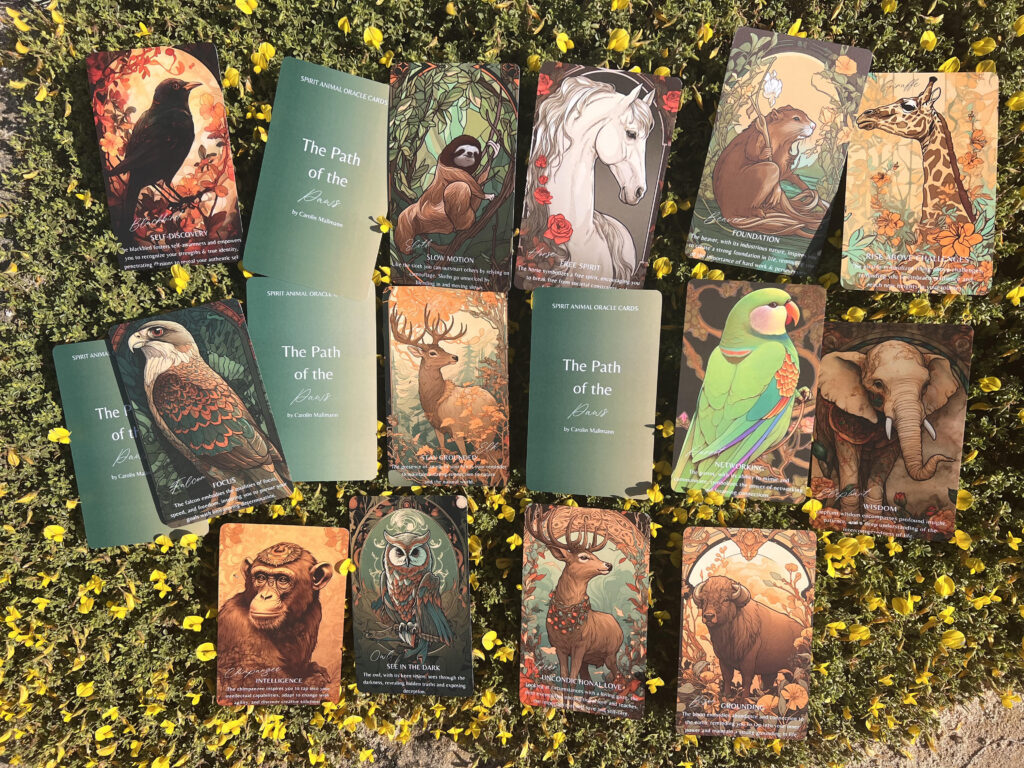
The Shadow of the Ant: When the Worker Forgets It Is Alive
The ant’s shadow is one of the most socially rewarded shadows there is, which is exactly why it is dangerous.
- Toil without meaning. The ant never stops, and neither will you if this shadow has you. Work becomes identity, then compulsion, then a way of never having to feel what stopping would surface. The most common thing I hear from ant-people is not “I am tired” but “I do not know who I am if I am not producing.”
- The dissolved self. Serving the colony is noble until there is no you left inside the service — only a role. When your worth is entirely a function of what you carry for others, the medicine has become a cage.
- Following the trail off a cliff. Pheromone loyalty has a dark edge: ants can form a death spiral, circling until they die, each following the one ahead. If you are exhausting yourself on a path only because everyone before you walked it, this is your warning.
- Ants swarming in a dream. When ants crawl over you or overwhelm a space in a dream, the reading I use in practice is this: a thousand small obligations are eating something alive in you, or an anxiety you have refused to name is multiplying underground. It is rarely about one big thing. It is about the accumulation.
The ant’s true teaching is not to stop working — your diligence is real and it matters. It is to make sure you are a living being who works, not a function that occasionally remembers it is alive. Where the ant teaches tireless service, the bee spirit animal can help you find the sweetness and rhythm that keep such devotion from turning hollow.
A Shamanic Practice: The Ant Trail Journey and the One-Load Ritual
This is the practice I offer people who are carrying too much and calling it duty.
- Set a weight-shaped intention. Not “help me work harder” but: “Show me which of these loads is actually mine to carry.”
- Prepare. Lie down, cover your eyes, and use fifteen to twenty minutes of steady drumming. Let the ground take your full weight first.
- Enter through the trail. Picture a line of ants moving across the earth. Shrink to their size and join the line, feeling the rhythm of the work around you.
- Ask to see what you are carrying. Let the load on your back become visible. Ask the ant beside you whose it truly is — yours, or something you picked up from the trail.
- Follow the trail to the colony’s heart. Ask what you are all building, and whether you still want to be part of it. Listen without defending your answer.
- Return slowly and set down, in your mind, one load that was never yours.
The One-Load Ritual
- List everything you are carrying this week — tasks, people, worries — in one honest column.
- Mark each one: mine, shared, or not mine at all. Be ruthless. Ants do not carry another colony’s grain.
- Set down one “not mine” deliberately this week — hand it back, or simply stop carrying it — and notice that the colony does not collapse.
- Do one piece of your real work slowly, with full attention, as an offering rather than a task.
If the ant is not the guide who ultimately arrives for you, you can explore the wider list of spirit animals and their meanings, learn how to find your own spirit animal, or let one come through the Path of the Paws oracle deck.
Frequently Asked Questions
What does the ant spirit animal mean?
The ant spirit animal represents teamwork, patient perseverance, planning and devotion to something larger than the self. When it appears, it usually affirms your diligence while asking whether your effort still has meaning — or has become tireless toil that has swallowed the person doing it.
What does it mean to dream about ants?
Dreaming of an orderly line of ants often points to productive teamwork and steady progress. Ants swarming or crawling over your body more commonly reflect accumulated anxiety or many small obligations quietly overwhelming you, asking to be named and reduced.
Is the ant a good spirit animal?
Yes — it is one of the most grounded and reliable guides for anyone building something real. Its only caution is balance: the ant can teach you to work with devotion, but you must not let it teach you to disappear into the work.
What is the difference between the ant and the bee as spirit animals?
Both are community-minded workers, but the ant’s medicine is earth, structure and steady load-bearing, while the bee’s is sweetness, pollination and joyful purpose. The ant asks what you are building; the bee asks whether it nourishes you.