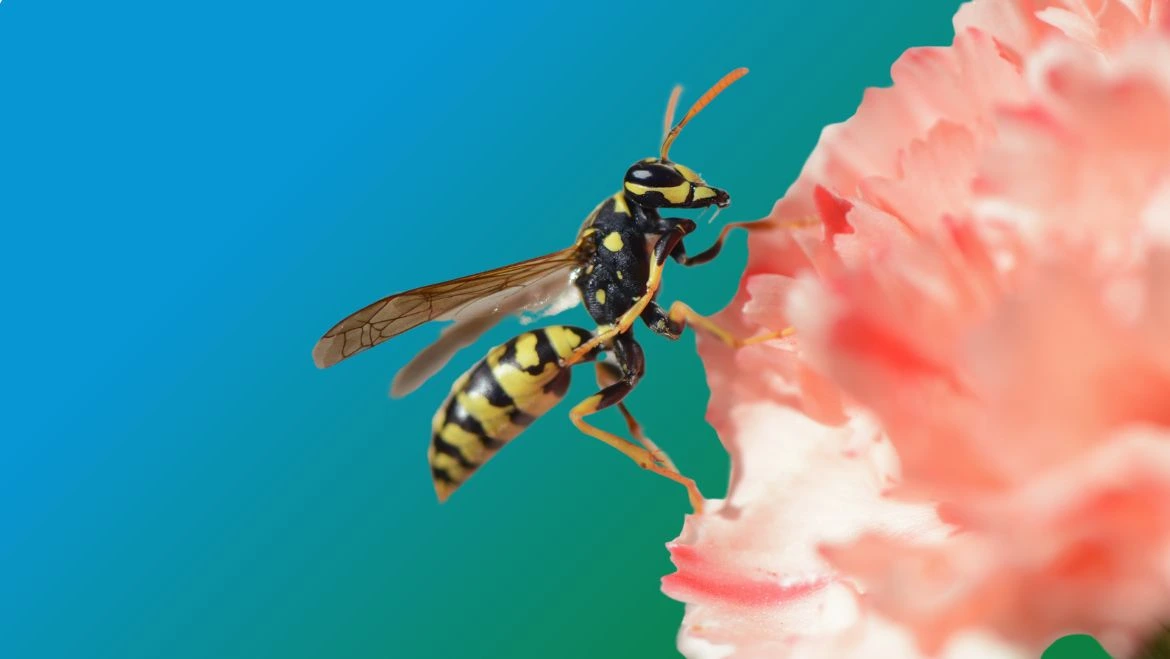
The wasp spirit animal does not arrive to soothe you. It arrives with an edge already drawn. When it comes on a shamanic journey, people almost never describe peace — they describe a small, electric tension across the shoulders, the particular alertness you feel a half-second before you say the thing you have been swallowing for months. That tension is the medicine. Wasp is the guide of the boundary you have not yet defended, the no you keep softening into a maybe.
This is about the wasp spiritual meaning — what it means when this insect keeps turning up in your journeys, your dreams, or at the edges of an ordinary day — not about the biology of stinging insects. In more than two decades of shamanic and coaching practice, I have watched Wasp arrive most often for gentle, accommodating people who have started to go quietly resentful. If a wasp has been circling your life and you want to know why, stay. If you only wanted to know how to avoid a sting at a picnic, this is the wrong page.
The Bridge: What Wasp Biology Actually Teaches
Honest spirit-animal work begins with the real creature. The meaning is not painted on top of the insect — it grows out of how the insect actually lives.
- She can sting again and again — and mostly chooses not to. Unlike the honeybee, a wasp does not die when she stings; her weapon is reusable. And yet she does not spend it freely. She warns, she hovers, she gives you every chance to move first. Wasp medicine is the medicine of the boundary that is real but held in reserve — the person who could retaliate and instead states the limit clearly, once.
- She builds paper from nothing. A wasp makes her nest by chewing wood fibre into pulp — she is one of nature’s original papermakers, constructing intricate architecture out of what she scrapes together. She is the medicine of building a life from scarce materials, of making something structured out of very little.
- She is a guardian, not a nuisance. Social wasps are formidable predators of other insects and genuine pollinators; they hold an ecosystem in balance. The creature we swat is doing unseen, thankless, protective work — which is exactly the role Wasp people so often play, and so rarely get thanked for.
- She lives in a colony that works as one. The nest is a coordinated society. Wasp is not a solitary warrior; her strength is collective, structured, and disciplined.
Wasp Spirit Animal Symbolism Across Traditions
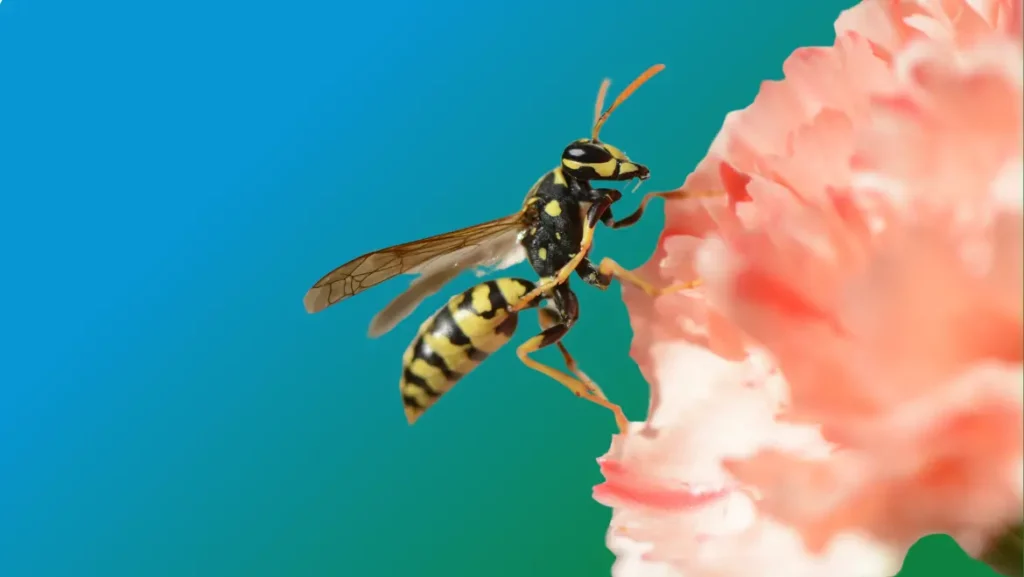
For an insect so often dismissed, the wasp carries a surprisingly consistent symbolism wherever people have watched her closely: order, productivity, and swift, deserved justice.
Ancient Egypt and the Mediterranean
In parts of the ancient Mediterranean world the wasp and the bee were read together as emblems of industry and of a society that defends itself — small bodies capable of organised, decisive force. The stinging insect became a natural symbol of protective sovereignty: leave the colony in peace and it will leave you in peace; threaten it and it answers as one.
European folk tradition
European folklore tends to cast the wasp as sharp-tempered and quick to judge — the insect of consequence. Underneath the caricature sits something precise: the wasp is the one who does not let a trespass pass unmarked. In a world that rewards people for absorbing slights quietly, that is not a small teaching.
Read across cultures, the archetype is steady: the small, industrious guardian who asks to be respected rather than adored. If Wasp has come to you, it is worth asking honestly whether you have spent your life trying to be liked when what you actually needed was to be respected.
Spiritual Messages of the Wasp Power Animal
- Boundaries: the right and the ability to defend your own space, cleanly and without apology.
- Self-worth: the reminder that you do not have to earn the right to take up room.
- Constructive productivity: building something real, patiently, from modest materials.
- Rebellion in the healthy sense: the willingness to challenge a structure that is quietly crushing you.
- Recovery: the capacity to be knocked down, lie still, and rise to fly again.
The Shadow Aspect: Wasp’s Warning Medicine
Wasp is not a fortune cookie, and her shadow is specific. When she appears agitated, swarming, or in a recurring nightmare, she is usually pointing at the cost of a boundary you have refused to set.
- The sting that arrives far too late. The most common Wasp shadow I meet is the accommodating person who says yes for years, swallows every small trespass, and then one day detonates — and the force is wildly out of proportion, because it is not one grievance but a hundred. That is not a boundary. It is a suppressed boundary arriving with interest. Wasp’s real teaching is to sting early, while the matter is still small.
- The sting used to control. The opposite pole: irritability weaponised, a person who keeps everyone at a distance with sharpness. A boundary protects a self; an attack punishes another. Wasp asks you to know the difference.
- Swarming in a dream. Clients almost always read this as a curse. In my practice it is not. Swarming wasps usually point to many small, ignored irritations that have multiplied — the unspoken resentments, the tiny yeses you resent, the boundary you never named — until they became a cloud. The dream is not asking you to be afraid. It is asking you to deal with one thing before there are a hundred.
- The wasp you keep swatting. If Wasp appears and you feel only revulsion, sit with the revulsion. Very often the disowned material is your own assertiveness — the part of you that was told, early, that having needs made you difficult.
Practical Shamanic Work: Journeying with the Wasp
This is the practice I give clients who have been “being reasonable” for years. Shamanic work is not a substitute for medical or psychological care. If you are new to it, begin with the step-by-step guide to finding your spirit animal.
- Set a wasp-shaped intention. Not “make me stronger,” but: “Show me the boundary I have been refusing to defend.” Say it aloud, once.
- Prepare the container. A quiet room, eyes covered, fifteen to twenty minutes of steady drumming. Sit upright — Wasp rewards alertness, not drift.
- Go to the nest. Travel to a real structure you have seen — under an eave, in a hedge — and watch the wasps work. Notice how orderly the building is, and how little the colony wastes on threat.
- Ask her one question: “Where in my life am I being trespassed on, and staying silent?” Wasp answers plainly. Do not soften what you hear.
- Then ask what the small, early sting would be — the one clear sentence that would end the trespass now, while it is still minor.
- Return and write it down before you speak to anyone. Then, within a week, say the sentence. Wasp medicine that stays in the journal does not take root.
The Path of the Paws
42 hand-illustrated oracle cards, one for each animal guide — drawn from the same practice these articles come from. A way to sit with an animal instead of only reading about it.
Order your deck →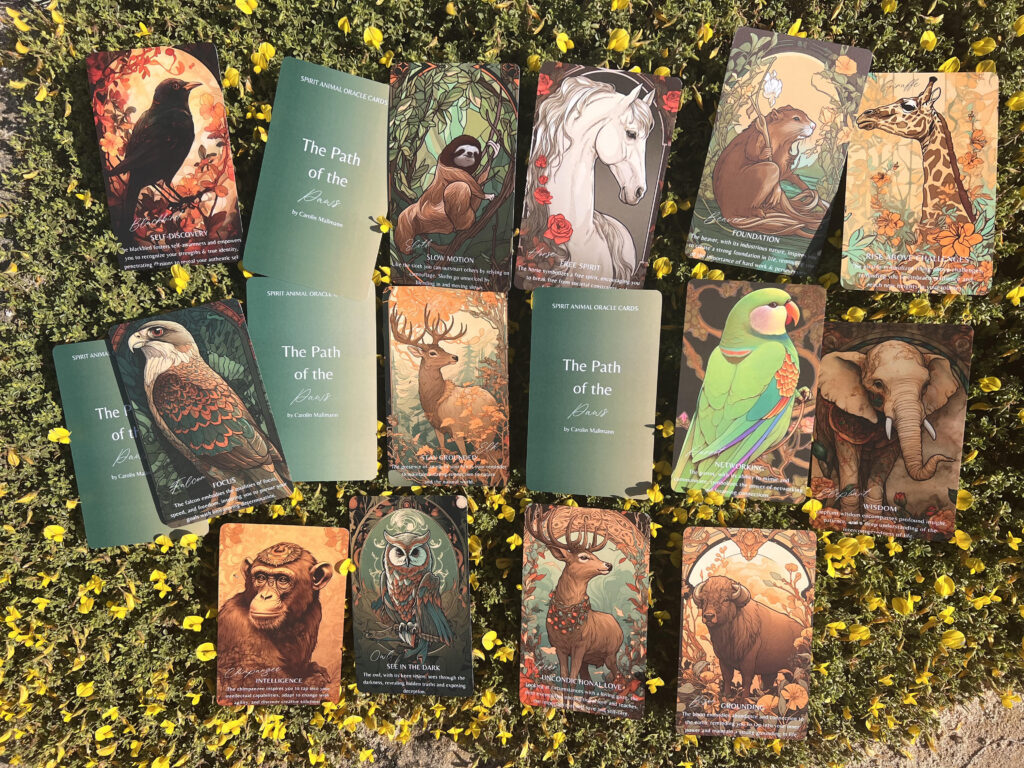
If the wasp is not the guide who comes, explore the full A–Z spirit animal guide, or sit with its close relative the bee spirit animal, whose medicine of community and sweetness balances Wasp’s edge. For the deeper work of reclaiming a disowned assertiveness, see my writing on shadow work.
Wasp Spirit Animal: Questions People Actually Ask
What does it mean when a wasp keeps appearing?
Repetition is emphasis. When a wasp turns up again and again — in life, in dreams, on a journey — it usually means a boundary in your life is being crossed and you have not yet named it. Ask where you are absorbing a trespass in silence. The appearances tend to stop once you actually set the limit.
Is the wasp a good or bad omen?
Neither, in the way people mean it. The wasp is a clarifying omen, not a comforting one. She arrives to tell you the truth about where your energy is being taken — and that truth, acted on early, protects you. An omen you do nothing with is just an insect at the window.
What does a wasp in a dream mean?
Read what she is doing. A single wasp usually points to one specific limit that needs stating. A swarm points to many small, ignored irritations that have multiplied. Being stung in a dream often marks the moment a suppressed feeling finally breaks through — not a warning of harm, but of pressure that has waited too long.
Is the wasp the same as the bee as a spirit animal?
They are cousins with different medicine. The bee carries sweetness, community and devotion to the collective; the wasp carries boundaries, self-defence and the courage to say no. If it was unmistakably a wasp that came to you — sleeker, sharper, more solitary in feel — that distinction is the message, not an accident.
Whatever brought the wasp to you, treat her sharpness as an invitation rather than a threat. She is not here to make you hard. She is here to make you honest about where you end and everyone else begins.