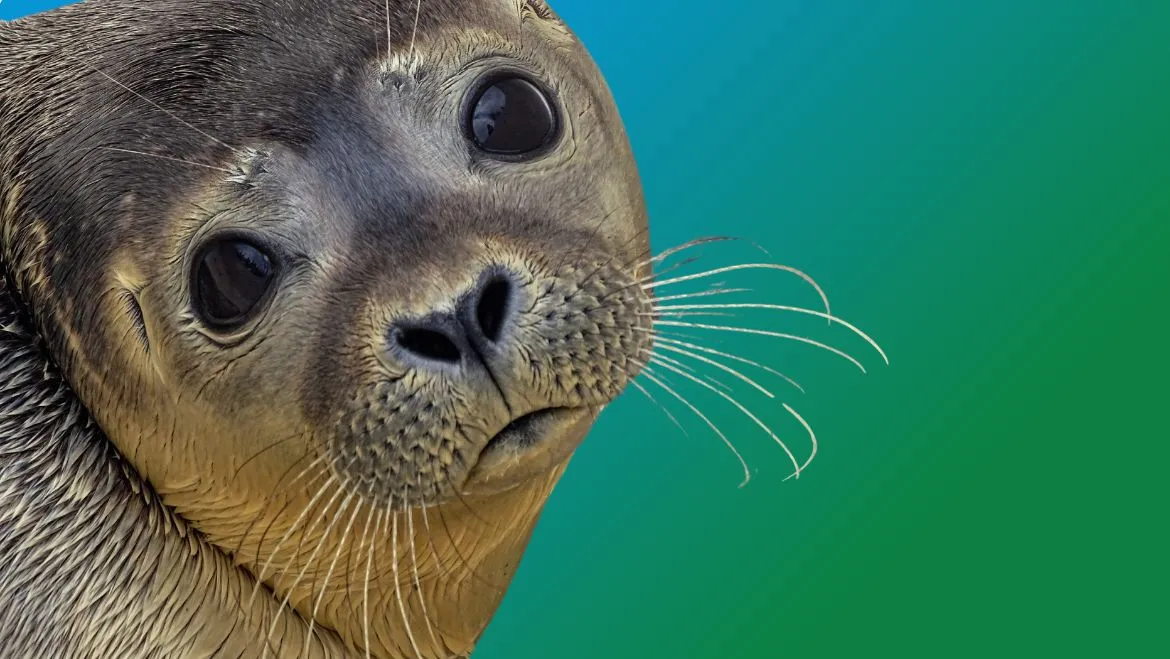
The seal does not arrive the way a predator does. In a journey it usually shows up as a face in the water — those enormous dark eyes breaking the surface, watching you with a curiosity that is almost unnerving, and then gone, and then back a little closer. What people report afterwards is the feeling of having been read: not judged, not approached, simply and completely perceived by something that lives where they do not.
This page is about the seal spiritual meaning — what it means when this animal keeps appearing, in journeys, in dreams, on the tideline of a life that is changing. It is not about pinnipeds and blubber. And the essential thing about the seal is written into its body: it belongs fully to two worlds at once. It is a mammal that breathes air and a swimmer at home in the deep. It moves between the surface and the depths, between land and water, all its life — and it does not pretend to be only one thing.
In my practice, the seal arrives for people who have been living entirely on the surface, or entirely in the depths — all competent daylight and no feeling, or all emotion and no ground under them. It comes for people who have learned to distrust what they feel beneath the surface. When people journey to the seal, it does not perform. It surfaces, holds their gaze, and shows them the element they have been avoiding.
The Bridge: What Seal Biology Teaches About the Seal Spirit Animal
Honest animal medicine is anchored in the real creature. The seal’s meaning is not painted onto it — it grows out of how the animal actually lives.
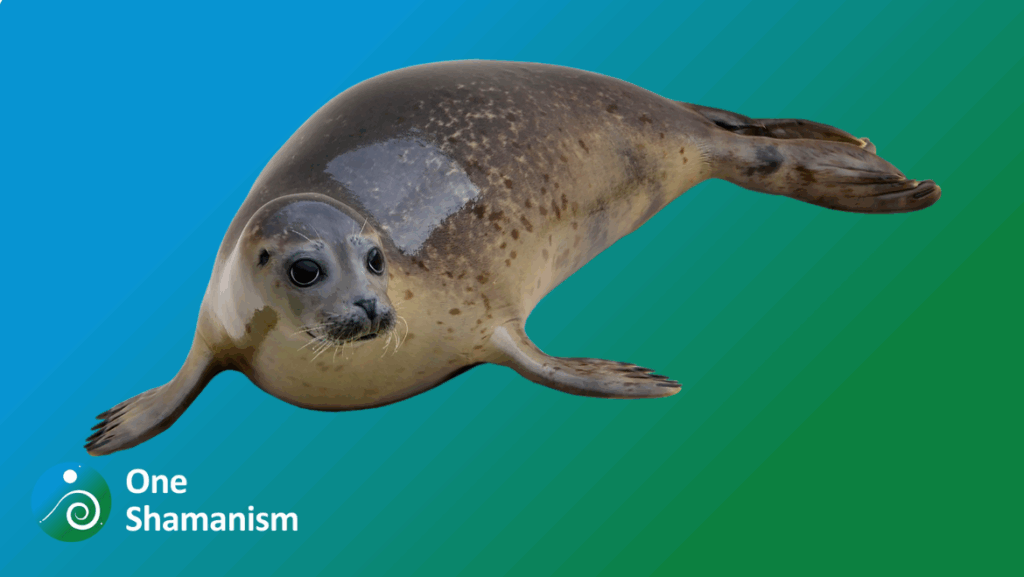
- It is amphibious, and unashamed of it. The seal is graceful and powerful in the water and famously clumsy on land, hauling its body over the rocks. It does not apologise for either. Seal medicine is the capacity to move between the emotional deep and ordinary waking life without drowning in one or beaching in the other — and the honesty to admit that one element is where you are graceful and the other is where you are awkward.
- It must surface to breathe. However deep it dives, the seal is a mammal; it returns to the air, deliberately, or it dies. You can descend into feeling as far as you like — but you have to come up. The seal is proof that depth and survival are not opposites, as long as you remember the surface exists.
- It reads the water with its whiskers. A seal’s whiskers are extraordinarily sensitive, able to detect the faint hydrodynamic trail a fish leaves behind and track prey through dark, murky water where the eyes are useless. This is the root of the seal’s reputation for intuition: it perceives what has already moved through a situation, the currents and disturbances others cannot see. When the seal is your guide, it is asking you to trust the feeling that arrives before the evidence.
- It plays, and the play is not frivolous. Seals are curious and playful, and their play keeps them agile, bonded and sharp. Joy, in seal medicine, is not a reward for finishing your suffering. It is part of the survival strategy. A life with no play in it is not serious; it is brittle.
Put those together and the seal’s message is clear: you are built for two worlds. Stop forcing yourself to live in only one. Dive into what you feel — and remember to surface. Trust the whisker, not just the eye.
Seal Symbolism Across Traditions
Wherever people have lived on a cold coast, the seal has been understood as something more than an animal — as a being that crosses the boundary between the human and the more-than-human world.
Celtic and Norse coasts: the selkie
The deepest seal tradition belongs to the Gaelic and Norse coasts — Scotland, Ireland, Orkney, the Faroes, Iceland. The selkie is a seal that can shed its skin and step ashore as a human, achingly beautiful, and then slip back into the sea. In the most famous version of the story, a man steals and hides a selkie-woman’s skin so she cannot return to the water; she stays, marries him, bears children — and never stops standing at the shore, longing for the element that was taken from her. When at last she finds her skin, she leaves. This is not a fairy tale about magic. It is one of the most precise images of the human soul that folklore has ever produced: the self you gave up to belong somewhere, and the grief of living without your own skin.
Inuit tradition: the mistress of the sea
In Inuit cosmology, the great goddess of the sea — known in many communities as Sedna — is the mother and mistress of the sea mammals, and the seals are hers. The hunt depends on her goodwill; when she is neglected or offended, the seals withdraw and the people go hungry, and it falls to the shaman to journey to her and set things right. These are living traditions belonging to specific peoples, and I reference them with respect and no claim to their ceremonies. But the principle inside the story is available to anyone: what feeds you from the depths must be honoured and reciprocated, or it stops coming.
The creature of the threshold
Across the coastal peoples of the Pacific Northwest and the North Atlantic alike, the seal recurs in the same register: a being of the boundary, a shape that moves between worlds, watched with a mix of kinship and awe because its face is so nearly human and its home is so entirely not. That is the heart of seal symbolism everywhere it appears. It is the animal that reminds us we, too, belong to more than one world — and that the water we came from is still calling.
The Path of the Paws
42 hand-illustrated oracle cards, one for each animal guide — drawn from the same practice these articles come from. A way to sit with an animal instead of only reading about it.
Order your deck →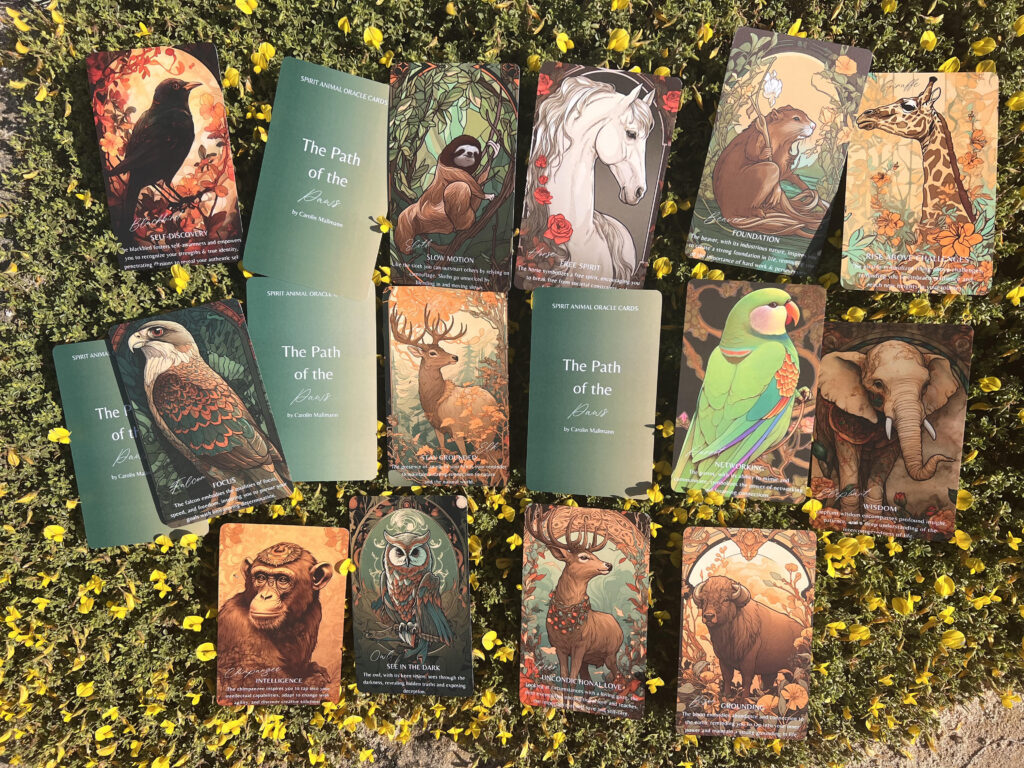
The Shadow of Seal Medicine
The seal is usually written up as pure intuition and play, which is exactly why its shadow goes unexamined. Its failure modes are specific and, in my practice, common.
- The stolen skin. The selkie’s tragedy is the most common seal shadow I meet: the person who gave up their true nature — their sea-self, their real work, their deepest need — to be allowed to stay in a relationship, a family, a role. They function. They are even loved. And they stand at the shore of their own life, quietly grieving something they can no longer name. If you have a longing you cannot explain, the seal is asking where your skin went, and who has it.
- Diving and never surfacing. The seal must come up for air. Its shadow is the person who goes so deep into emotion — grief, introspection, the beautiful dark water of feeling — that they forget the surface exists. Depth without breath is drowning, however spiritual it looks.
- Play as a wall. The seal’s charm and lightness can become a performance that keeps everyone at the surface. If you are the delightful one, the easy one, the one who deflects every real question with a joke, the seal is asking who is allowed to see your depths at all.
- Living in the wrong element. The seal is clumsy on land and mistakes it for failure only when it has forgotten it has a sea to return to. Some people spend years forcing themselves to be graceful on dry ground — in a life, a job, a way of being that is simply not their water — and call their exhaustion a personal flaw.
A seal appearing in a dream stranded on the rocks, unable to reach the water is one of the clearest images of a person cut off from their own element — the emotional life, the true work, the sea they belong to. A seal trapped under ice, unable to find the breathing hole speaks to feeling submerged with no way up, and it is worth taking seriously as a signal to get support. And a seal that keeps its distance, surfacing and watching but never approaching is usually showing you what your own guardedness looks like from the outside.
How to Journey to the Seal
Shamanic work is not a substitute for medical or psychological care. If you are new to journeying, begin with the step-by-step guide to finding your spirit animal. This is a journey between two elements, and the whole practice is refusing to stay in only one.
- Name the element you have been avoiding. Before you begin, say it out loud: “I have been living on the land and refusing the water” — or the reverse. The seal responds to that honesty directly.
- Enter at the tideline. Let a steady drumbeat carry you to a shore — a real one you have stood on. Stand where the water meets the land, the exact seam the seal lives in.
- Go into the water and dive. Follow the seal down. Do not try to see with your eyes — feel your way, the way the seal reads the water with its whiskers. Ask: “What has already moved through my life that I felt but never named?”
- Surface deliberately. Come up for air, on purpose, and notice how much you did not want to. The reluctance is information. Depth is only medicine if you can leave it.
- Haul out, and ask about the skin. On the rock, ask the seal the selkie’s question: “Where is my skin, and what did I trade it for?” Do not argue with the answer. Write it down exactly as it comes.
- Integrate by returning to your element once. Within a week, do one thing that belongs to the world you have been denying — one real dive into feeling if you live on the surface, or one solid, ordinary, grounded act if you have been lost at sea. And reclaim one small piece of your skin: name, out loud, one thing that is truly yours that you gave away to belong.
Seal Spirit Animal: Questions People Actually Ask
What does it mean when a seal appears to you?
It usually means you are being asked to move between two worlds you have been keeping apart — most often your emotional life and your practical one. The seal arrives when you have been living on the surface and ignoring the deep, or drowning in the deep and refusing the surface. Its message is almost always about restoring the movement between them, and about trusting what you feel before you can prove it.
Is the seal a good omen?
Yes, and a tender one. The seal is not a warning animal. When it arrives it tends to signal that the way through is not force but feeling, play and intuition — and that your own element, the one you may have abandoned, is calling you back. That is good news, though it sometimes comes with the grief of realising how long you have been away from it.
What does a seal in a dream mean?
Read where it is and what it is doing. A seal moving freely between water and shore usually speaks to a healthy flow between your feelings and your daily life. A seal stranded on the rocks points to being cut off from your own element. A seal watching from the water without approaching often mirrors your own guardedness, and a seal you cannot reach usually points to a longing you have not let yourself name.
How do I know if the seal is my spirit animal?
Persistence, not preference — whether the image keeps returning uninvited, especially at emotional thresholds. The people I meet who carry seal medicine tend to feel the currents in a room before anyone speaks, and often carry an unexplained longing for the sea. For the playful, joyful cousin of this medicine, read the dolphin spirit animal. To test the connection in a structured way, work through the A–Z spirit animal guide or sit with the Path of the Paws oracle deck and let the animal find you.
Is the Seal Your Spirit Animal?
Check the boxes that resonate with your spirit and current life journey.
Where is your skin — the part of your own nature you traded to belong somewhere — and what would it take to put it back on?