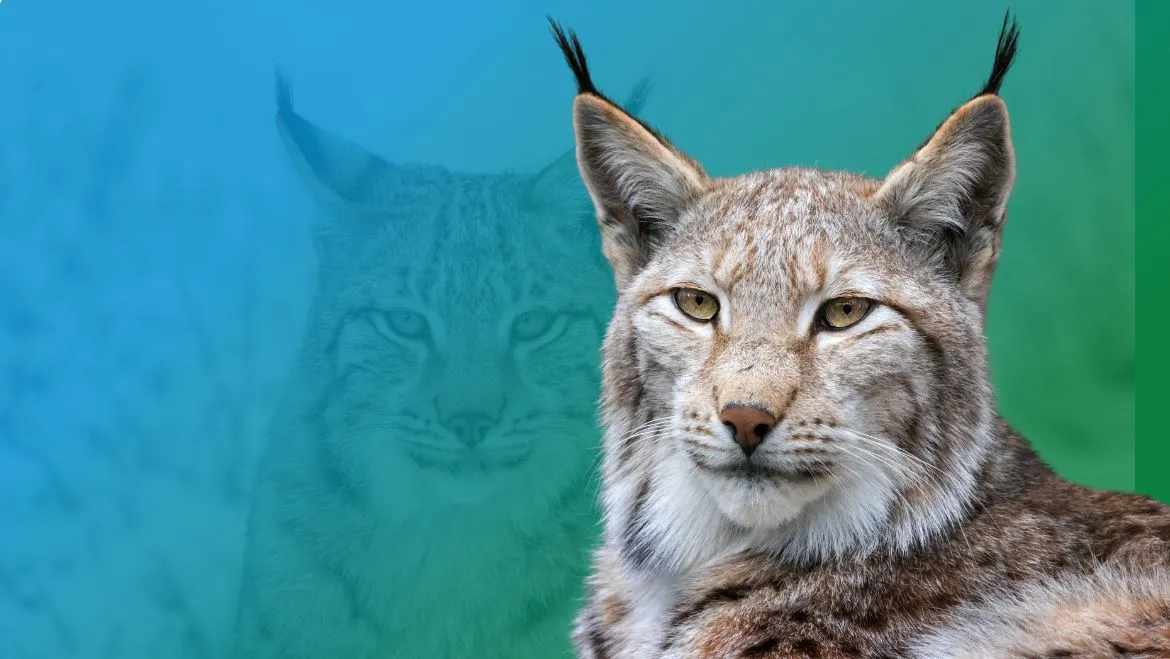
There is something specific about working shamanically in Portugal and Spain that makes the Iberian lynx medicine particularly alive for me. This animal lives here. Not in a distant continent, not in some abstract wilderness — in the scrubland and cork oak forests of the Iberian Peninsula, in a landscape I know and walk in. And for most of the last century, it was disappearing from that landscape so rapidly that by the early 2000s, fewer than 100 individuals remained in the wild.
The Iberian lynx became, in those years, the most endangered wild cat on earth. And then — through extraordinary human effort, through a conservation program that required decades of sustained commitment — it came back. Not fully, not without ongoing threat. But genuinely, measurably back. There are now over a thousand individuals in the wild. The trajectory has reversed.
I think about this when the lynx appears in shamanic space. It carries something that most spirit animals do not: the direct, recent experience of near-annihilation followed by genuine return. This is not simply a metaphor the lynx embodies. It is the actual story of this animal’s life on earth in our own generation. And that story is medicine.
Iberian Lynx Spirit Animal Meaning
The lynx spirit animal across traditions carries consistent qualities — extraordinary vision, particularly in conditions where others cannot see; a quality of perception that goes beyond the physical senses into something more like knowing; solitary authority; the capacity to wait with complete patience for exactly the right moment, and then to act with total commitment.
The Iberian lynx carries all of these, and something additional: the particular medicine of the one who almost wasn’t here. There is a quality in this animal’s presence — in journey space, in dream — that carries the weight of near-extinction. It does not bring drama about it. But it brings a quality of preciousness, of not taking existence for granted, that is unmistakable once you encounter it. The Iberian lynx knows, in whatever way an animal knows things, that its continued existence is not guaranteed. And it lives within that knowledge without diminishment.
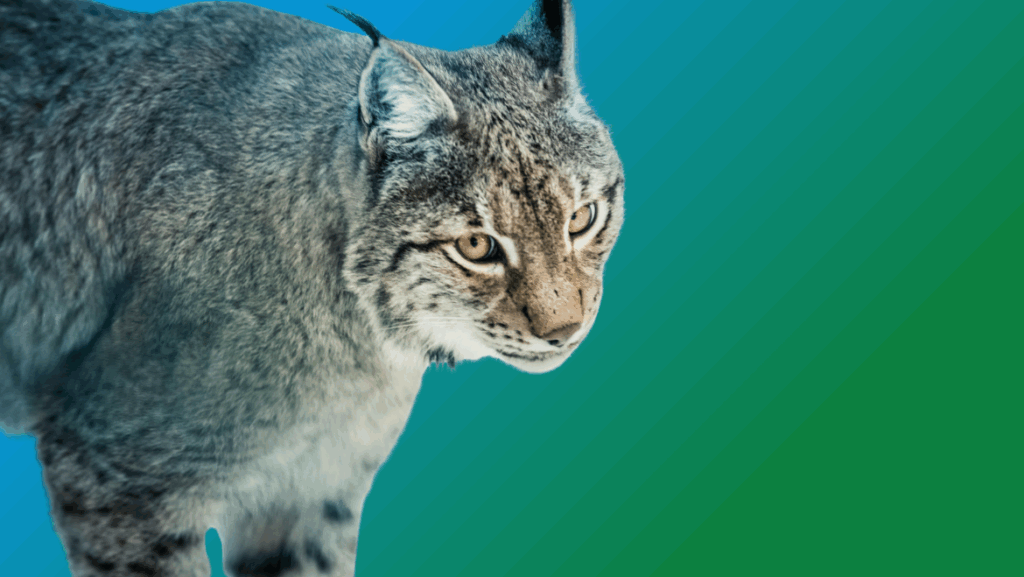
Who the Lynx Comes For
In my practice, the lynx tends to arrive for people in the early period of reconstruction — after an illness, a long depletion, a situation that stripped away more than it should have. Not in the crisis itself, but in the quiet afterward, when the question is no longer how to survive but who one is now, after all of that.
When people journey to the lynx, they often report the same thing: it does not approach quickly. It sits at a distance and watches, with an attention so complete that being seen by it becomes the experience itself. Nothing is said. And yet people consistently describe what they felt afterward not as comfort but as recognition — the sense of having sat beside a being that came very close to not existing and continues to exist anyway, without fanfare, with complete commitment to the life that remained.
I have learned not to interpret too quickly when this animal appears. Its medicine is not a message to be decoded. It is a quality of presence — and the people it comes for usually understand it without translation.
Stealth and Precision
The lynx’s hunting strategy is built on an extraordinary capacity for stillness followed by explosive, perfectly timed action. It can wait — motionless, completely focused — for far longer than most predators, and when it moves, the movement is so precisely timed and executed that the prey has almost no opportunity to respond. There is no wasted motion. Every expenditure of energy is deliberate and complete.
This quality of precision — of conserving everything until the moment of full commitment, and then giving everything to that moment — is the lynx’s teaching for those who tend to either act prematurely or wait so long that the moment passes. The lynx knows exactly when the moment has arrived. Not through calculation, but through the kind of embodied knowing that comes from complete, sustained attention.
For those who carry lynx medicine, the question it brings is consistently: Are you genuinely waiting for the right moment, or are you using waiting as a way to avoid commitment? And when the moment comes — and you will know when it comes — are you willing to give everything to it without holding back?
Keen Insight and Intuition: The Lynx’s Vision
The lynx’s eyes are among the most extraordinary in the animal kingdom — adapted for low-light conditions, capable of detecting movement at significant distances, designed for the precise depth perception required to judge a pounce exactly. In many traditions, the lynx is associated with the ability to see what others cannot: the hidden truth beneath the apparent situation, the thing that is present but not visible to ordinary attention.
This quality of perception — of seeing through rather than simply looking at — is the lynx’s most consistently reported medicine in journey work. It tends to arrive for people who are in situations where the apparent surface of things is genuinely misleading, where their own intuition is telling them something different from what the presented facts suggest. The lynx does not debunk the apparent. It simply directs your attention to what is underneath it, with such calm certainty that the hidden thing becomes impossible to continue ignoring.
Solitude and Independence
The Iberian lynx is one of the most solitary of the wild cats — territorial, self-reliant, maintaining its own space with clear boundaries and without the need for constant company. But its solitude is not isolation. It knows its territory completely. It has deep familiarity with every corner of the landscape it inhabits. Its solitude is not emptiness — it is the richness of a being that has developed a full relationship with its own environment and its own nature.
This quality — solitude as fullness rather than absence — is what the lynx teaches those who carry it. Not that connection with others is unimportant, but that there is a particular kind of knowing, a particular quality of self-possession, that can only be developed in solitude. The lynx that does not know its own territory cannot hunt effectively, cannot protect itself, cannot survive. The human who does not know their own interior landscape with the same intimacy is always, to some degree, operating in unfamiliar territory.
Adaptability and the Medicine of Return
The Iberian lynx’s conservation story is, among other things, a story about what genuine resilience actually requires. This animal did not simply endure — it was sustained, over decades, by a combination of its own biological tenacity and extraordinary human commitment. The recovery required habitat restoration, prey population management, breeding programs, reintroduction efforts across multiple regions, and the sustained political and financial will to continue when the outcome was genuinely uncertain.
As medicine, this teaches something important: that resilience is not always a solo act. The lynx’s return required the lynx’s own biological drive to survive — and it required a web of support from outside. Those who carry lynx medicine are sometimes called to be that web of support for others. And sometimes they are being reminded that their own resilience, however real, may be more sustainable when they allow others into the process of their recovery.
The Shadow Side of Lynx Medicine
Every gift has a place where it turns. The lynx’s turns quietly, which makes it easy to miss.
Watching can become a way of not living. The lynx’s perceptive gift — seeing everything, missing nothing — can harden into a permanent observer position: always reading the room, never entering it. If you find yourself understanding every situation with great precision while participating in none of them, the lynx’s stillness has stopped being preparation and started being a hiding place.
Waiting can become avoidance. The patient hunter and the person who never commits look identical from the outside. The difference is internal: the lynx’s waiting is fully engaged, oriented toward action. Shadow-waiting is oriented away from it — the moment is always not-quite-yet, and the not-quite-yet is the point.
Solitude can quietly become isolation. The self-possession the lynx models is built in solitude, but it is meant to be brought back into contact. When the territory becomes a fortress — when self-reliance becomes the refusal to be helped — the very medicine of this animal’s story is being ignored. The lynx did not return alone. It was helped back.
Survival vigilance can outlive the threat. A lynx appearing threatening or blocked in a recurring dream often points here: some part of you is still living as though scarcity and danger were current, when in fact the season has changed. The question the shadow-lynx asks is uncomfortable and precise: what would you do differently if you believed the recovery was real?
How to Journey to the Iberian Lynx
- Come with a question about perception. The lynx responds most powerfully to questions about what you cannot yet see clearly — the hidden layer of a situation, the intuition you are not yet trusting, the thing your deeper knowing keeps saying and your rational mind keeps overriding.
- Journey into scrubland or cork oak forest. The Iberian lynx’s specific habitat — mixed open forest and dense cover — is where it is most accessible in the spirit world. If you know this landscape, journey into it. If you don’t, move toward the quality of it: open visibility and deep shadow alternating between trees.
- Wait without searching. The lynx will not be found by someone actively looking for it. Arrive, state your intention, and become genuinely still. The stillness you cultivate is itself the preparation — it brings you into the lynx’s mode of being before you have encountered the animal.
- Pay attention to the eyes. If the lynx appears, its gaze is the primary communication. What it looks at — and what it directs you to look at — is almost always more important than any words or symbolic actions. The lynx teaches through directed attention.
If you are not yet sure which animal walks with you, our guide to finding your spirit animal describes how to begin this work safely and without forcing an answer.
The Iberian Lynx in Dreams
A lynx appearing in dreams almost always signals that something is present in your situation that you are not yet seeing — not hidden maliciously, but simply outside the range of your current attention. The lynx is pointing your perception in a specific direction.
A still, watching lynx is asking you to develop the same quality — to be present enough, quiet enough, that what is currently invisible becomes perceptible. A lynx moving through shadow is showing you that something important is moving in the parts of your life or psyche you have been avoiding looking at directly. A lynx making direct eye contact is the most intense version of this guide’s communication — something needs to be seen now, clearly and without looking away.
A lynx that appears healthy and fully present in a dream — particularly for those who have been through significant loss, illness, or depletion — can carry the specific medicine of return: the image of something rare and nearly lost that is genuinely, unmistakably here.
Iberian Lynx Spirit Animal: Common Questions
What does the Iberian lynx mean as a spirit animal?
It combines the classic lynx qualities — piercing perception, patience, solitary self-possession — with something unique: the lived experience of near-extinction and genuine return. It tends to appear for people rebuilding after loss or depletion, carrying the quiet knowledge that survival can become presence again.
What does it mean to dream of a lynx?
Usually that something in your situation is real but not yet visible to you. The lynx directs attention: notice what it watches in the dream. A calm lynx invites stillness and trust in your perception; a threatening one often points to vigilance that has outlived its usefulness.
Is seeing a lynx a good omen?
In most European traditions the lynx is a keeper of secrets and hidden knowledge rather than a bringer of luck. Encountering one — physically or in inner work — is generally read as an invitation to trust what you perceive beneath the surface, not a prediction of fortune.
How is the Iberian lynx different from other lynx spirit animals?
The perceptive and solitary qualities are shared across lynx species. What the Iberian lynx adds is the medicine of return — it went to the edge of extinction within our lifetime and came back. For those recovering from their own near-annihilation, that specificity matters.
Affirmations for Iberian Lynx Medicine
- “I am still enough to see what others cannot. I trust what my deeper perception shows me.”
- “I know my own territory — my interior landscape — with the completeness and intimacy of the lynx.”
- “I am here. After everything, I am genuinely, completely here.”