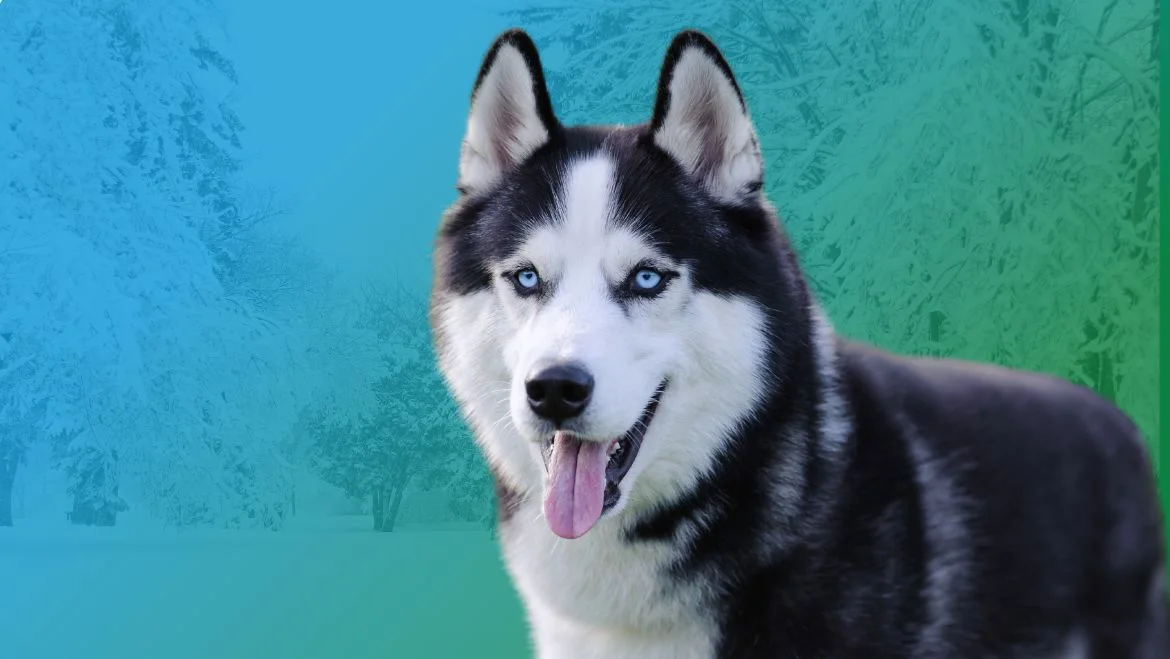
Have you ever looked deep into the eyes of a Husky? It’s a captivating experience. In one moment you see the wild, untamed spirit of the arctic tundra — a primal call to adventure and boundless freedom. In the next you see a soft, unwavering loyalty; a profound commitment to its family, its “pack.” That beautiful duality is the very heart of the Husky spirit animal.
When Husky came into my practice for the first time, what I felt in my body was not freedom. It was harness. A pull across the chest and shoulders, forward, insistent — the sensation of being tied to something and wanting to run anyway. That surprised me, and it has surprised almost every client since. People expect Husky to feel like wildness. He feels like willing effort. He is not a guide for the faint of heart. He is a teacher of resilience, a champion of the journey, and a fierce protector of his tribe. When Husky runs into your life, it is a call to awaken your adventurous spirit, honour your commitments, and find the endurance to see the journey through to its end.
The Bridge: What Husky Biology Actually Teaches
The Siberian Husky is not a wolf and not a pet. He is a working animal bred over millennia by Arctic peoples for one purpose: to pull, for a very long time, in appalling conditions, without breaking. His spiritual medicine is inseparable from that.
- He runs on almost nothing. Sled dogs display an extraordinary metabolic ability to shift into fat-burning endurance within a day or two of sustained work, running vast distances daily without the depletion that would destroy a human athlete. Husky medicine is the medicine of pace, not power. He is not asking you to go faster. He is asking you to find the speed you can hold for a thousand kilometres.
- He is built for the cold, not against it. A double coat, a curled tail he sleeps beneath, a nose that warms the air. Husky does not endure winter by resisting it — he is designed for it. The teaching is uncomfortable: the hard conditions in your life may not be an obstacle to your path. They may be the terrain your path requires.
- He pulls in a team, and the team has a shape. Lead dogs, swing dogs, wheel dogs — different roles, different strengths, all necessary. The wheel dogs closest to the sled take the heaviest strain and are never the ones people photograph. Ask yourself which position you have taken in your own life’s team, and whether you chose it or simply never questioned it.
- He howls; he does not bark. Huskies are famously vocal and famously poor guard dogs. He announces, he communicates, he sings — he does not threaten. Husky people are often deeply expressive and profoundly non-aggressive, and are sometimes mistaken for being soft. They are not.
Huskies thrive in cold, challenging environments, showcasing adaptability and strength. Their lifestyle — a balance of independence and pack mentality — teaches us the importance of community and the value of forging strong bonds with those around us.
Core Symbolism & Historical Context: The Dog Who Made the North Possible
The Husky’s cultural weight is not mythological in origin. It is historical, and that makes it rarer and more solid than most spirit animal lore.
The Arctic: the dog as survival infrastructure
The Siberian Husky descends from dogs bred by the Chukchi people of northeastern Siberia, and closely related sled dog lineages were developed by Arctic peoples across the circumpolar north. Genetic studies of ancient dog remains have pushed the story of Arctic sled dogs back thousands of years. These are living peoples with living traditions, and their stories belong to them; I reference the history here with respect and without any claim to their ceremonies. What the archaeology and the genetics establish plainly is this: human beings could not have lived in the far north without these dogs. Not “would have found it harder.” Could not have.
That is an extraordinary spiritual status for an animal to hold. Husky is not a symbol of partnership. He is the historical proof that partnership is what makes the impossible survivable.
The 1925 serum run: the archetype made literal
In January 1925, a diphtheria outbreak threatened Nome, Alaska. Twenty mushers and roughly 150 sled dogs relayed antitoxin nearly 1,000 kilometres through a brutal Alaskan winter in about five and a half days. Balto and Togo became famous — though Togo’s team ran by far the longest and most dangerous leg. There is a teaching in that too, and Husky people should sit with it: the one who carries the hardest stretch is often not the one who gets the statue.
The wolf archetype, corrected
People come to Husky expecting Wolf medicine — the lone hunter, the wild outsider. Husky is Wolf’s medicine chosen. He has the wildness and has voluntarily bound it to a rope, a team, and a destination. Where Wolf teaches instinct, Husky teaches commitment: the far harder spiritual discipline of staying with something.
Traits, Attributes & the Symbolism of Husky Puppies
The Husky spirit animal embodies endurance, resilience and independence — a beacon of perseverance in the face of life’s challenges. This innate sense of direction, coupled with unwavering determination, guides us to push forward even when the path ahead seems insurmountable.
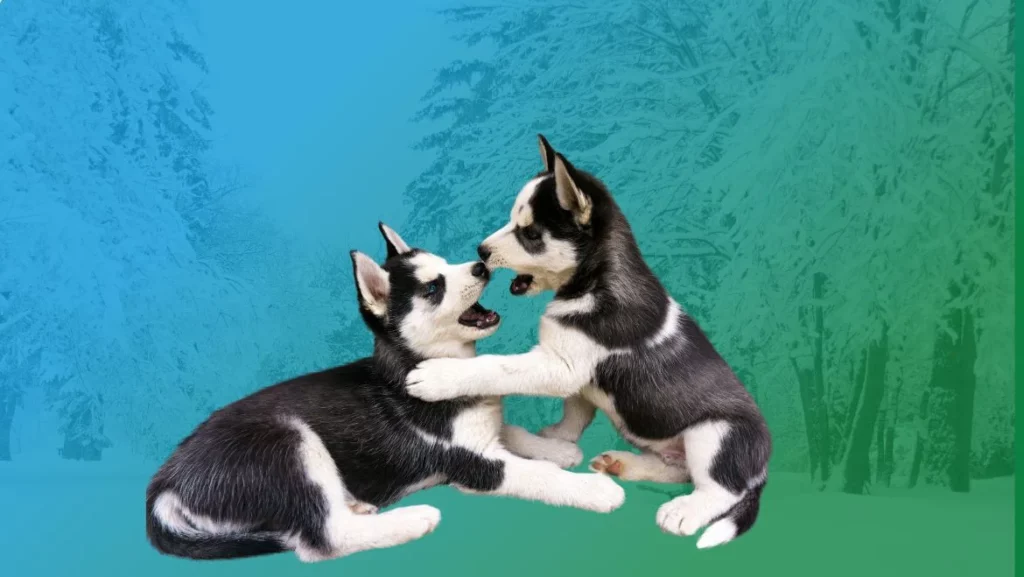
Husky puppies carry a different and gentler medicine: boundless energy, curiosity, and the pure joy of a journey that has not yet become hard. When Husky comes to you as a pup, it usually means you are at the very beginning of something long — and that the enthusiasm you feel now is real, but is not yet endurance. Enjoy it. Then build the muscle.
Affirmations from the Husky Spirit
- “I embrace the journey with strength and resilience.”
- “I find freedom in the wildness within me.”
- “I build meaningful connections, valuing loyalty and trust.”
- “I adapt to change, finding my path through adversity.”
The Shadow Aspect: Husky’s Warning Medicine
Endurance is the most easily corrupted virtue there is, and Husky’s shadow is the reason I take this guide seriously rather than sentimentally.
- Pulling a sled that is going nowhere. This is the single most common Husky shadow I meet. The capacity to endure becomes the reason you stay ten years in a marriage, a job, or a caretaking role that ended long ago. A Husky will pull until he drops. That is not always a virtue — sometimes it is a failure to look up. Ask: am I persevering, or am I just harnessed?
- Loyalty as self-erasure. The pack is sacred to Husky. But loyalty that costs you your own direction is not loyalty; it is disappearance. Some of my most loyal clients have never once asked where they wanted to go.
- Restlessness disguised as adventure. The flip side: the Husky who runs and runs and never arrives. If every year brings a new city, a new project, a new beginning, and never a completion — that is not freedom, it is a dog who has slipped the harness and cannot stop moving.
- Endurance as a refusal to grieve. Keep moving and you never have to feel it. Husky people are extraordinary at functioning through loss. They are often terrible at metabolising it.
Husky in dreams, and when he appears blocked
When Husky appears in dreams, he often signals a call to adventure, or a reminder of your own strength and independence. But pay close attention to his state. A husky straining in a harness that is attached to nothing is the clearest warning image I know: enormous effort, no movement. A husky alone, howling, cut off from the team points to an isolation you have normalised. A husky lying down in the snow and refusing to rise is not laziness — in my experience it is a body telling you it is finished, and it should be taken seriously, including medically.
Practical Shamanic Work: The Trail Journey & Harness Ritual
Husky is an excellent guide for anyone in the middle of something long and unglamorous. This is the practice I give clients who are exhausted but not finished.
- Set a trail-shaped intention. Not “give me strength to keep going.” Rather: “Show me what I am pulling, and where it is actually going.” The distinction is everything.
- Prepare. Sit somewhere cool if you can. Cover your eyes. Fifteen to twenty minutes of steady drumming — let the drum find a running rhythm, not a slow one.
- Enter through open snow. Not a cave, not a tree — a wide white trail ahead of you. Husky’s world is horizontal and long.
- Look behind you first. Before you meet him, turn and look at what is on your sled. Most people are shocked. Name every item you are hauling.
- Then let him run with you, and ask two questions: “What on this sled is not mine to carry?” and “Who is running beside me that I have never thanked?”
- Ask to be shown the destination. If the trail leads nowhere, he will show you. Do not argue with him.
- Return, and rest properly. Not collapse — rest. Husky sleeps hard between runs. So must you.
The Harness Ritual: choosing your load
- Write down every obligation you are currently pulling. All of it. Work, family, promises, old guilt. One line each.
- Mark each one: chosen, inherited, or expired. Be brutal with the third category.
- Cut one expired line — literally. Write it on a cord or a strip of paper and cut it. Say aloud what you are no longer pulling.
- Name your team. Write the names of the people actually running beside you, and tell one of them this week. Huskies do not run alone, and neither do you.
- Walk outdoors, fast, for twenty minutes. Husky medicine lands in the body or it does not land at all.
To embody Husky’s spirit day to day: seek out adventures that genuinely stretch you, cultivate the resilience that comes from choosing your load rather than accepting it, nurture relationships built on loyalty and trust, and stay true to your own direction — guided by the inner compass of your spirit animal. If you are new to this practice, start with the beginner’s guide to shamanic journeying.
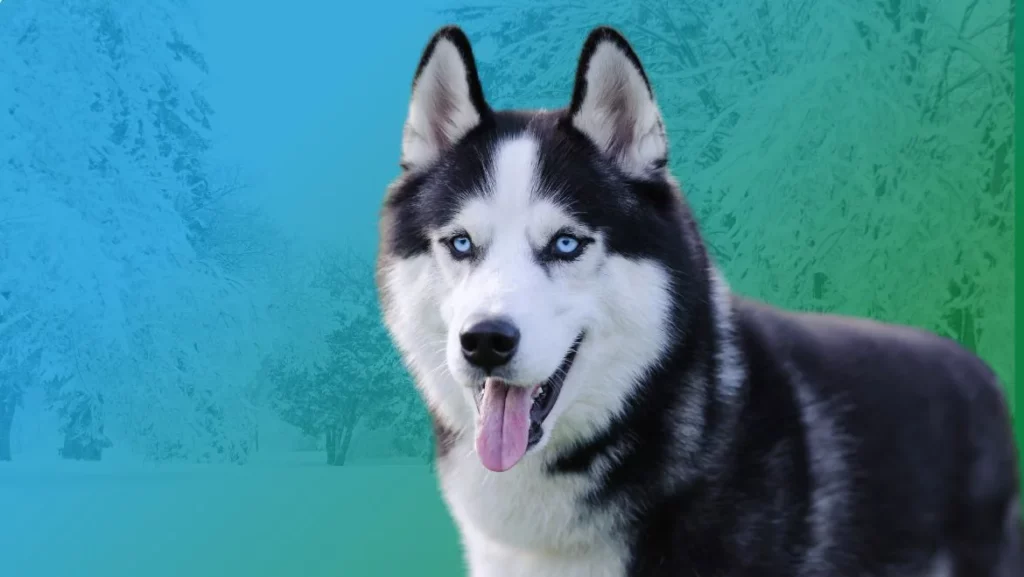
Is the Husky Your Spirit Animal?
Check the boxes that resonate with your spirit and current life journey.
The Husky as a spirit animal brings a message of strength, adventure and community — but always with the harness in view. Embrace his qualities and you can navigate life’s snowy terrain with confidence, moving forward with resilience and grace. Just remember to look up from the trail now and then, and check that the sled is still going somewhere you want to arrive.
About the Author — Carolin Mallmann
I am Carolin Mallmann, founder of One Shamanism and author of The Path of the Paws. For over two decades I have worked with people as a coach, certified NLP practitioner and shamanic practitioner, guiding thousands of one-to-one sessions and training students internationally in shamanic journeying, spirit animal work and shadow integration. Everything I write here comes from lived practice — my own journeys, my teachers, and the real experiences of the clients I sit with. I do not promise miracles, and shamanic work is not a substitute for medical or psychological treatment. What I can offer is an honest, grounded path — and the endurance to walk it. Read more about my background and practice here.