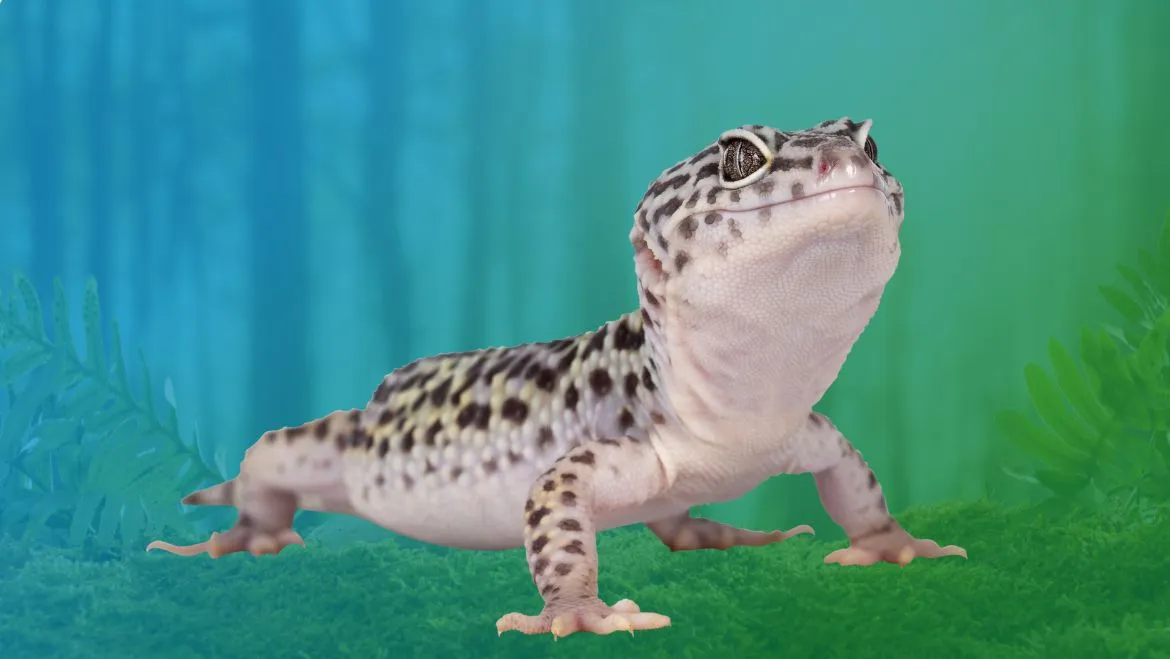
Gecko arrives sideways. She does not descend in glory or come loping out of the dark; she is suddenly simply there, motionless on a wall that should not hold her, watching you. In more than two decades of shamanic and coaching work I have noticed how consistently clients describe the same physical sensation on meeting the Gecko spirit animal: a prickling stillness across the skin, and the odd conviction that they themselves are being read — patiently, without judgement, and completely.
Then she moves, and the message lands. Gecko shows up for people who are stuck to something that is costing them: a role, a story, a relationship they cannot leave without losing a piece of themselves. Her medicine is not comfort. It is the terrible, liberating knowledge that you can drop the tail and live — and that what grows back will not be identical to what you lost. This article is what I have learned about working with her honestly.
From Wall to Psyche: The Bridge Between Gecko Biology and Gecko Medicine
Honest spirit-animal work always begins with the real animal. The spiritual meaning is not invented on top of the biology — it grows out of it.
Three facts about geckos carry almost the whole of the teaching.
- She holds on without gripping. A gecko’s toes are covered in millions of microscopic hairs — setæ — that adhere through molecular attraction, not suction or glue. She sticks to a vertical pane of glass by proximity, and she releases instantly by changing the angle of her foot. Sit with the metaphor: it is possible to be completely attached and completely free to let go, and the difference is not force. It is the angle at which you are holding on.
- She drops what is being held against her. Caudal autotomy — the voluntary shedding of the tail. When a predator has her by the tail, the gecko does not fight for the tail. She severs it, at a pre-formed fracture plane built into her own body, and walks away. The tail regrows, but it grows back as cartilage, not bone. It is never the same tail.
- She has a voice, and reptiles mostly do not. Geckos are among the very few lizards that vocalise — the chirps, clicks and barks that gave the family its name. In a class of animals defined by silence, Gecko speaks.
Adaptability follows from all of this. Geckos live on every continent except Antarctica — in rainforest and desert, savanna and mangrove, on cliffs, in caves, and in enormous numbers on the walls and ceilings of human houses, hunting the insects our lights attract. She does not wait for a perfect habitat. She makes the imperfect one work.
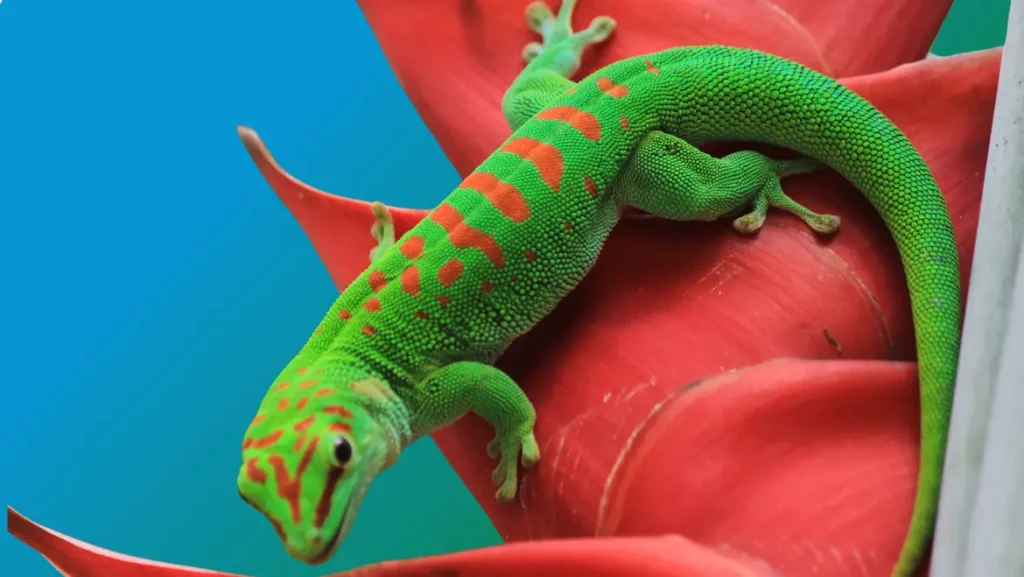
Core Symbolism & Historical Context of the Gecko
The gecko is a household animal in most of the warm world, and household animals accumulate the deepest, most practical symbolism — the kind that is lived rather than theorised.
Oceania and Southeast Asia: The Voice in the Wall
Across many Pacific and Southeast Asian cultures the gecko is a guardian of the home and a bringer of good fortune, and — crucially — her call is treated as an omen. In parts of Indonesia and Malaysia the loud bark of the tokay gecko is counted, or heeded, at the moment a decision is being spoken aloud. These are living traditions belonging to specific communities, and I reference them as an outsider who was taught to take them seriously, not as an owner of them. But the underlying image is universal and worth taking to heart: the small voice from the wall confirms or interrupts you, and the wise person listens.
The Wider Lizard Family: Sun, Regeneration and the Dreaming Mind
Geckos belong to the older, wider symbolism of the lizard. In Egyptian and Mediterranean material the lizard is associated with the sun, with basking, and with the mystery of an animal that seems to go dormant and then return, warm and quick, as though resurrected. In Roman and later European emblem traditions the lizard sleeping in the sun becomes an image of regeneration through rest — not laziness, but the deliberate stillness that precedes renewal. The gecko, hunting by night and holding motionless for hours, is the same creature with the polarity reversed: she is the watcher at the edge of the light.
Jung, Sacrifice and the Regrown Limb
In depth-psychological terms, autotomy is one of the most exact images of individuation I know. Jung’s insight was that becoming yourself always costs something concrete — a persona, a role, an identity you were praised for. The gecko does not negotiate with the predator. She pays, immediately, and she pays with a real part of herself. And what regrows is functional but different. This is honest, and it is why I trust her: she does not promise you will get your life back unchanged. She promises you will have a life.
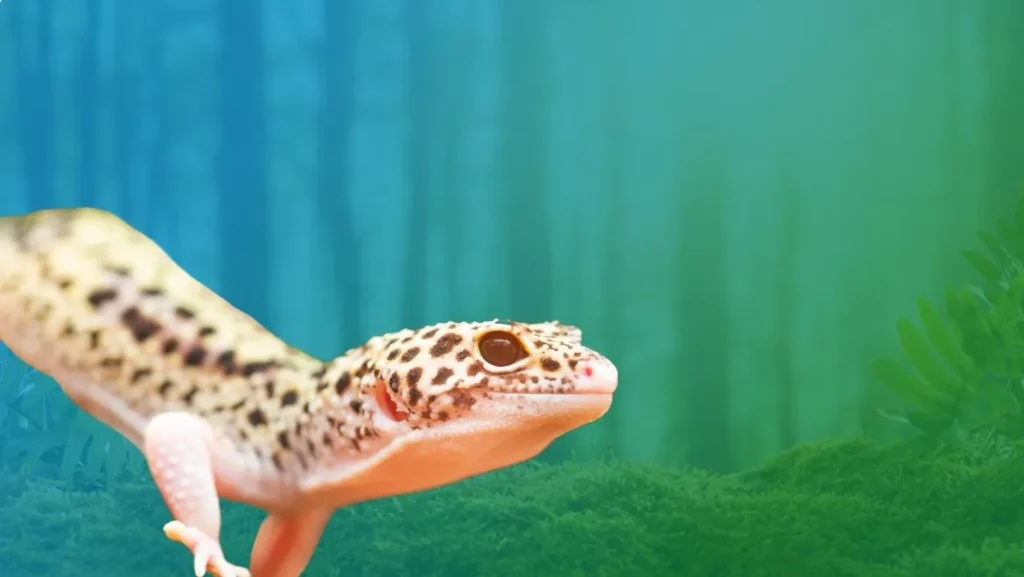
Spiritual Messages & Abilities of the Gecko Power Animal
- Regeneration: the capacity to lose something real and grow forward anyway.
- Adaptability: thriving in the habitat you actually have, not the one you wanted.
- Voice: speaking up in an environment where silence is the norm.
- Detachment without coldness: holding on lightly enough to be able to let go.
- Night vision: seeing clearly in circumstances other people find unreadable.
- Guardianship of the home: protecting the inner house — and knowing what is living in its walls.
The Shadow Aspect: The Warning Medicine of the Gecko
Gecko’s gifts have exact and unflattering distortions, and when she appears reversed, blocked, or in a recurring dream, these are what she is pointing at.
- The tail dropped too easily. This is the shadow I meet most often. Autotomy becomes a habit: the person who leaves the job, the city, the relationship at the first grip of pressure, and calls it adaptability. Each escape costs a real piece of the self, and the pieces do not grow back indefinitely. Ask honestly: am I releasing what has hold of me, or am I abandoning what asked something of me?
- Adaptability as self-erasure. The gecko changes colour to match the wall. Done consciously, that is discretion. Done unconsciously for thirty years, it is a life spent taking the shape of other people’s rooms until you can no longer say what colour you are.
- The unused voice. Gecko can speak and mostly chooses not to. If she appears silent, mute, or turned away on a journey, the reading in my practice is almost always the same: you know the thing that needs saying, and you have decided the cost of saying it is too high. She has come to argue with that decision.
- Stuck to the wall. The inverse of flight. Frozen, immobile, waiting for a change of circumstance that is not coming. Stillness that was once strategy has become paralysis.
- Dreams of the severed tail. When clients dream of a lizard’s tail twitching on the ground, separated from the body, it points with unusual precision to a part of the life that has been cut off and is still moving — an unfinished grief, an ex-partner, an old self still drawing attention. Something was severed and never mourned.
Shadow work with Gecko is quiet and specific. It usually means one honest sentence spoken out loud, or one honest refusal to run.
Practical Shamanic Work: Journeying with the Gecko
This is the journey I give clients who are ready to meet Gecko directly. Allow thirty minutes. Do not do it while distracted or intoxicated.
- Set a precise intention. Not “show me my spirit animal” but something Gecko can actually answer: “What am I still holding that I need to let fall?”
- Prepare the container. Dark room, blanket, a steady drumbeat (roughly four beats per second) for 15–20 minutes. Lie down. Cover your eyes.
- Travel to a warm wall. Not a tunnel this time — a real sun-warmed wall or rock face you have actually touched. Put your palms flat against it. Feel the heat come back into your hands.
- Call, then wait. Speak the intention aloud. Do not manufacture a gecko. Let one come, and ask it three times whether it is here for your highest good.
- Ask to be shown the grip. Gecko will show you the exact place where something has hold of you — or where you have hold of it. Look at whose hand it is.
- Ask what the tail is. Name it. This is the hard part, and the whole journey turns on it. It will be something you value.
- Listen for her voice. If she speaks, do not interpret. Simply record the words exactly.
- Thank her and return at the callback beat. Write everything down before you speak to anyone.
The Shedding Ritual: Integrating Gecko Medicine
A journey without integration is entertainment. Within 48 hours:
- Name the tail out loud. One sentence: “The thing that has hold of me is ______, and the piece I would have to give up is ______.” Say it to a person, not to a journal.
- Do not cut yet. Gecko’s shadow is the too-easy escape. Sit with the naming for a full week before you act. If it is still true after seven days, it is true.
- Change the angle, not the grip. Choose one relationship or commitment you have been white-knuckling and, this week, hold it differently — fewer messages, one honest boundary, less monitoring. Notice that it does not fall.
- Use the voice once. Say the one thing you have been swallowing. One sentence, to the person it belongs to. This is the entire practice.
- Sit in the sun for twenty minutes and do nothing. Regeneration in this tradition is not effort. It is warmth, stillness, and time — and it will not happen while you are busy.
If you are new to this work, start with the basics of shamanic journeying — and if you would like guidance in finding your spirit animal, that is exactly what I do with clients.
Affirmations to Embrace the Gecko Spirit
- “I adapt to change with ease and confidence, embracing the flow of life.”
- “I express my truth freely and confidently, knowing my voice is powerful.”
- “I release the old and welcome new growth and healing into my life.”
Is the Gecko Your Spirit Animal?
If you are wondering whether the gecko is your spirit animal, sit with these questions honestly rather than hopefully:
- Do you adapt to new environments so easily that people rarely ask what you wanted?
- Is there something you have been holding on to long past the point where it was good for you?
- Have you survived a loss that cost you a real piece of yourself — and grown something new, but different, in its place?
- Do you have a voice you are not using?
If these land, Gecko is likely close. Her offer is a serious one: you are allowed to survive this, and you are allowed to be changed by it. Adaptability, in her hands, is not the ability to bend endlessly. It is knowing precisely what to release, and when — and then having the nerve to grow the new thing in daylight.
About the Author — Carolin Mallmann
I am Carolin Mallmann, founder of One Shamanism and author of The Path of the Paws. For over two decades I have worked with people as a coach, certified NLP practitioner and shamanic practitioner, guiding thousands of one-to-one sessions and training students internationally in shamanic journeying, spirit animal work and shadow integration. Everything I write here comes from lived practice — my own journeys, my teachers, and the real, sometimes uncomfortable experiences of the clients I sit with. I do not promise miracles, and shamanic work is not a substitute for medical or psychological treatment. What I can offer is an honest, grounded path back to your own instincts. Read more about my background and practice here.