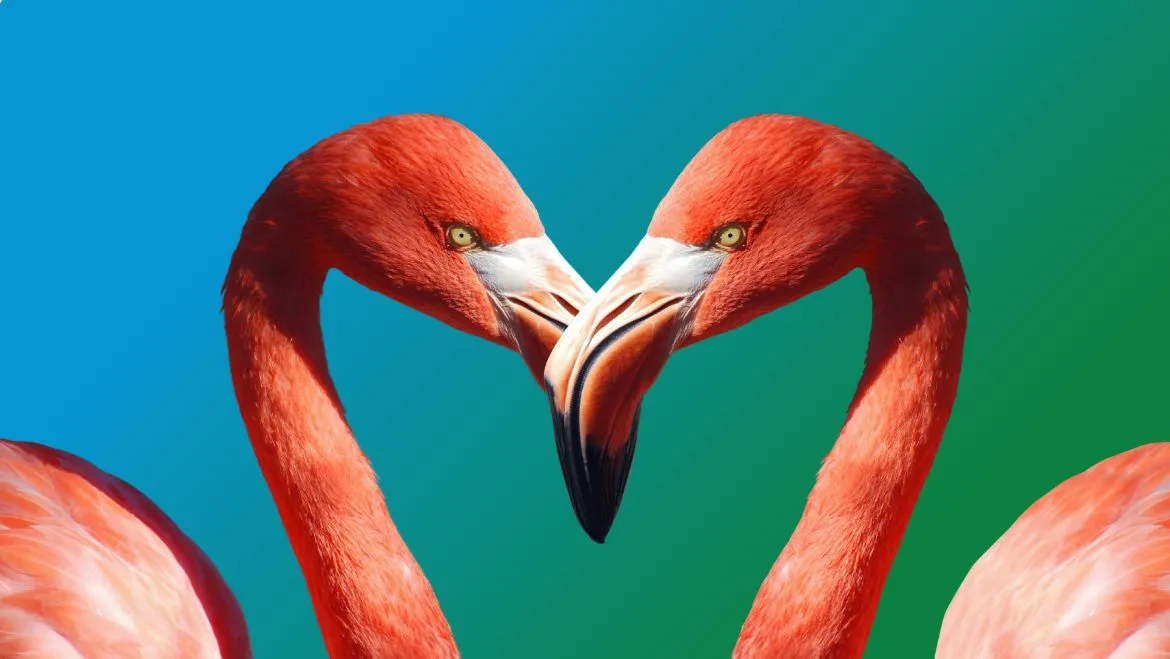
When the flamingo first waded into one of my journeys, what struck me was not the colour but the stillness. A tall, improbable bird standing on a single leg in shallow water, utterly composed, while everything around it moved. There was no effort in it — no wobble, no bracing — just a poised, almost amused steadiness. I felt my own nervous system borrow it, the way you catch someone else’s calm in a waiting room.
That is the medicine of the flamingo spirit animal. It arrives for people who are trying to hold their balance in unstable water — a shifting relationship, a workplace, a season of change — and who suspect they should be gripping harder than they are. In my practice, the flamingo tends to come for those who have learned to perform poise while quietly exhausted underneath, or who have lost their own colour inside a group they love. It does not ask you to try harder. It asks a stranger question: what are you actually standing on, and what are you made of?
Flamingo Spiritual Meaning: From Biology to Message
The flamingo’s spiritual meaning is not decoration laid over a pretty bird. It grows directly out of how the animal actually lives.
- It is not born pink. Flamingo chicks hatch grey. The famous colour comes entirely from carotenoid pigments in the algae and brine shrimp they eat — the flamingo becomes the colour of what it takes in. Your vibrancy, too, is built from what you consume: food, company, information, grief, love.
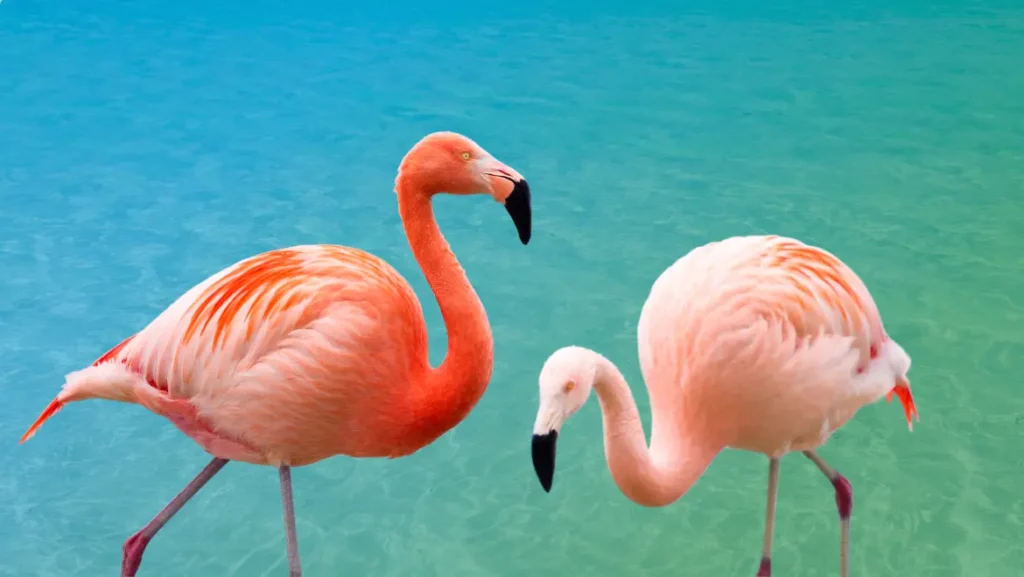
- The one-legged stance is efficiency, not effort. Standing on one leg lets the flamingo conserve body heat in cold water, and research suggests the posture is actually more stable and requires less muscular work than standing on two. True balance is not strain. It is finding the position that costs you least.
- It feeds with its head upside down. The flamingo filters tiny food from the water with its head inverted, seeing the world from a reversed angle. Nourishment, for this bird, requires a change of perspective.
- It cannot thrive alone. Flamingos breed in vast colonies and often will not breed at all unless the group is large enough. Belonging is not optional for them; it is biological. That is both the gift and, as we will see, the shadow.
So the flamingo’s real teaching is sharper than “find balance and be yourself”. It is this: you are coloured by what you take in, steadied by finding your least-effort stance, and made vivid within — not despite — your community.
Symbolism and Cultural Context
The flamingo has carried very different meanings across the cultures that lived beside it, and they are worth naming individually.
In ancient Egypt, the flamingo was linked to the sun and to the colour red, and is widely thought to be one of the living inspirations for the Bennu, the heron-like bird of rebirth that later fed the Greek myth of the phoenix. Here the flamingo belongs to cycles of renewal and the returning sun. In the Roman world, by contrast, the flamingo’s beauty made it a target: its tongue was served as a luxury delicacy at imperial banquets — a stark early lesson that standing out in a crowd draws appetite as well as admiration.
In the high Andean cultures of South America, flamingos of the salt lakes appear in textiles and iconography and are associated with the sacred mountain lakes and their spirits; in parts of the Caribbean, the flamingo became an emblem of place and identity, later the national bird of the Bahamas. Across these traditions a single thread holds: the flamingo is the being whose colour and grace make it visible — and visibility is always double-edged, bringing both reverence and risk. I name these traditions rather than blur them, and reference them with respect for the peoples who hold them.
The Path of the Paws
42 hand-illustrated oracle cards, one for each animal guide — drawn from the same practice these articles come from. A way to sit with an animal instead of only reading about it.
Order your deck →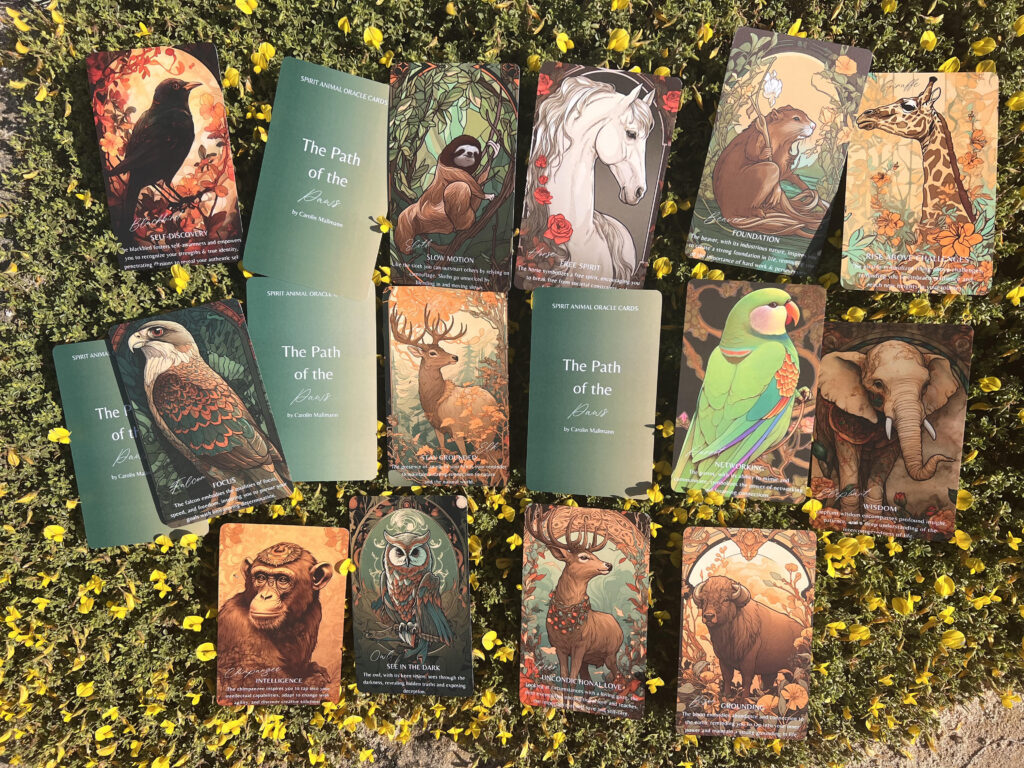
The Shadow of the Flamingo: Poise That Hides Depletion
The flamingo’s warning medicine is subtle, because its shadow looks so graceful from the outside.
- Performed balance. The one-legged poise becomes a mask when you hold it through sheer will rather than ease. If keeping your composure is costing you everything you have, that is not balance — it is a bird about to fall, smiling.
- Colour borrowed for approval. Because the flamingo becomes what it consumes, its shadow is turning the shade the flock finds acceptable rather than the shade that is truly yours. People with strong flamingo medicine often report they can no longer tell which of their tastes and opinions are actually their own.
- Dissolving into the crowd. Belonging is the flamingo’s strength until it becomes the inability to exist outside the group. When you cannot make a decision, feel a feeling, or rest without the flock’s permission, the medicine has curdled into dependence.
- The wounded or isolated flamingo in a dream. When a flamingo appears alone, greyed-out, or unable to stand, the reading I use in practice is this: a part of you has been separated from its source of nourishment or community, or has been standing on one leg for far too long. It is asking, gently, to be fed and to be allowed to rest the other foot down.
The work here is not to abandon the flock or stop caring how you appear. It is to make sure your colour is coming from genuine nourishment, and that your balance is rest, not performance. Where the flamingo teaches belonging, the swan spirit animal teaches the grace of moving apart when you need to.
A Shamanic Practice: The Flamingo Journey and the True-Colour Ritual
This is the practice I offer people who are quietly worn out from holding it all together beautifully.
- Set a nourishment-shaped intention. Not “help me balance” but: “Show me what I have been taking in that is not becoming me.”
- Prepare. Lie down, cover your eyes, and use fifteen to twenty minutes of steady drumming. Let your weight be fully held by the ground — no standing on one leg here.
- Enter through shallow water. Picture a wide, still lagoon at dawn. Wade in until the flamingo notices you and lifts its head from feeding.
- Ask to see your own colour — the true shade you carry when no one is choosing it for you. Then ask the flamingo what has been diluting it.
- Ask it to show you where you may set the other foot down. Let it demonstrate rest without collapse.
- Return slowly and note one thing you take in daily — a person, a feed, a habit — that is worth keeping, and one that is not.
The Standing Ritual
- Stand on one leg for as long as it is easy — and the moment it becomes effort, set the foot down without judgement. Feel the difference between poise and strain in your own body.
- Name one true colour — an opinion, a taste, a need — you will let be visible in your group this week, even if it does not match.
- Choose your intake deliberately for one day: what you eat, read and listen to. Notice, at nightfall, what colour it left you.
If the flamingo is not the guide who ultimately arrives for you, you can explore the wider list of spirit animals and their meanings, learn how to find your own spirit animal, or let one come through the Path of the Paws oracle deck.
Frequently Asked Questions
What does the flamingo spirit animal mean?
The flamingo spirit animal represents balance without strain, the nourishment we draw from community, and authentic self-expression. When it appears, it usually asks you to check whether your poise is genuine rest or exhausting performance, and whether your true colour is still your own.
What does it mean when you dream of a flamingo?
A vivid, upright flamingo in a dream often affirms healthy balance and belonging. A greyed-out, injured or isolated flamingo suggests you have been cut off from what nourishes you, or have been holding a difficult posture far too long and need rest and reconnection.
Why do flamingos stand on one leg spiritually?
Physically, standing on one leg conserves heat and is surprisingly stable. Spiritually, it is a teaching about balance as efficiency rather than effort — finding the stance that steadies you at the lowest cost, and trusting your ground enough to rest.
Is the flamingo a good spirit animal for confidence?
Yes — but its confidence is honest rather than showy. The flamingo encourages you to stand tall in your true colour, sourced from real nourishment, rather than performing a brightness you do not feel. That is a steadier confidence than bravado.