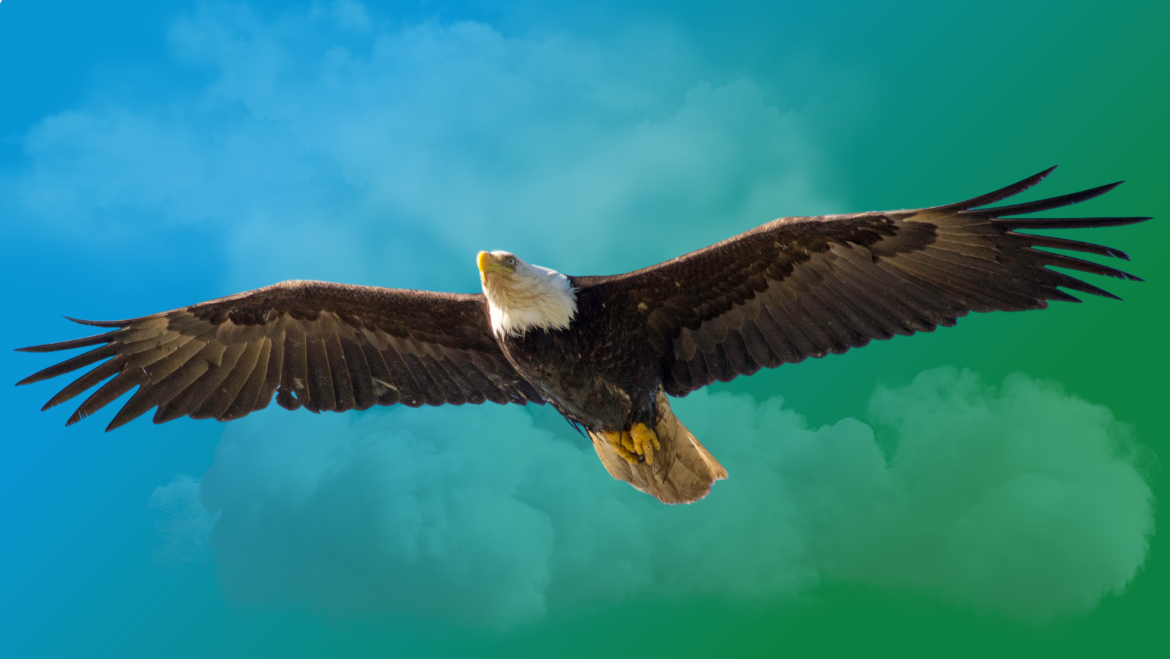
The eagle is the only animal people routinely tell me they met without ever seeing it. What they describe is not a bird. It is altitude — the floor dropping away, the landscape of their life suddenly laid out flat and small beneath them, and a strange, cold calm arriving with it. Almost everyone says the same thing afterwards, in almost the same words: “I could finally see the whole thing.”
If you have come here for wingspans and nesting ranges, you are in the wrong place. This is about the eagle spiritual meaning — what it means when this bird keeps arriving in your dreams, your journeys, or in that insistent way an image returns when it wants something from you.
And I want to say the difficult part immediately, because the popular version of this animal is doing real harm: the eagle is not asking you to rise above your life. In my practice, that is precisely the misunderstanding it comes to correct. The people who are drawn to the eagle are very often already too high — detached, above it all, watching their own existence from a great and lonely distance. The eagle’s actual medicine is what it does after the flight. It comes down. It lands. And then, hard as it is to say about so majestic a bird, it eats.
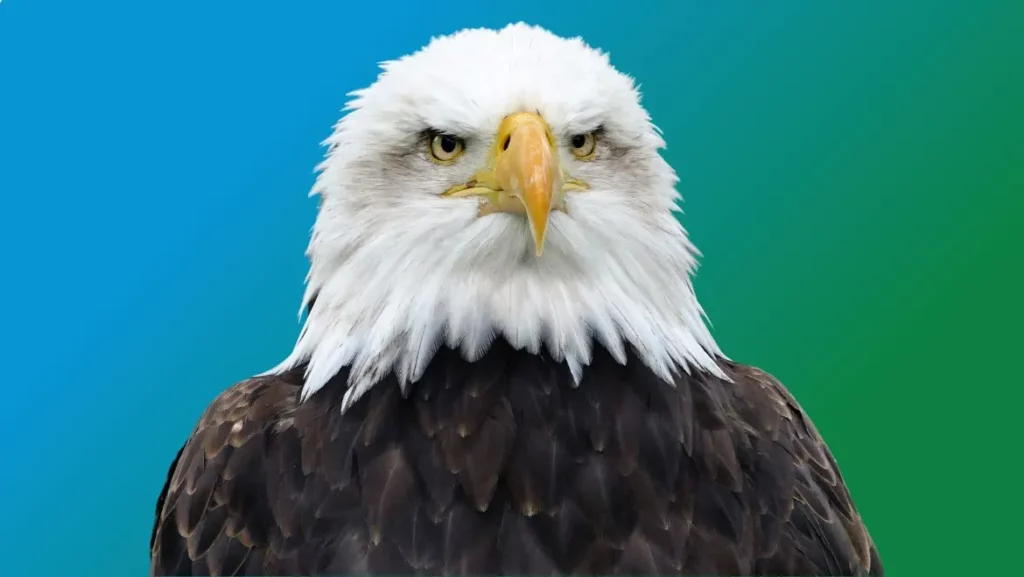
The Bridge: What the Real Bird Teaches About Eagle Spirit Animal Meaning
Every claim about this animal should be traceable to what the animal does. And what the eagle actually does is stranger, humbler and more instructive than the emblem on the flag.
- It does not climb. It stops resisting. An eagle gains its enormous height mostly by finding a thermal — a column of warm air rising off the land — and holding its wings still inside it. The bird is not powering upward. It has located the place where the world is already moving in the direction it wants to go, and it has stopped flapping. That single fact contains more usable spiritual instruction than every affirmation ever written about this animal. If you are exhausted from climbing, the eagle’s question is not how hard are you working? It is are you in the wrong column of air?
- Its eye is built for distance — and only for distance. The eagle’s vision is extraordinary at range and comparatively poor up close. This is not a flaw to be edited out of the symbolism; it is the symbolism. The gift and the blind spot are the same organ. People with eagle medicine see the shape of a whole life from a great height and routinely cannot see what is happening in the room they are standing in.
- It steals, and it eats the dead. Bald eagles regularly harass ospreys into dropping their catch, and they eat carrion without hesitation. Benjamin Franklin famously complained that the bird was of “bad moral character” for exactly this reason. He was right about the behaviour and wrong about the meaning. The eagle is not disgraced by this. It is simply not romantic about survival — and any spiritual guide that cannot look at how it actually feeds itself is not a guide, it is a decoration.
- The nest gets heavier every year. Eagles return to the same eyrie and add to it season after season; the largest recorded nests weigh over a tonne and have brought down the trees holding them. The structure you keep adding to for security is the structure that will eventually break the thing carrying it. I have rarely met a more precise image of what happens to a life built by accumulation.
- It does not renew itself by breaking its own beak. There is a viral story, repeated in a thousand motivational posts, in which the eagle at forty retreats to a mountaintop, smashes off its beak and plucks out its talons and feathers to live another thirty years. It is entirely false. No eagle does this; it would die. I include it because the myth’s popularity tells you something true about us: we would rather believe in a violent, dramatic self-renovation than in the slow, unglamorous molt that actually happens — feathers replaced gradually, a few at a time, while the bird keeps flying.
Eagle Symbolism Across Traditions
North America: the messenger, and a boundary worth respecting
Among many Native nations — the Lakota, the Haudenosaunee, the Diné, the peoples of the Northwest Coast, and many others, each with their own distinct traditions — the eagle is understood as the being that flies highest and therefore carries prayer between the human world and the Creator. Eagle feathers are not ornaments in these traditions; they are ceremonial objects of the highest order, earned and conferred, never simply acquired.
I want to be plain about something here, because I have watched well-meaning seekers get this wrong. In the United States, possessing eagle feathers is unlawful for almost everyone; they are distributed through a federal repository specifically to enrolled members of federally recognised tribes, for religious use. If the eagle is your guide, the correct response is not to obtain a feather. It is to leave the feather where it belongs. Respect for a tradition sometimes looks like taking nothing from it.
Norse: the eagle at the top and the serpent at the root
An eagle sits in the highest branches of Yggdrasil, the world tree, with a hawk between its eyes. Far below, at the root, the serpent Níðhöggr gnaws. And between them, up and down the trunk, runs the squirrel Ratatoskr — carrying insults from one to the other, keeping the feud alive. This is the most psychologically exact image of the eagle’s shadow in any mythology I know: the highest and the lowest parts of a person, never meeting, connected only by a messenger who makes it worse. If you know what it is to hold a lofty self-image and a buried contempt in the same body, the Norse already mapped it.
Greece, Rome and India: the bird of the sovereign
The eagle is Zeus’s bird, and it is the aquila carried at the head of a Roman legion — an object so sacred that losing it was a catastrophe for the whole unit. In Hindu and Buddhist tradition, Garuda is the great eagle-being who serves as Vishnu’s mount and is the eternal adversary of the serpents. The pattern is unmistakable and worldwide: the eagle is placed at the top of every hierarchy humans have invented, and it is always set against what lives underneath. That is exactly why its shadow is what it is.
The Shadow: When Height Becomes Escape
The eagle’s shadow is the one I encounter most often in spiritual circles, and it is almost never recognised as a shadow — because from the outside, and from the inside, it looks exactly like wisdom.
- Altitude as avoidance. The person who “rises above” every conflict and therefore never resolves one. Who responds to a partner’s hurt with a paragraph about the bigger picture. Spiritual bypass has a wingspan, and this is it. The most common form of eagle shadow is a genuinely wise perspective deployed at the exact moment it is being used to avoid a difficult conversation at ground level.
- Contempt disguised as perspective. From high enough up, everybody looks small — and some part of the eagle-person quietly enjoys that. The line between clarity and disdain is thinner than anyone with this medicine wants to admit.
- Vision without landing. The endless visionary: extraordinary at seeing what should exist, unwilling to do the ordinary, undignified work of building it. A bird that never descends does not starve nobly. It just starves.
- The theft. Franklin’s complaint, in human form: taking what someone slower and less impressive has caught, and calling it leadership. Eagle-people are frequently very good at arriving at the last moment, seeing the whole picture, and leaving with the fish.
An eagle appearing grounded, injured or unable to fly in a recurring dream is rarely about failure. In my experience it points to a person whose gift for perspective has been taken away from them — by exhaustion, by a role, by a relationship that requires them not to see clearly. An eagle watching you from a great distance and not coming down speaks to a part of yourself you have exiled to a height where it can no longer touch your daily life. And an eagle attacking is usually the return of a judgement you have been aiming at everyone else.
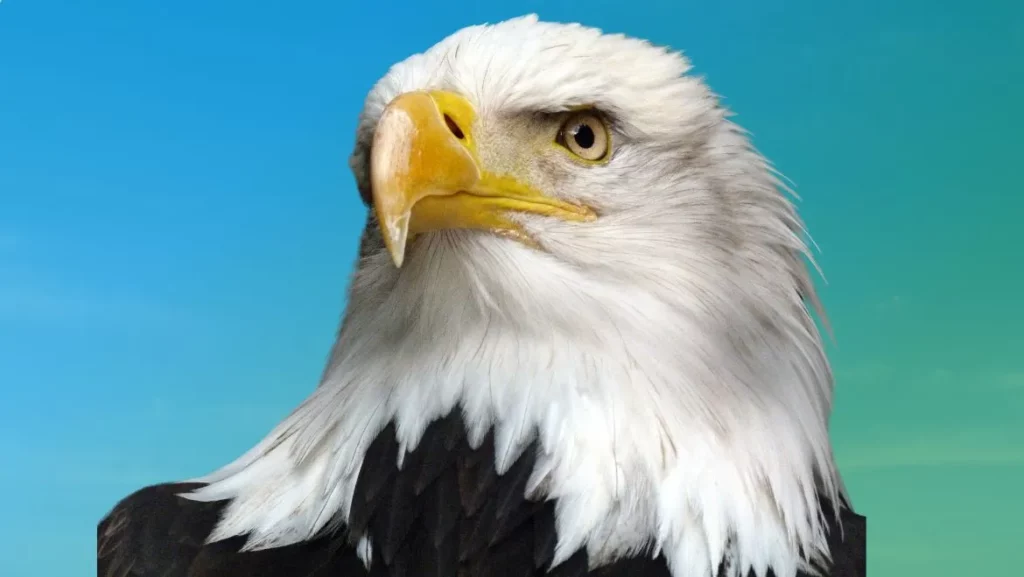
How to Journey to the Eagle
Shamanic work is not a substitute for medical or psychological care. If you are new to this, begin with the beginner’s guide to shamanic journeying. Allow thirty undisturbed minutes.
- Set an intention the eagle can answer. Not “give me clarity.” Rather: “Show me what I have been refusing to look at from close up.”
- Enter through height and open air. A cliff, a ridge, a tall tree at the edge of a valley. The eagle is an Upper World bird and it will not meet you in a cave.
- Do not fly immediately. Everyone wants to fly. Wait on the rock until the eagle comes to you — people who launch themselves into the sky in the first minute almost always have an exhilarating journey and receive nothing.
- Look at what it shows you, not at how far you can see. Height is the method, not the message. When the landscape of your life appears beneath you, find the one place your eye keeps sliding away from. That is the entire journey.
- Then come down. This is the instruction people skip, and it is the whole of eagle medicine. Descend, in the journey, to the exact place you were avoiding. Stand in it. Look at it from a metre away.
- Ask one question before you return: “What have I been calling perspective that is actually distance?”
The Integration Ritual: The Descent
Eagle medicine is completed on the ground, never in the air. Within a week:
- Find the thermal. Name one place in your life where the world is already moving your way and you have been flapping against it out of habit. Stop flapping. Height is a matter of position, not effort.
- Have the small conversation. The one you have been “rising above.” Not the philosophical version — the two-metre, uncomfortable, human one.
- Do one thing that is beneath you. Deliberately, and without narrating it as humility practice. The eagle eats carrion. There is no dignity to protect.
- Take one thing out of the nest. A possession, a commitment, an old structure you have been adding to for years because you always have. The nest is what breaks the tree.
- Molt slowly, on purpose. Change one small thing and keep flying. You do not have to smash your own beak. That was never true.
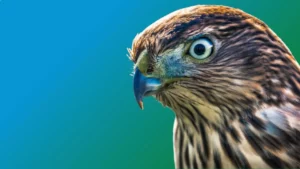
If it is the seeing rather than the height that draws you, the hawk spirit animal works the same element at a lower altitude — closer, faster, and far more interested in the detail directly in front of it.
The Path of the Paws
42 hand-illustrated oracle cards, one for each animal guide — drawn from the same practice these articles come from. A way to sit with an animal instead of only reading about it.
Order your deck →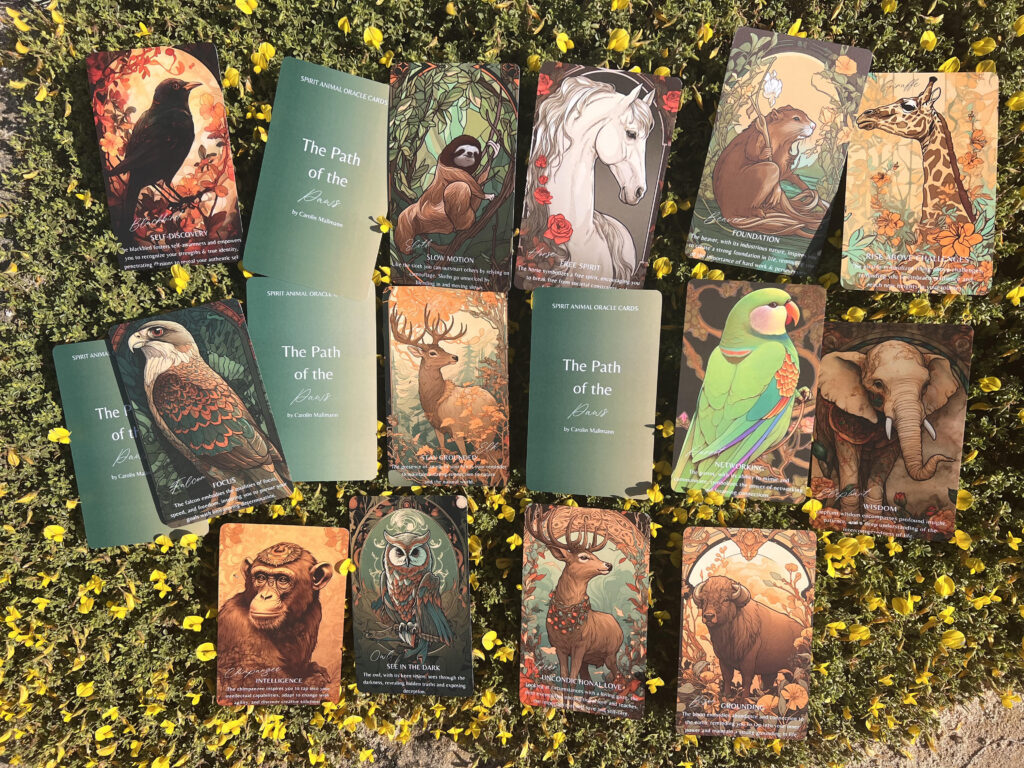
Eagle Spirit Animal: Questions People Actually Ask
What does it mean when an eagle appears in your life?
It usually means you are being given a view you did not ask for. The eagle arrives when a situation can no longer be understood from inside it — and, in my practice, it very often arrives for people who are about to make a large decision from a very small vantage point. It is not congratulating you on your spiritual progress. It is handing you the map and expecting you to come back down and use it.
Is the eagle a good or bad omen?
Almost universally honoured — but honour is not the same as comfort. The eagle is an omen of truth at a distance, and truth at a distance is frequently unwelcome. What it shows you tends to be accurate and unflattering. Whether that lands as blessing or blow depends entirely on what you do once you are back on the ground.
What does an eagle in a dream mean?
Read the altitude and the direction of the gaze. An eagle circling above you, watching, points to something in yourself observing your life from too far away. An eagle carrying you is an invitation to a perspective you have been avoiding. An eagle on the ground beside you — uncommon, and the most hopeful image of the three — means the vision and the living have finally arrived in the same place.
What is the difference between the bald eagle and the golden eagle as spirit animals?
The bald eagle is a bird of water and coast — its medicine tends to concern emotional clarity, and it is unembarrassed about opportunism and survival. The golden eagle is a bird of mountain and open country: solitary, sovereign, a genuine hunter, and its medicine is about self-rule rather than seeing. If you are unsure which one came, ask whether it was fishing or hunting. That single detail tells you more than the colour ever will.
Can the eagle be my spirit animal if I am not Indigenous?
The eagle is sacred in traditions all over the world — Norse, Greek, Roman, Hindu — and it can absolutely come to anyone. But if you feel drawn specifically to Native American eagle practice, the respectful path is to learn about those traditions rather than to borrow their ceremonial objects, and to take nothing that was not offered to you. If you want a structured way to test which animal is actually working with you, use the A–Z spirit animal guide or sit with the Path of the Paws oracle deck.
Is the Eagle Your Spirit Animal?
Check the boxes that resonate with your spirit and current life journey.
The eagle does not arrive to lift you out of your life. It arrives to show you the shape of it — once, clearly, from above — and then to send you back down into it with nowhere left to hide.