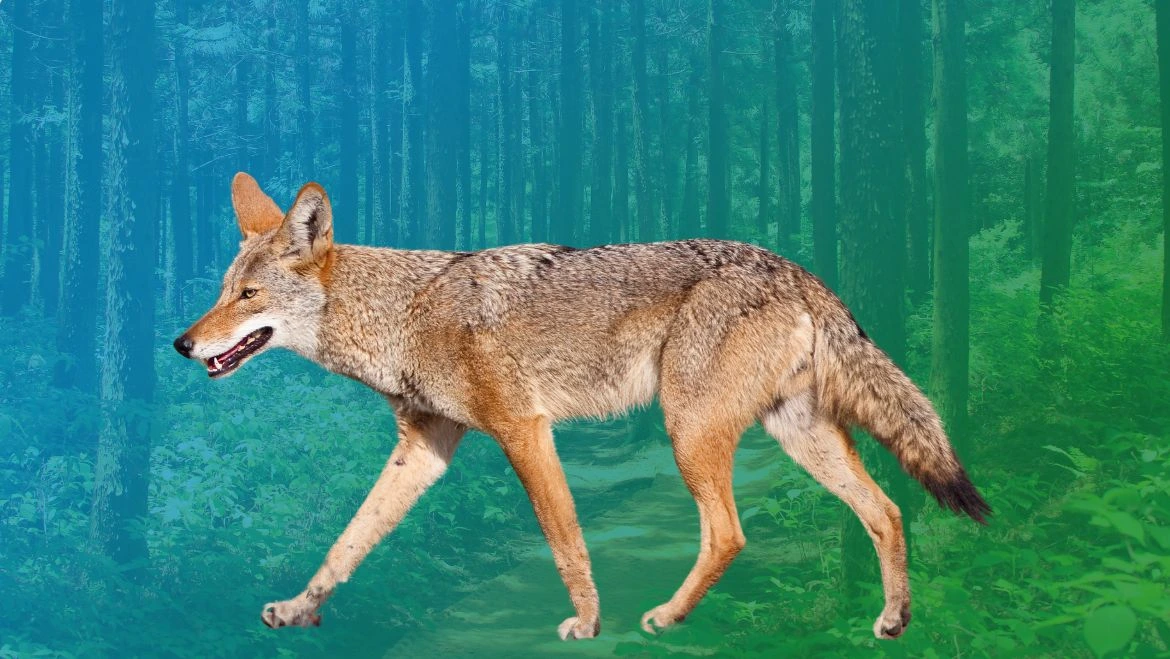
The coyote rarely arrives with dignity. When this guide comes through on a journey, there is almost always a moment where the thing you were taking very seriously suddenly looks absurd — and you feel the laugh before you understand it. In my practice the coyote tends to show up for people who have gripped a plan so tightly that they can no longer see the doors standing open on either side of it. He does not counsel. He trips you, watches you fall, and waits to see whether you get up cursing or grinning.
This is a guide about meaning, not biology. If you searched for what a coyote eats or how large it grows, you are in the wrong place. But if a coyote has been crossing your path, filling your dreams, or padding through your journeys, and you want to know what the coyote spirit animal is asking of you, stay. What follows is trickster medicine — and trickster medicine always costs you a little of your self-importance.
The Coyote Spirit Animal: What the Real Animal Teaches
The medicine is never invented on top of the animal. It is read straight off how the creature actually lives — and the coyote is one of the most instructive teachers alive.
- He thrives where others are pushed out. Wolves were driven from most of North America; the coyote quietly expanded into cities, suburbs and highways. His medicine is the intelligence of adaptation without permission — surviving by fitting into the cracks rather than fighting for the throne.
- He hunts by improvisation. A coyote will pair up with a badger to flush prey, change diet with the season, and abandon a strategy the moment it stops working. This is the root of his trickster gift: not deception for its own sake, but the refusal to stay loyal to a plan that has failed.
- He is loud, social and unafraid to sound foolish. The yipping chorus at dusk is not dignified. Coyote does not need to look impressive to stay alive — and that is precisely the freedom he offers.
Read those habits together and the coyote spiritual meaning comes into focus: flexibility as a form of intelligence, humour as a survival skill, and the willingness to look ridiculous rather than die being right.
Coyote Symbolism Across Traditions
The coyote is one of the most widespread trickster figures in the storytelling of Indigenous nations across North America — and those stories belong to the peoples who carry them. I reference them here with respect and without any claim to their ceremony or authority. In many Diné (Navajo) narratives the coyote, Ma’ii, is both creator and fool: he scatters the stars into disorder, breaks rules, and through his blundering brings about change that the orderly powers could not. Among a number of California and Great Basin peoples he appears as a world-shaper whose mistakes are woven into how things came to be.
What these traditions share is a refusal to split wisdom from folly. The coyote is not a villain and not a saint; he is the force that keeps the world from becoming too rigid to live in. Compare him to the trickster elsewhere — the Norse Loki, the West African and diaspora Anansi — and the same archetype surfaces: the one who breaks the frame so that something new can enter. When the coyote comes to you, he comes carrying that lineage of disruptive, creative intelligence.
The Shadow: When the Trickster Tricks You
No guide is only a gift, and the coyote’s shadow is sharper than most because it wears the same face as his medicine.
- Cleverness curdled into evasion. The most common misunderstanding I meet is that cunning means deception. Coyote’s gift is adaptability, but its shadow is the person who is so quick, so slippery, so good at the workaround that they never once commit to anything and call it freedom.
- Humour as armour. When someone journeys to the coyote and it will not stop joking, will not meet their eyes, the reading I use is that the laughter has become a wall. Coyote can teach you to laugh at your pain — or to use the joke so you never have to feel it.
- Chaos for its own sake. The trickster who disrupts a stuck situation is medicine. The one who blows up every stable thing because stability feels like a cage is running the shadow. Ask honestly whether you are freeing yourself or simply afraid to be pinned down.
- The coyote in a recurring nightmare — mocking, circling, refusing to let you rest — usually points to a part of you that has been outsmarting your own honesty. It is not there to frighten you. It is there because you have been too clever with yourself for too long.
A Practice: Journeying to the Coyote
Shamanic work is not a substitute for medical or psychological care. If you are new to journeying, begin with the beginner’s guide to shamanic journeying. This practice is specifically for meeting a guide who will not let you stay solemn.
- Set a loose intention. Not “fix my life” but: “Show me the plan I am clinging to that has already stopped working.”
- Prepare. Lie down somewhere undisturbed, cover your eyes, and let fifteen to twenty minutes of steady drumming carry you down into the lower world.
- Let him lead, and expect mischief. The coyote will rarely walk in a straight line. Follow him even when the route seems pointless — the detour is usually the message.
- Notice where you laugh. The moment something genuinely funny breaks through is the moment a defence has dropped. Mark it. That is the place to look afterwards.
- Ask one question before you leave: “What am I taking so seriously that it has stopped serving me?” Then return slowly and write down whatever came, however absurd.
If the coyote is not the one who comes, the process of finding your spirit animal will help you meet whoever does, and the full A–Z spirit animal guide lets you follow the thread to related tricksters like the fox and the raven.
The Path of the Paws
42 hand-illustrated oracle cards, one for each animal guide — drawn from the same practice these articles come from. A way to sit with an animal instead of only reading about it.
Order your deck →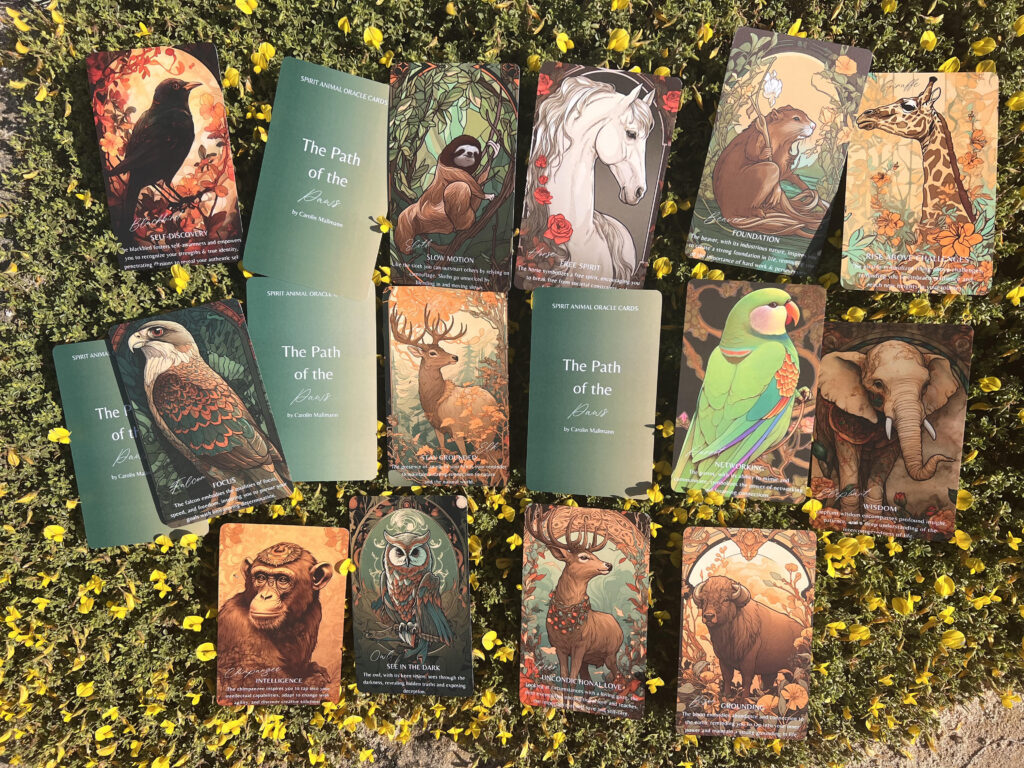
Coyote Spirit Animal: Questions People Actually Ask
What does it mean when a coyote crosses your path?
In shamanic terms it is usually a nudge to loosen your grip. The coyote tends to appear when you have been forcing a single solution and can no longer see the alternatives. Crossing your path is his way of asking whether the route you are defending is still the right one — or just the one you have committed to out of pride.
Is the coyote a good or bad omen?
Neither, and that is the point. The coyote is the guide who refuses the tidy split between good and bad. He often arrives right before a useful upheaval — a plan collapsing so a better one can form. Whether it feels like fortune or disaster usually depends on how tightly you were holding the thing he came to shake loose.
What does a coyote in a dream mean?
A coyote in a dream commonly points to your own cleverness — used well or used to avoid something. A playful coyote can affirm your resourcefulness; a mocking or relentless one often mirrors a way you have been outsmarting your own honesty. Ask what the dream-coyote wanted you to stop pretending.
What is the difference between coyote and fox medicine?
Both are clever, but the fox works through quiet, precise strategy, while the coyote works through disruption and humour. The fox slips past the problem unseen; the coyote knocks it over to see what falls out. If your situation needs stealth, look to the fox. If it needs shaking loose, the coyote has come for a reason.
Whatever the coyote has come to disrupt, treat the disturbance as the teaching rather than the obstacle. When you are ready to go deeper, the four-week spirit animal course teaches the journeying method in full.