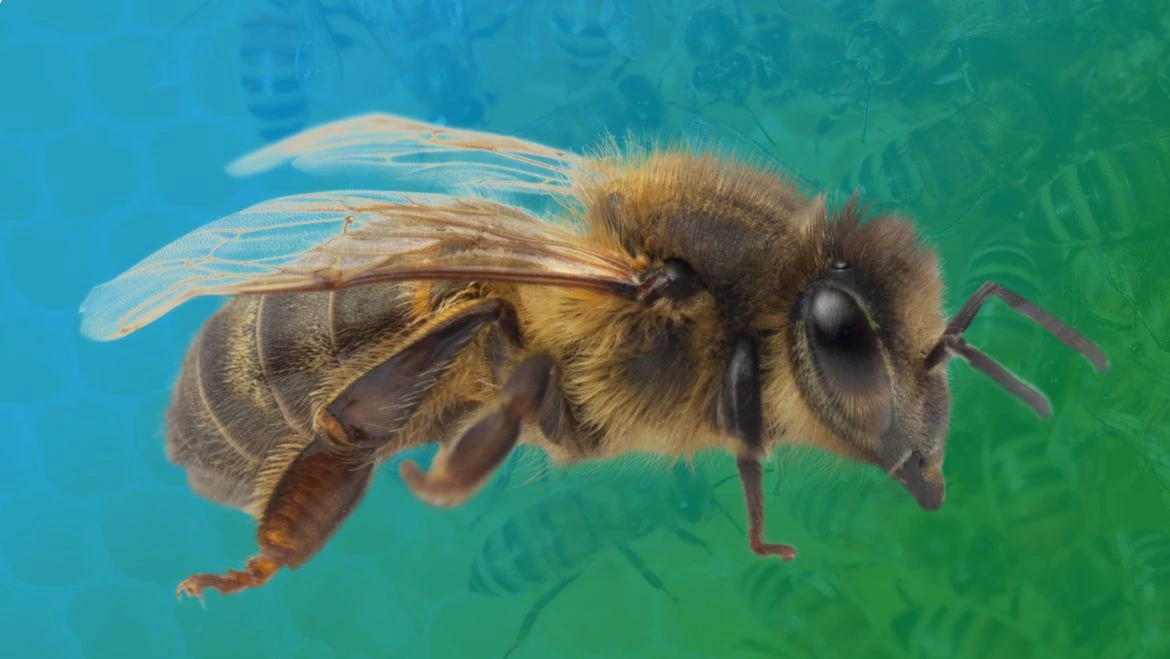
You hear the bee before you decide anything about it — that low, steady hum that means work is happening whether or not anyone is watching. On a shamanic journey the bee rarely arrives alone; it comes trailing the sense of a whole hive behind it, a single small worker that is never really a single thing. It moves from bloom to bloom with a purpose so complete it can look like devotion. In my practice, the bee spirit animal arrives for two kinds of people at once: those who have been carrying everything alone and calling it strength, and those who work so relentlessly for the hive that they have forgotten they were also meant to taste the honey.
If the bee keeps appearing for you — in dreams, on journeys, circling you in the waking world — this page is about the bee spiritual meaning, not about hive management or pollination charts. It is one of the oldest sacred creatures there is, and its message is about how the individual and the whole are meant to feed each other.
The Bridge: What Bee Biology Teaches About the Bee Spirit Animal
Honest animal medicine grows out of the real creature, and everything the bee means is written into how it actually lives and works.
- It is a single body made of thousands. A honeybee cannot survive alone; the colony is the real organism, and each bee is something closer to a cell within it. Bee medicine is belonging so complete that the self and the community are inseparable — the truth that you were never meant to survive as an island, and that your work only means something inside a shared life.
- It communicates with astonishing precision. A returning forager performs the famous “waggle dance” to tell the hive exactly where the flowers are — direction and distance encoded in movement. The medicine is clear, generous communication: the understanding that a community only thrives when its members truly tell each other where the nourishment is.
- It makes sweetness and it can sting — once. The bee produces honey, one of the few foods that never spoils, and defends the hive with a sting that, for the honeybee, costs it its life. The medicine holds both: the capacity to create real sweetness, and a defence so serious it is only ever spent when it truly matters.
- Its small work sustains the whole world. Through pollination the bee underwrites much of the living world’s food. The medicine is the disproportionate power of humble, repeated effort — the reality that quiet, faithful work you might dismiss as small is holding far more together than you know.
When the bee appears as your guide, the question it carries is usually: where have you cut yourself off from your hive — and where has your work stopped producing any sweetness you actually get to taste?
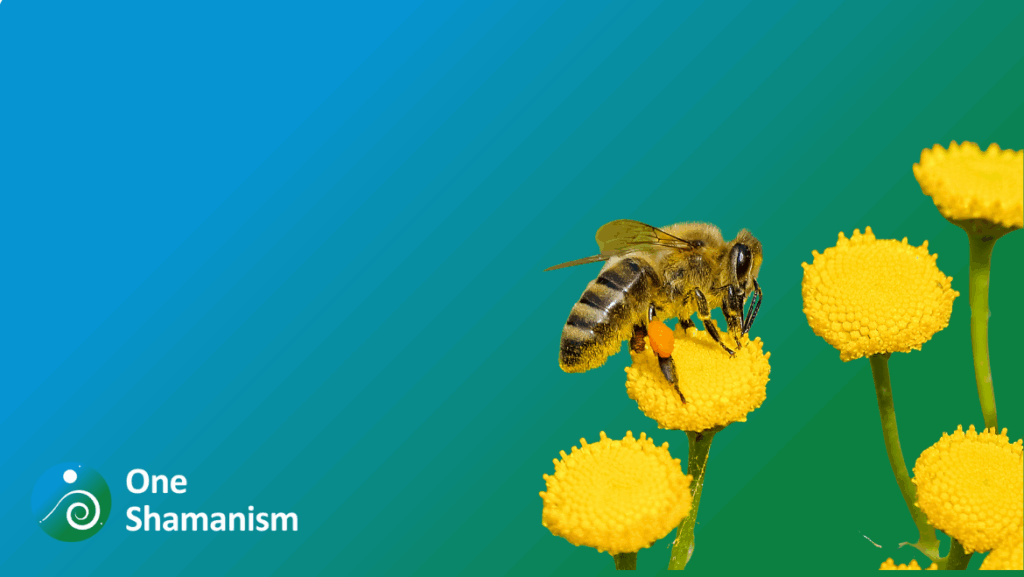
Bee Symbolism Across Traditions
Few creatures have been held as sacred for as long as the bee. Across the ancient world it was tied to the soul, to the divine feminine, and to the sweetness that comes from ordered, devoted labour.
Ancient Egypt: the tears of the sun god
In ancient Egypt the bee was profoundly sacred — in one tradition, bees were born from the tears of the sun god Ra as they fell to the earth. The bee was a royal emblem of Lower Egypt and associated with kingship, order and the industry that sustained the land. Read as medicine, the Egyptian bee is work as something holy: labour understood not as drudgery but as a sacred act that keeps the world in order.
Greece: the Melissae and the priestesses of the hive
In the Greek world bees were linked to the divine feminine and to prophecy; certain priestesses were called Melissae, “the bees,” and honey was an offering fit for the gods. The hive, with its single queen and its ordered community, became an image of a sacred, self-governing order. The teaching that carries across is that community is not only practical but holy — that a well-ordered common life is itself a spiritual achievement.
The soul, resurrection and the folk hive
Across many European cultures the bee was associated with the soul and with the passage between life and death — and the old custom of “telling the bees” of a death in the family, so the hive would not leave or die, treated the bees as members of the household and keepers of its fate. The consistent thread everywhere is that the bee is a bridge between the individual and something larger — the soul, the family, the divine order — never a creature that stands alone.
The Shadow: When the Work Never Stops
The bee’s shadow hides inside its most admired quality. In a culture that worships busyness, the industrious bee is easy to romanticise right up to the point of collapse.
- Working yourself to death. The most common distortion I meet with this animal is the person who has become all labour — productive, tireless, unable to stop, quietly proud of never resting. The worker bee does not, in fact, die of rest; it wears out from ceaseless work. If your entire worth has collapsed into what you produce, the bee is naming it, not applauding it.
- Making honey you never taste. The bee produces sweetness — but its shadow is the person who generates abundance for everyone else and never allows themselves any of it. Endless giving to the hive, no share of the honey. Real bee medicine includes receiving; a life that is all output and no sweetness has lost the plot of the animal.
- Losing yourself in the hive. Belonging is the bee’s gift, but its shadow is a self so dissolved into the group that no individual voice, need, or direction survives. The hive is meant to be sustained by distinct bees, each with a role — not by people who have disappeared entirely into the collective and call the vanishing loyalty.
- The sting spent carelessly. The honeybee dies when it stings; its defence is a last resort. The shadow is the person who lashes out reflexively, spending a costly defence on every minor threat. Real boundaries, like the bee’s, are grave enough that you use them rarely and mean them completely.
A bee appearing frantic or dying from overwork in a recurring dream often points to a pace you cannot sustain — a life that has become all labour. A swarm that overwhelms or traps you can reflect a community or set of obligations that has stopped nourishing and started consuming you. And a single bee moving calmly between flowers is the steadying version of the message: work and sweetness can coexist, if you let yourself taste what you make.
The Path of the Paws
42 hand-illustrated oracle cards, one for each animal guide — drawn from the same practice these articles come from. A way to sit with an animal instead of only reading about it.
Order your deck →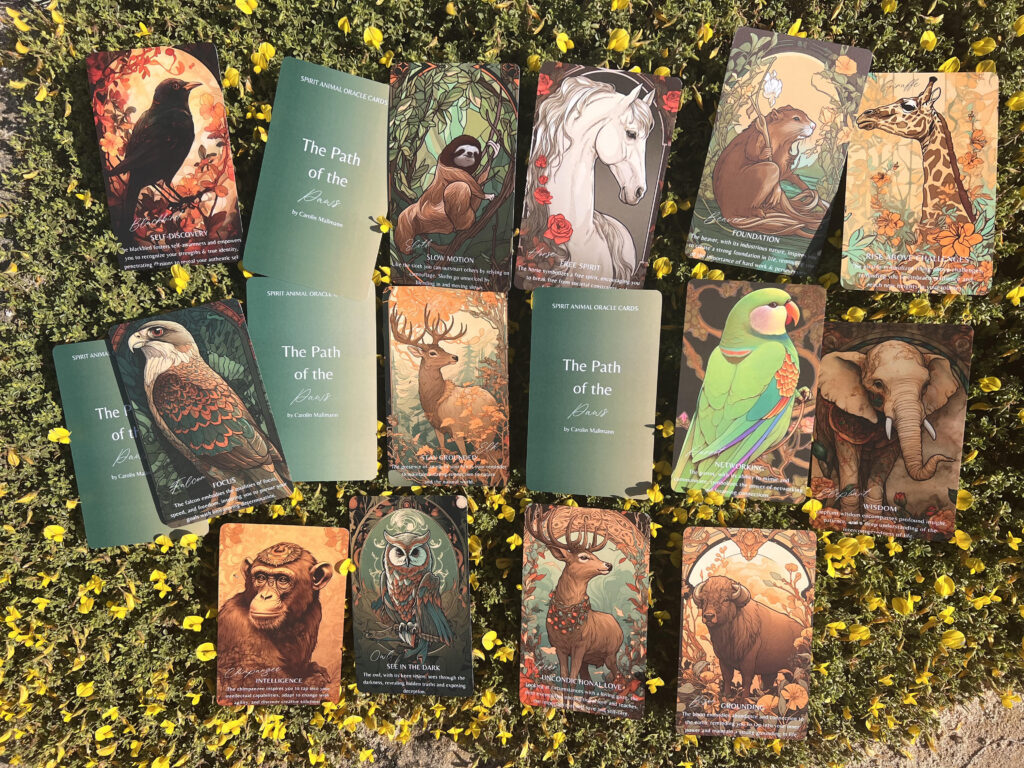
How to Journey to the Bee
Shamanic work is not a substitute for medical or psychological care. If you are new to journeying, begin with the beginner’s guide to shamanic journeying before the practice below.
- Set a bee-shaped intention. Not “make me more productive” but: “Show me where my work has lost its sweetness, and where I have cut myself off from my hive.” The bee answers questions about belonging and balance.
- Journey to a summer meadow. Flowers, warmth, the collective hum of many bees at once. Let yourself feel the difference between the single bee and the field full of them working as one.
- Follow it to the hive. Let the bee take you inside the ordered dark of the hive. Notice where you sit in your own communities — are you truly part of a hive, or a lone forager who never returns?
- Ask where the honey goes. Let the bee show you what you produce and who gets to taste it. Ask, honestly, whether any of the sweetness comes back to you.
- Ask about the sting. Where are you spending your defences carelessly — and where do you need one clear, serious boundary you have been afraid to set? Let the bee show you the difference.
- Return and taste something. Within a day, do one act of receiving — rest, or accept help, or let yourself enjoy something you made. Tasting your own honey is how bee medicine takes root.
Affirmations for Bee Medicine
- “I belong to a hive. I was never meant to carry everything alone.”
- “I am allowed to taste the honey I make, not only to give it away.”
- “My sting is serious. I spend it rarely, and I mean it completely.”
Bee Spirit Animal: Questions People Actually Ask
What does it mean when a bee appears in your life?
It almost always points to community, work and sweetness — and to the balance between them. The bee tends to arrive either for people who have isolated themselves, calling it independence, or for people who work relentlessly and never receive. Read it as a call to return to your hive, and to make sure your labour is producing a sweetness you also get to taste.
Is the bee a good omen?
Yes — a deeply auspicious and sacred one, tied across the ancient world to the soul, abundance and divine order. It brings community, productivity, sweetness and personal power. Its only caution is its shadow: do not let industry become self-destruction, and do not give all your honey away.
What does a bee sting in a dream mean?
A sting is often a wake-up call — a sharp nudge to pay attention to something you have been ignoring, or a reminder that you are allowed to defend your boundaries. Because the honeybee’s sting costs it its life, it can also point to a defence that is costing you more than it protects. Read the feeling around it to find which.
How do I know if the bee is my spirit animal?
Persistence rather than preference — whether the image keeps returning uninvited. People who carry bee medicine are often hard-working, community-minded and generous, whose growth edge is resting and receiving as much as they give. For a structured way to test the connection, work through the A–Z spirit animal guide or sit with the Path of the Paws oracle deck and let the animal find you.
Is the Bee Your Spirit Animal?
Check the boxes that resonate with your spirit and current life journey.
Where has your work stopped producing any sweetness you get to taste — and which hive have you cut yourself off from?