Oracle cards are decks of illustrated cards with no fixed structure: the maker decides how many cards there are, what they mean and what the deck is about. Tarot is the opposite. A tarot deck has 78 cards in a set order that has barely moved in five hundred years, and learning it means learning that order. Both are divination tools, both are asked questions, and they work in very different ways. If you have been standing in front of a shelf of beautiful decks wondering which one you are supposed to buy, this is for you.
What is the difference between oracle cards and tarot?
The difference is structure. Tarot has a fixed system of 78 cards that every tarot deck follows, so a reading is built on a shared language, while an oracle deck invents its own language and can hold 30 cards or 100, with whatever meanings its creator gave them.
That single difference shapes everything else: how long each takes to learn, how precise the answers feel, and how much room is left for your own intuition.
| Tarot | Oracle cards | |
|---|---|---|
| Number of cards | 78, always | Anything from about 30 to over 100 |
| Structure | 22 Major Arcana, 56 Minor Arcana in four suits | Free, set by the deck maker |
| Meanings | Largely shared across decks | Unique to each deck |
| Learning curve | Months to years | You can read on day one |
| Typical answer | Detailed, layered, sometimes uncomfortable | Broad, encouraging, one clear theme |
| Best for | Complex situations, long study, precise spreads | Daily guidance, journalling, group work |
| Guidebook | Optional, thousands of books exist | Almost always included and needed |
What are tarot cards, exactly?
A tarot deck is a 78-card system split into 22 Major Arcana, which describe the big turning points of a life, and 56 Minor Arcana in four suits, which describe the everyday. Every suit runs from ace to ten plus four court cards, so the structure repeats in a way you can eventually feel rather than look up.
Tarot did not begin as a spiritual tool. The oldest surviving decks, the hand-painted Visconti-Sforza cards held by the Morgan Library, were made in northern Italy in the middle of the 15th century for a card game played at court. Using the cards for divination is documented much later, in late 18th century France, and the deck most people picture today, with a scene painted on every single card, was drawn by Pamela Colman Smith and published in 1909. That history is worth knowing, because it tells you tarot is a human system that grew over time, not something handed down whole.
What you get for the effort is precision. Because the meanings are shared, a card that lands in a spread carries weight you did not invent, and it will sometimes tell you something you did not want to hear. That is the gift of a fixed system. It does not bend around your mood.
What are oracle cards, and how do they work?
An oracle deck is a set of cards built around one theme, with meanings its creator wrote, and it works by giving you a single clear image to sit with. There is no system to memorise, so you can pull a card the day the deck arrives and get something useful.
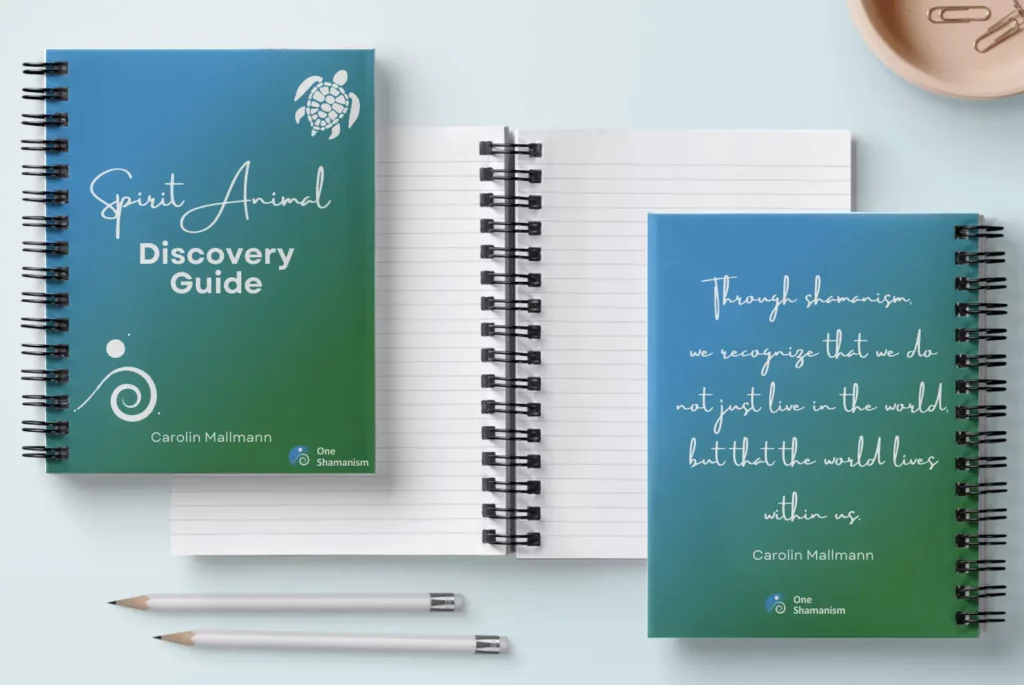
Themes are as wide as the people making them: angels, plants, moon phases, ancestors, the elements, and animals. In shamanic work, animal decks come up most often, because the animal is already how this tradition talks. When you draw a bear, you are not reading a symbol on a card so much as being reminded of a relationship. I built Path of the Paws for exactly that reason: 43 animals, each one a doorway into a journey rather than a verdict.
The freedom cuts both ways. A deck with no structure cannot hold a complicated question for you, and many oracle decks lean gentle, which is lovely on a hard morning and useless when you need the truth. A card that only ever says “trust the process” is not doing much work.
Which should a beginner start with?
Start with oracle cards if you want a practice you will actually keep, and start with tarot if you enjoy studying a system and want depth over speed. Most people I teach begin with an oracle deck, and a good number move to tarot a year or two later, once the daily habit is real.
Ask yourself three honest questions before you buy anything:
- How much time do I have? Tarot asks for study. If ten minutes in the morning is all you have, an oracle deck will serve you better than a tarot deck that stays in its box.
- What kind of answer do I want? One image to carry through the day, or a detailed reading of a tangled situation.
- Do the pictures move me? This matters more than reviews. You will look at these cards hundreds of times. If the art leaves you cold, the deck will stay closed.
Can you use oracle cards and tarot together?
Yes, and the combination is one of the most useful things you can do with two decks. The usual way is to lay a tarot spread for the detail of a situation, then pull one oracle card on top of it to name the overall tone or the medicine the situation is asking for.
It works the other way too. Pull an oracle card first as the theme of a session, then ask tarot for the specifics. What you want to avoid is pulling card after card until one of them finally agrees with you. That is not divination, that is negotiation, and the cards lose their voice quickly when you treat them that way.
How I use cards in my own practice
I came to cards sideways. My practice is shamanic journeying: drum, closed eyes, a question carried into the Lower World. For years I thought cards were a shortcut that people used because they were not willing to do the harder work, which was arrogant of me and also wrong.
What changed my mind was noticing what a card does before a journey. Pulling one gives the question a shape. Instead of climbing down with a vague ache, I climb down with an image, and the journey has somewhere to start. In client work I use an animal card the same way, as an opening rather than an answer, and quite often the animal on the card is the one that shows up when we journey a few minutes later.
I also use tarot, but privately and slowly, usually when I am stuck on something practical and my own intuition has gone quiet. The two do different jobs. One opens a door, the other draws a map.
How do you choose a deck that fits you?
Choose the deck whose images you would happily look at every morning for a year, and check that its guidebook says something rather than nothing. Everything else is secondary.
- Look at the full card gallery first. Most publishers show every card online. If ten of them bore you, that is ten dead cards in your deck.
- Read two guidebook entries. Look for one that names the difficult side of a card, not only the pretty one.
- Check the card stock. Thin cards bend and shuffle badly, and a deck you fight with is a deck you stop using.
- Match the theme to your path. If you work with animals, an animal deck will deepen that work. Our A-Z spirit animal guide is a good place to see which animals already speak to you before you spend anything.
- Ignore the rule about being gifted a deck. It is a lovely story with no basis in any tradition I have trained in. Buy your own.
One more thing, said plainly. Cards are good at reflection and terrible at diagnosis. They do not replace medical care, therapy, or a decision that needs facts, and any reader who tells you otherwise is selling something. If you want to see how cards sit alongside proper coaching work, I wrote about using spirit animal oracle cards in a coaching session in some detail.
Frequently asked questions
Are oracle cards easier than tarot?
Yes. Oracle cards have no system to memorise, so you can read with them on the first day, while tarot takes months of study before readings feel fluent. Easier does not mean shallower, it means the depth comes from you rather than from the structure.
How many cards does an oracle deck have?
There is no fixed number. Most oracle decks hold between 40 and 60 cards, but decks of 30 and decks of well over 100 both exist, because the creator decides. Tarot, by contrast, is always 78.
Can oracle cards predict the future?
Not in the way people hope. Cards show you the present clearly, including the parts you have been avoiding, and a clearer present tends to change what happens next. Treat a reading as a mirror rather than a forecast.
Do I need to cleanse my cards?
Only if it means something to you. There is no universal rule. Smoke, moonlight, a knock on the deck, or simply shuffling with attention all do the same job, which is marking the moment you move from ordinary time into asking.
Is tarot connected to shamanism?
Historically, no. Tarot grew out of a European card game and later European occultism, while shamanic practice is far older and built on journeying rather than symbols on paper. They can sit side by side in one practice, but honesty about their separate roots matters.
Which deck should I buy first?
Buy the deck you keep coming back to look at. If you want a recommendation for shamanic work, start with an animal oracle deck, because the animals give you somewhere to journey afterwards rather than only something to think about.
About the author. Carolin Mallmann is a shamanic practitioner and coach, founder of One Shamanism, and the creator of the Path of the Paws spirit animal deck. She teaches shamanic journeying online and works with clients on soul retrieval, power animal retrieval and everyday practice. For background on tarot’s documented history, see the Encyclopaedia Britannica entry on tarot.