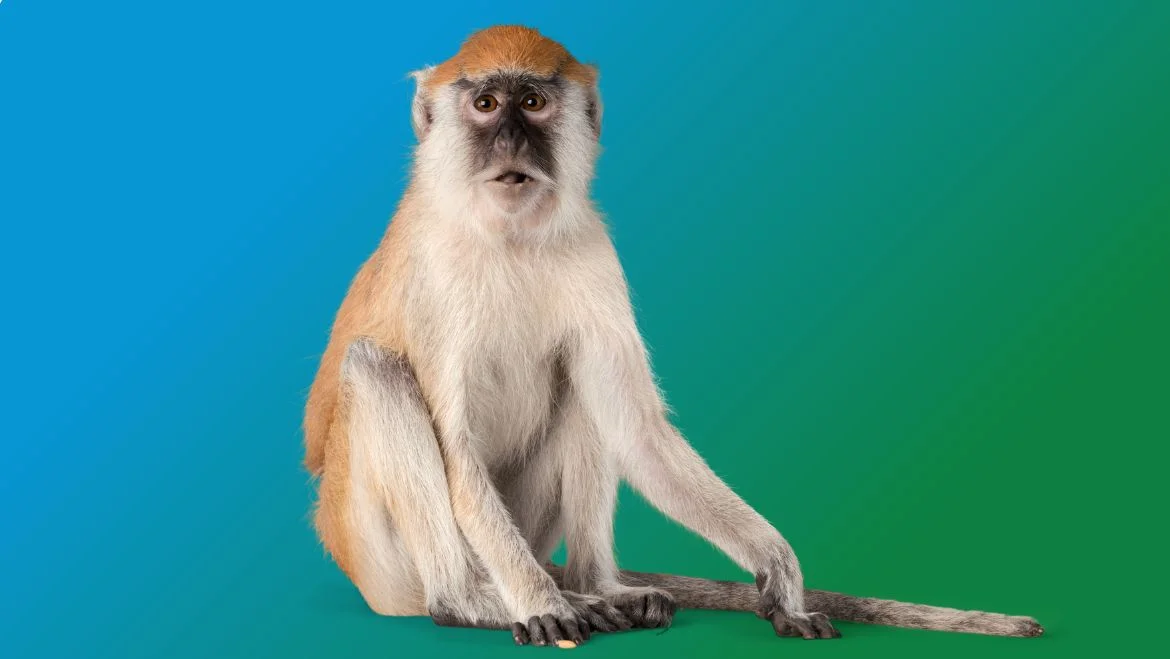
The monkey rarely arrives in shamanic space and holds still. It moves — swinging in, tilting its head, reaching out to touch and turn over whatever you have brought with you, quick and curious and impossible to pin down. What people notice afterwards is the intelligence of it: the sense of having been examined by something very fast, very clever, and not entirely willing to tell you what it concluded.
This page is about the monkey spiritual meaning — what it means when this animal keeps appearing in your dreams and journeys, not its habitat or diet. In my practice, the monkey tends to arrive for two kinds of people: those who have gone grey and rigid and forgotten how to play, and those whose brilliant, restless minds never stop moving long enough to actually feel anything. The monkey has medicine for both, and it is not the same medicine.
The Bridge: What Monkey Biology Teaches About the Monkey Spirit Animal
The monkey’s medicine is written into a body and a brain built for manipulation, connection, and constant clever motion.
- Many monkeys have a prehensile tail — a fifth hand. The monkeys of the Americas can hang and hold by the tail alone, freeing both hands to work and play. The teaching is grip and freedom at once: the ability to stay anchored to something while the rest of you reaches, explores and experiments. Cleverness without an anchor is just falling with style.
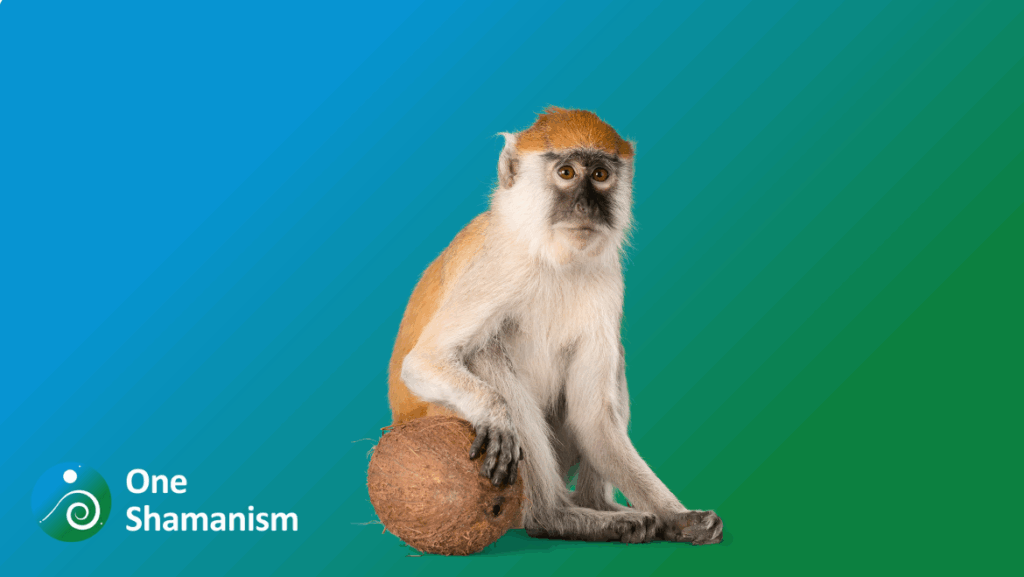
- It solves problems by touching them. Monkeys are relentless manipulators of their world — some crack nuts with stones, wash their food, work locks and puzzles. The monkey mind cannot leave a thing alone; it must pick it up, turn it over, try it. Curiosity, in this animal, is not a mood. It is how it survives.
- It maintains its bonds by hand. Grooming is the currency of a troop — hours a day spent tending each other’s fur, and it is far more about alliance and trust than hygiene. Connection, for the monkey, is active daily work, not a feeling you simply have. Relationships are groomed or they fray.
- It names its dangers precisely. Some monkeys have distinct alarm calls for different predators — one cry for a threat from above, another for a threat on the ground — and the troop responds differently to each. That is discernment: not just “danger,” but which danger. The clever mind’s real gift is telling one thing from another.
Monkey Symbolism Across Traditions
Wherever humans have lived alongside monkeys, they have recognised something uncomfortably familiar — a mind like ours, with all its brilliance and all its mischief.
Hindu: Hanuman and the mind disciplined by devotion
In Hindu tradition the monkey god Hanuman is the great emblem of strength placed entirely in the service of devotion — capable of extraordinary feats, but powerful precisely because his gifts are anchored in love and purpose rather than ego. Set against this is the well-known image of the “monkey mind” in the meditative traditions of India: the restless, chattering, branch-to-branch mind that cannot sit still. Together they hold the whole teaching. The monkey mind is not the enemy; it is Hanuman before it found something worth serving.
China and Japan: the trickster and the three wise monkeys
In Chinese tradition the Monkey King, Sun Wukong, is dazzlingly clever, rebellious and disruptive — a trickster whose brilliance is real and whose lack of discipline causes chaos until it is tempered on a long journey. The Monkey is also one of the zodiac animals, standing for wit and resourcefulness. In Japan, the three wise monkeys — see no evil, hear no evil, speak no evil — turn the animal into a teaching about attention and restraint. The through-line across both cultures is the same: the monkey’s cleverness is a gift that becomes wisdom only when it is governed.
Maya: the monkey as patron of the arts
In Maya tradition the howler monkey gods were patrons of the scribes and artists — the deities of writing, carving and craft. It is a striking and precise association: the endlessly curious, dexterous, manipulating hand is exactly the one that makes art. The monkey’s restless need to touch and reshape the world is, seen rightly, the root of creativity itself.
The Shadow: When the Clever Mind Never Lands
The monkey’s shadow is the exact underside of its gift, and it is one of the more socially rewarded shadows there is — which is what makes it so hard to catch.
- The monkey mind that cannot land. Swinging from thought to thought, tab to tab, idea to idea, never still long enough to go deep. The shadow of brilliant curiosity is a life lived entirely in the branches, never on the ground. If you start many things brilliantly and finish almost none, the monkey is describing you.
- Wit as armour. The most common distortion I meet with this animal is cleverness used to avoid feeling — the joke that deflects the serious moment, the analysis that replaces the emotion, the mind that solves everything so it never has to sit in anything. It is very charming, and it keeps everyone, including you, at a safe distance.
- The trickster turned manipulator. The monkey’s cleverness can curdle into cunning used against others — winning the exchange, running the angle, being the smartest one in the room at everyone else’s expense. Brilliance without sincerity is not wisdom. It is just a faster way to be alone.
- Exhausting troop politics. Monkeys are intensely political, and the shadow of that gift is a life spent managing alliances, reading the hierarchy, grooming the useful and dropping the rest. If your social world has become a full-time campaign, the monkey is asking who you actually like, underneath all the strategy.
A monkey appearing caged in a dream often points to a lively, curious mind trapped in a life too rigid or too small for it. A monkey screeching and throwing things can be your own scattered agitation — the monkey mind in open revolt. And a monkey that is quietly, unnervingly still is worth the most attention of all: it usually marks the rare moment the clever mind has stopped performing and is genuinely paying attention.
How to Journey to the Monkey
Shamanic work is not a substitute for medical or psychological care. If you are new to journeying, start with the beginner’s guide to shamanic journeying before working with the practice below.
- Set an intention the monkey cannot wriggle out of. Be specific. “Show me where my cleverness is serving me, and where it is helping me avoid something.” Vague intentions invite the trickster to play; precise ones get an answer.
- Journey into the canopy. Warm forest, dense green, movement everywhere, sound in every direction. The monkey is a creature of the busy upper storey, not the still lake or the open plain. Go up into the branches and let it come to you.
- Let it examine you — and watch what it picks up. The monkey will investigate. Notice what it reaches for and turns over: it is often showing you the thing in your life you keep fiddling with instead of resolving.
- Ask for its tail. Ask the monkey to show you your anchor — the one thing you can hold onto so that your curiosity becomes exploration rather than falling. “What do I grip, so that all this reaching has a centre?”
- Then do one thing, badly, for the joy of it. The monkey’s other medicine is play, and it dies the moment everything becomes useful. This week, do one thing with no purpose beyond delight — and notice how much of your cleverness was tension in disguise.
Affirmations for Monkey Medicine
- “My curiosity is a gift. I give it an anchor so it becomes exploration, not escape.”
- “I can be clever and still be sincere. I do not have to solve a feeling to avoid feeling it.”
- “I let myself play with no purpose, and I let that be enough.”
Your Connection to the Monkey: Questions Answered
The monkey spirit animal stands for curiosity, cleverness, playfulness and social intelligence. It calls you to explore, to solve problems inventively, and to keep a sense of humour — while also asking you to anchor that restless mind so your brilliance goes somewhere, and to make sure your wit is not being used to avoid depth or intimacy.
Recurring monkeys are often a nudge to loosen up and bring more curiosity and play into a life that has gone rigid — or, if your mind is already restless, a mirror of a mind that cannot settle. Look at what the monkey is doing: mischievous and free suggests you need more play; caged or frantic suggests a lively mind trapped in too small a life.
Follow your curiosity and learn something purely for the fun of it. Approach a stuck problem as a puzzle rather than a burden. Invest real time in your friendships — for the monkey, connection is active work. And balance the cleverness with sincerity: let yourself feel a thing sometimes instead of solving it.
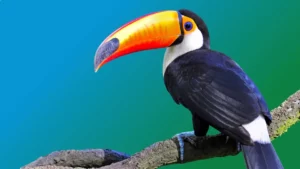
If it is the bright, expressive canopy you are drawn to, you may also recognise yourself in the toucan. And when you want to test which animal is genuinely yours, work through the A–Z spirit animal guide or sit with the Path of the Paws oracle deck.
Is the Monkey Your Spirit Animal?
Check the boxes that resonate with your spirit and current life journey.
What’s something you’re curious about right now, and how can you playfully explore it this week?