In February 1996, the most famous singer in the world travelled to a place an entire government would have preferred to keep invisible. What happened on that steep hillside above Rio de Janeiro is not really a music story. It is a lesson in what power actually is — and who holds it.
The conflict with politics: a question of image
For the video to his protest song „They Don’t Care About Us“, Michael Jackson and director Spike Lee chose to go exactly where Brazil’s officials least wanted the world to look: into the favela Santa Marta, high above the Botafogo district of Rio de Janeiro.
When the plans became public, the team met fierce resistance. Rio was courting international mega-events, the country wanted to present itself as a rising economic power — and feared that images from the favelas would damage that carefully tended picture. Authorities intervened, courts were called upon, filming permits were delayed and denied.
Jackson and Lee did not back down. For them the setting was not a stylistic choice, it was the meaning of the song. To sing about people nobody cares about while standing in a studio with painted poverty would have been the exact lie the song was written against.
The real hierarchy: the favela controls the favela
In the steep, winding alleys of Santa Marta, the state held neither trust nor effective control. So the production team did not negotiate with city hall. They negotiated with the people who actually decided: the local leaders.
Permission was granted — and the safety of the crew guaranteed. For the days of the shoot, the armed conflicts in the neighbourhood paused. Residents themselves protected the world star, organised access, routes, order. Children stood on the rooftops, families opened their windows, and the whole hillside became stage and security detail at once.
It was an unmistakable demonstration of where power really sat. Not official authorisation and not police presence made this project possible, but the consent of the people who live there.
Cultural force and lasting legacy
Together with the Afro-Brazilian percussion group Olodum from Salvador da Bahia, a visual and rhythmic masterpiece emerged. More than a hundred drummers gave the song a physical urgency that reached millions of people worldwide. The beat was not an arrangement. It was a statement.
- A social turning point. The global gaze made it harder to keep ignoring living conditions in the favelas. What had been treated as invisible for decades was suddenly on television screens around the world.
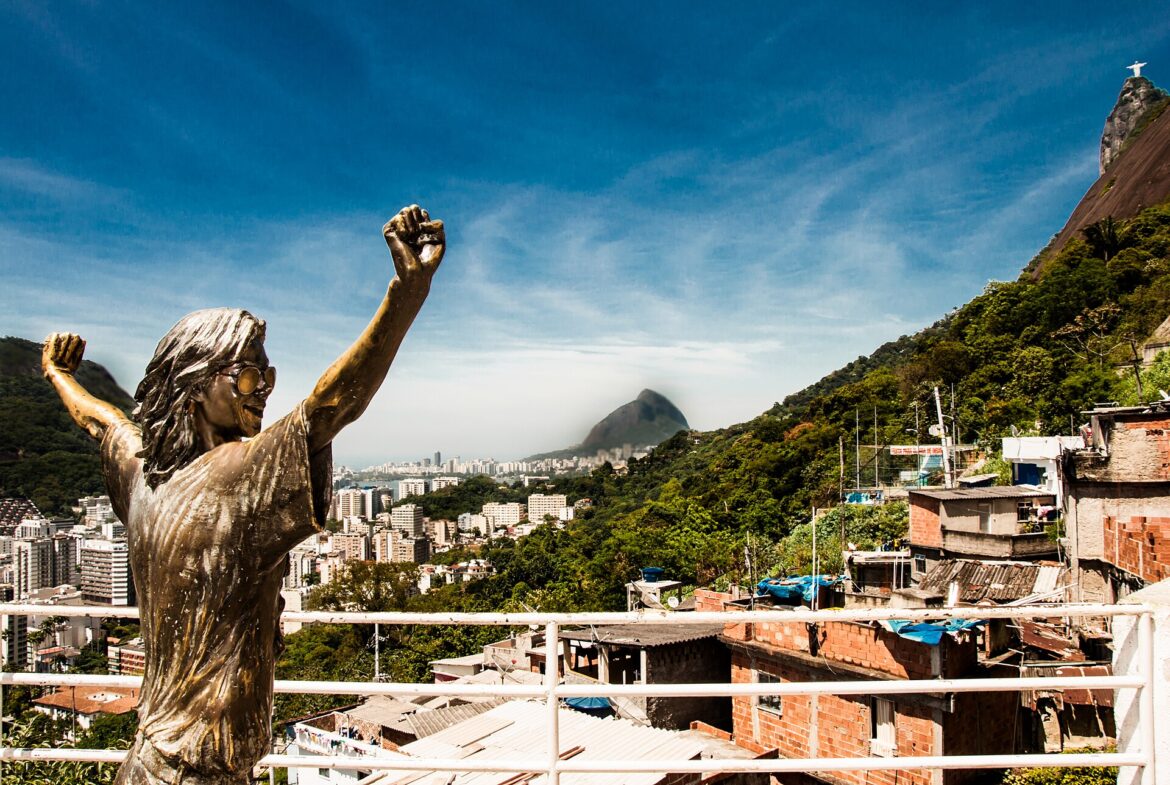
- A monument and a place of culture. On the square where Michael Jackson danced, a bronze statue and a mosaic of his portrait stand today. The place became a symbol of pride — and a destination for visitors from everywhere.
- A symbol of empowerment. The shoot proved that influence can rise from the ground up, even against official prohibition.
What this day reveals about power
Power is not the same as authority
In 1996 the Brazilian state held complete authority over Santa Marta: laws, courts, permits, an armed police force. And it held no power — at least not up there on the hill.
Authority is the right to give an order. Power is the ability to make something actually happen. Between the two there is often an abyss. Anyone who has worked in a team where someone officially had the say and nobody followed them knows that abyss intimately. Formal responsibility without lived consent is only a claim.
A ban nobody can enforce is not a ban. It is a request.
Power sits where access is decided
If you want to find power, ask: who controls the threshold? Who decides who comes in, who stays, who is protected?
In Santa Marta that decision belonged to the people of the neighbourhood. Not because a law said so, but because they knew the terrain, because they held together, because without them nothing was possible. Power is bound to a place and to the relationships that carry it there. It cannot be exercised by decree from a distance.
Power is control over visibility
The real argument was never about a music video. It was about a single question: who gets to decide what the world sees?
The authorities wanted to show a particular Brazil — beaches, growth, world class. The favela was not supposed to be in frame. Not because it did not exist, but because its existence disturbed the story. Invisibility is one of the oldest instruments of power there is: whoever is not seen does not have to be considered. Whoever does not appear in the picture does not appear in politics.
That is why the filming itself was the act of power. Not the lyrics, not the protest — the gaze of the camera. Jackson and Lee took away the state’s authority over its own image. That is why the reaction was so sharp.
Who holds power: the one who is followed
In the end it comes down to one uncomfortable truth. Power belongs to whoever people follow willingly — or whoever they must follow, because he has the means to make them.
Both were at work in Santa Marta at the same time, and it would be dishonest to smooth that over. The leaders who made the shoot possible owed their standing not only to respect and care for the neighbourhood, but also to weapons and fear. That they could pause the fighting for the filming was proof of their power — and a reminder that otherwise they let that fighting happen.
So this is not a romantic story. It is a precise one. Power is morally neutral. It can protect and it can oppress, often through the same person on the same day. What matters is not whether someone has power, but what they use it for — and whether those it is exercised over have consented to it.
The two questions that settle it
If you want to know where power actually sits — in your team, your family, your community, your own life — looking at titles and job descriptions will tell you very little. Ask instead:
Who can make something happen? And who can stop something from happening?
In Santa Marta the answer to both was the same: the people who lived there. Not the court in Rio. Not the government worried about its image. Not even the most famous singer alive — he could only come because they let him in.
And what does this have to do with you and me — especially in times like these?
It would be comfortable to file this away as an anecdote. Rio, 1996, a pop star, a video. Far away, long ago, not our life.
But the question at stake back then is exactly the question keeping many people awake now: do I still have any influence on anything at all?
The feeling of powerlessness is redistributed, not new
We live in a time when a great deal is moving at once — wars, climate, economies, technologies growing faster than our understanding of them. And none of it reaches us as distant news. It arrives in real time, several times a day, directly in our hands.
That creates a very specific state: we are informed about everything and responsible for almost none of it. We know more about world events than any generation before us and can touch less of it. That gap is exactly where the feeling of powerlessness is born — and out of it grow exhaustion, cynicism or withdrawal.
The people of Santa Marta knew that state well. For decades they were the ones spoken about rather than the ones speaking. And they did not wait for someone to assign them a place.
Today, too, power sits where visibility is decided
In 1996 the fight was about which images of Brazil would reach the world. The same fight is being fought now — except the gatekeepers are no longer ministries but platforms, algorithms and attention economies. What is seen, exists. What is not seen does not have to be considered. The logic has not changed at all.
The difference is that you are not only on the receiving end of this system. Every day you help decide what gets attention — what you share, what you speak about, who you listen to, whose story you carry forward and whose you do not. On its own that is very little. It is a great deal when many people do it. That is precisely how the solidarity on the hillside of Santa Marta worked: no single person could have secured that shoot. All of them together could.
The two questions, applied to your life
Ask the two questions again, not about the state of the world, but about the radius you actually move in:
- In your family: who decides what gets spoken about — and what stays unspoken?
- In your work: who holds the title, and who holds the influence? Are they the same people?
- In your neighbourhood or community: what would happen if you started something instead of waiting for it to be started?
- And within yourself: where are you waiting for a permission nobody is coming to give?
That last question is the hardest. A great many people believe themselves powerless when in truth they are only waiting for approval. For the right moment. For a signal from above. For someone to confirm that they are allowed. Jackson and Lee never received that permission. They went anyway.
What this does not mean
It does not mean that everything is in your hands. That is the comforting lie told to people so they feel responsible for conditions they did not create. Structures are real. Inequality is real. Some doors do not open no matter how hard you knock — and it is not your personal failure when they stay shut.
It means something smaller and sturdier: your influence is almost never zero. It is usually smaller than you wish and considerably larger than you estimate in a moment of exhaustion. And it almost always lies closer to you than you think — not on the world stage, but in the circle where you actually appear.
A shamanic footnote
There is a reason this story lands so deeply in a shamanic context. Shamanic traditions have never located power in institutions. Power lives in relationship — with the land, with the ancestors, with the spirits, with the community that stands around you. It is given and it can be withdrawn. It is not a possession; it is something you tend.
And it always moves through the body first. More than a hundred drums on a hillside above Rio did not argue anyone into anything. They made something felt. That, too, is old knowledge: what people feel together, they will defend together.
The thought to take with you
Power is not a substance stored somewhere above you that you were not given any of. It is a relationship. It arises between people who come to an agreement — and it disappears the moment they no longer do.
So the real consequence of this story is not a heroic act. It is unspectacular: find the people you can come to an agreement with. And then begin, without asking whether you are allowed.
That is exactly what happened on a steep hillside above Rio in 1996. The cameras rolled although it was forbidden. And the statue is still standing there today.
Where are you waiting for permission?
Tell me info@shamanism.one. One sentence is enough. Sometimes saying it out loud once is all it takes to notice that the door has been open for a long time.
„They Don’t Care About Us“ was released in March 1996 on the album „HIStory“. The video was filmed in Santa Marta (Rio de Janeiro) and in the Pelourinho (Salvador da Bahia), directed by Spike Lee, with percussion by Olodum.
Image: Statue von Michael Jackson auf dem Morro Santa Marta in Rio de Janeiro. Foto: Guilherme Mendes Cruz (Gincubus) via Wikimedia Commons, CC BY-SA 3.0.