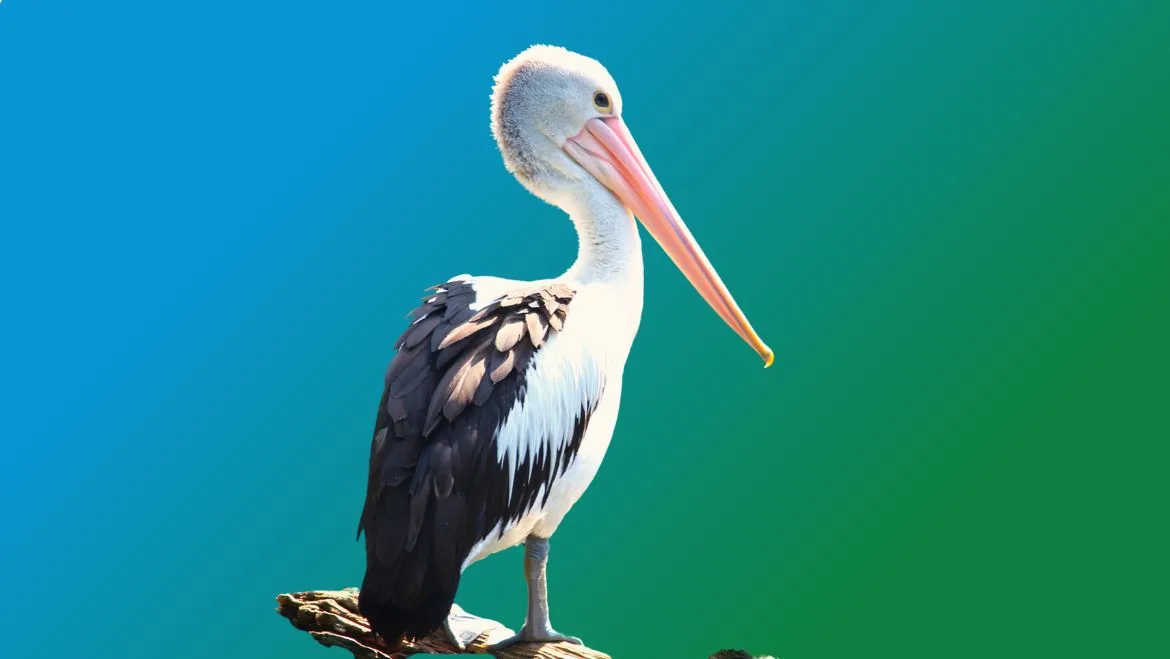
The pelican came into a journey once carrying water in its pouch as if it were carrying a whole ocean, and set it down in front of me without being asked. That is the first thing you feel with this guide: an immense, almost embarrassing generosity, offered before you have said what you need. It does not perform the giving. It simply opens, the way the pelican’s pouch opens — wide, unguarded, holding far more than seems possible for one body.
That is the medicine of the pelican spirit animal. It comes for the givers, the carers, the ones who hold everyone else’s feelings and call it love. In my practice, the pelican tends to arrive for people who are endlessly nourishing others and quietly starving — and it brings a message that is tender and uncomfortable in equal measure. Your generosity is real and holy. And you cannot keep feeding others from a chest you are bleeding dry.
Pelican Spiritual Meaning: From Biology to Message
The pelican’s meaning grows straight out of one of the most extraordinary bodies in the bird world.
- The pouch holds more than the belly. A pelican’s throat pouch can hold several litres — far more than its own stomach. It is built to carry more than it can consume, which is the literal anatomy of generosity: the capacity to hold for others what you do not keep for yourself.
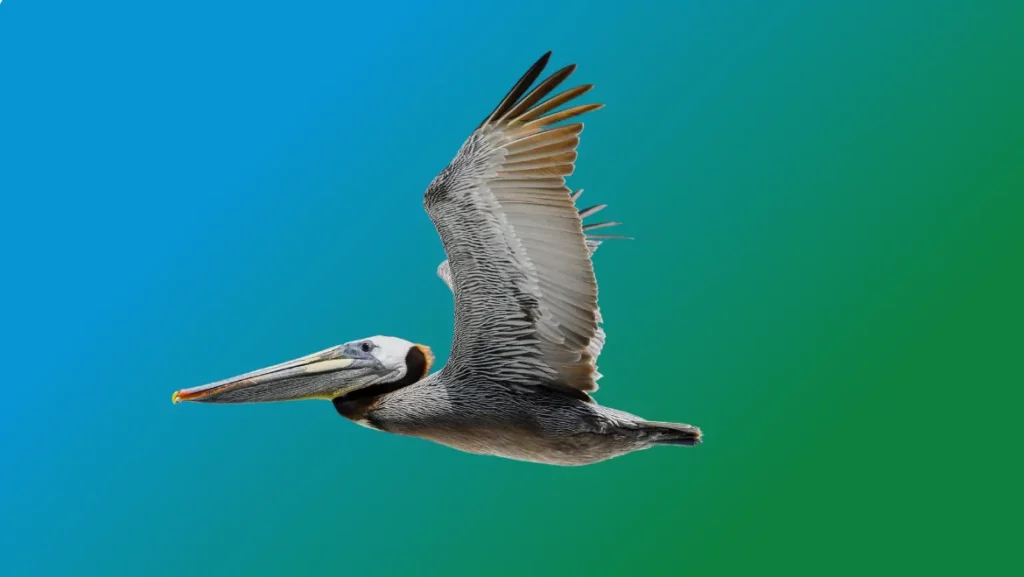
- It dives from height into the water. The brown pelican plunges from the air straight into the sea to feed — a full-bodied commitment to the emotional depths. The pelican does not skim feelings; it goes all the way in and trusts it will surface.
- It fishes together. Many pelicans herd fish cooperatively into the shallows, feeding as a group. Abundance, for the pelican, is something created and shared rather than hoarded.
- It floats with ease. Air sacs beneath the skin keep the pelican buoyant on the surface it dives into. Even the deepest diver is built to rise again. You are allowed to come back up.
So the pelican’s true teaching is more than “be generous”. It is: carry abundance for others, dive fully into your feelings, share what you gather — and trust the buoyancy that lets you rise instead of drowning in the giving.
Symbolism and Cultural Context
Few birds carry as loaded a symbolic history as the pelican, and its traditions speak directly to both its gift and its wound.
In medieval Christian Europe, the pelican became one of the most powerful emblems of self-sacrificial love through the legend of the “pelican in her piety” — the belief that a mother pelican would pierce her own breast to feed her starving young with her blood. The image entered church art, heraldry and later even Renaissance poetry as a symbol of sacrifice and devotion. It is beautiful and it is a warning at the same time, which is exactly why the pelican makes such an honest guide.
In ancient Egypt, the pelican — Henet — was associated with the mother principle and with protection in death, invoked in funerary texts to ensure safe passage through the underworld. Here the pelican is a guardian of the threshold between worlds, a fitting companion for the emotional depths it dives into. Across these traditions the pelican holds one steady meaning: it is the being of sacrificial abundance, the one that gives from its own body — revered for its love, and cautionary about its cost. I name these traditions distinctly and reference them with respect for those who hold them.
The Path of the Paws
42 hand-illustrated oracle cards, one for each animal guide — drawn from the same practice these articles come from. A way to sit with an animal instead of only reading about it.
Order your deck →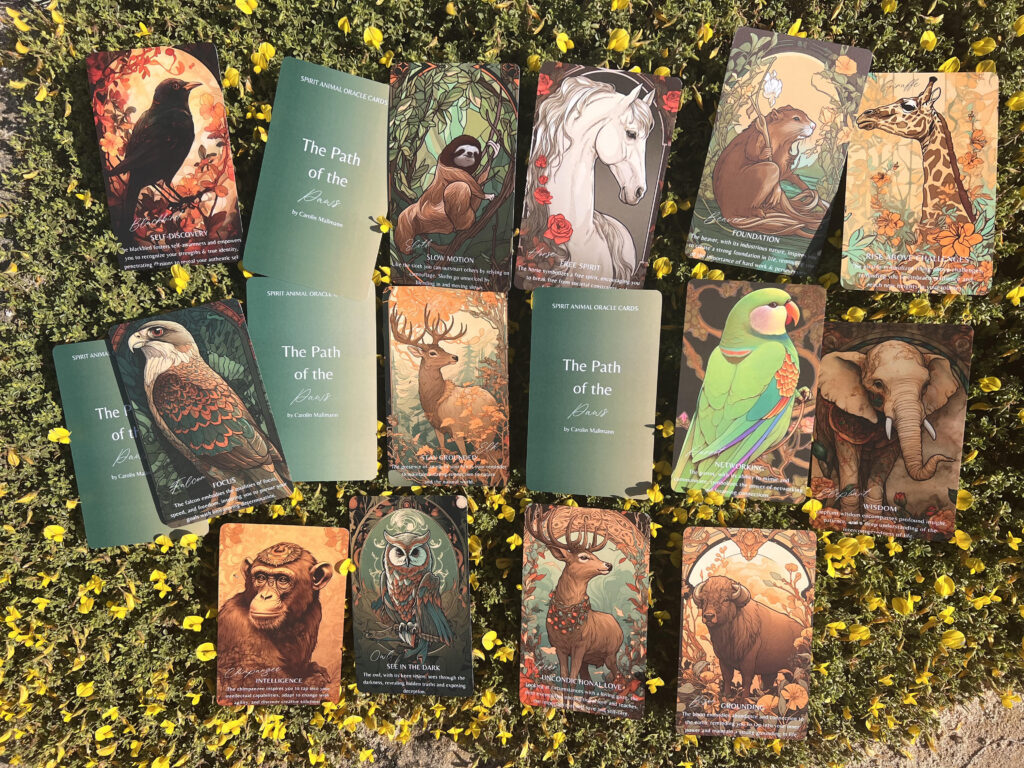
The Shadow of the Pelican: Generosity That Bleeds You Dry
The pelican’s shadow is hidden inside its most celebrated virtue, which is why so few people notice it until they are empty.
- Feeding others with your own blood. The “pelican in her piety” is a warning as much as an ideal. When giving becomes self-wounding — when you are literally depleting your health, time and spirit to keep others fed — the medicine has turned against you. The most common thing I hear from pelican-people is “but they needed it,” said while running on empty.
- The pouch that scoops up everything. A pouch that holds so much can end up holding what is not yours — other people’s emotions, crises and moods, carried around until you cannot tell your feelings from theirs. Emotional depth becomes emotional flooding.
- Generosity with a hook in it. The shadow of giving is giving that quietly expects — gratitude, loyalty, being needed. When your generosity has become the only way you know you matter, it is worth asking honestly what you are really fishing for.
- The starving or grounded pelican in a dream. When a pelican appears gaunt, unable to fly, or with an empty pouch, the reading I use in practice is this: you have given past your reserves, and a part of you is asking to be fed for once instead of feeding. Take it literally.
The pelican’s true teaching is not to stop giving — your generosity is one of the best things about you. It is to give from your overflow, not your organs, and to let yourself be fed as fully as you feed others. The pelican’s emotional depths are shared by the whale spirit animal, which teaches how to carry deep feeling without being swallowed by it.
A Shamanic Practice: The Pelican Dive Journey and the Refilled-Pouch Ritual
This is the practice I offer people who give beautifully and receive almost nothing.
- Set a receiving-shaped intention. Not “help me give more” but: “Show me what I am carrying for others that is draining me — and what I need to be fed.”
- Prepare. Lie down near water if you can, cover your eyes, and use fifteen to twenty minutes of steady drumming.
- Enter through the shoreline. Picture a wide coast at dusk. Let the pelican land beside you, its pouch heavy with water.
- Ask it to empty its pouch with you and name what pours out — which feelings and burdens are actually yours, and which belong to other people. Let the pelican help you return what is not yours to the sea.
- Dive, then rise. Follow the pelican down into the water toward one feeling you have been avoiding, and let its buoyancy carry you both back to the surface. Feel that you can go deep and still return.
- Return slowly and ask, before you open your eyes, who is allowed to feed you this week.
The Refilled-Pouch Ritual
- Name what you gave away this week — time, energy, care — in one honest list.
- Name what you received in the same period. Sit with the gap between the two columns without rushing to justify it.
- Ask for one thing this week — out loud, of a real person. Receiving is a muscle the pelican needs you to rebuild.
- Give one thing from genuine overflow, and feel the difference between that and giving from your reserves.
If the pelican is not the guide who ultimately arrives for you, you can explore the wider list of spirit animals and their meanings, learn how to find your own spirit animal, or let one come through the Path of the Paws oracle deck.
Frequently Asked Questions
What does the pelican spirit animal mean?
The pelican spirit animal represents generosity, emotional depth, shared abundance and resilience. When it appears, it usually honours your giving nature while asking whether you are giving from overflow or slowly emptying yourself to keep everyone else full.
What does it mean to dream of a pelican?
A healthy, fishing or flying pelican in a dream often points to abundance and generous connection. A gaunt, grounded or empty-pouched pelican more commonly signals that you have over-given and need to be nourished and to receive, rather than to give more.
Why is the pelican a symbol of sacrifice?
The medieval legend of the “pelican in her piety” claimed the mother pelican pierced her own breast to feed her young with her blood, making the bird a Christian emblem of self-giving love. Spiritually it is both an ideal of devotion and a caution against giving to the point of self-harm.
Is the pelican a good spirit animal for empaths?
Very much so — and it is also their most important teacher. The pelican shows empaths how to hold and share deep feeling, while warning against scooping up everyone else’s emotions until they can no longer tell which are their own.