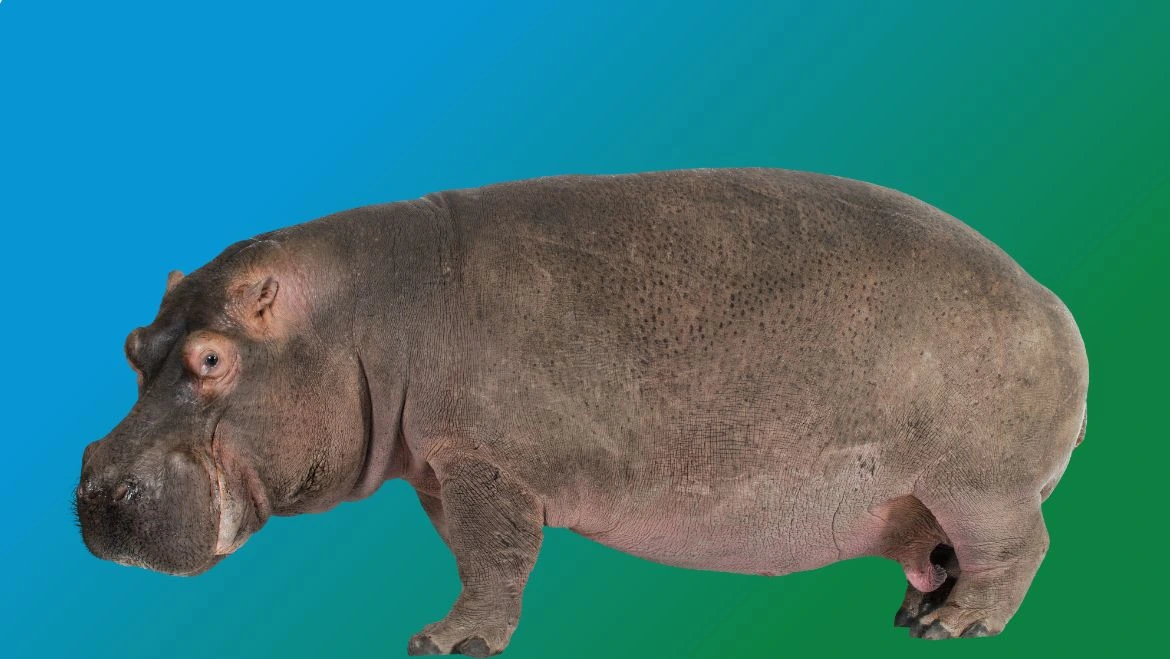
The first time a hippopotamus surfaced on one of my journeys, what struck me was not its size but its stillness. It rose from the riverbed without a ripple — only the eyes and nostrils breaking the surface — and it simply watched. There was no threat in it and no welcome either, just an enormous, patient presence that had been down there the whole time, whether or not I noticed. People who meet this guide almost always describe the same thing: the feeling of being seen from below, from a depth they had been carefully avoiding.
This article is about what the hippopotamus spirit animal actually means — in journeys, in dreams, and in the moments it keeps surfacing in your waking life. It is about meaning, not biology, though we will begin with the real animal, because honest spirit-animal work always does. If you came looking for facts about river horses, you are in the wrong place. If a hippo has been rising in your inner life and you want to understand why, stay. In more than two decades of shamanic practice I have learned that this guide arrives for a particular kind of person at a particular moment — and that its gentle reputation is almost entirely wrong.
From Riverbed to Psyche: What the Hippopotamus Actually Teaches
The medicine is never invented on top of the animal. It grows directly out of how the creature really lives, and the hippo’s habits are unusually precise once you look at them.
- It does not swim — it walks the bottom. A hippopotamus is denser than water. It cannot float or paddle the way we picture; instead it sinks, touches the riverbed, and pushes off it to rise for breath. That is the whole of its emotional teaching: you do not survive deep feeling by thrashing at the surface. You let yourself down to the bottom, find something solid, and push off that. Depth and grounding turn out to be the same gesture.
- It keeps watch while submerged. Its eyes, ears and nostrils sit high on the skull, so the animal can stay almost entirely hidden and still take in everything above the waterline. Hippopotamus medicine is the capacity to remain in your own depths without going blind to the world — present to feeling, yet still aware of what is moving around you.
- It looks calm and is not. The hippo is among the most dangerous large animals in Africa, responsible for more human deaths each year than lions. Nothing in its heavy, placid appearance predicts how fast and how fiercely it defends its stretch of water. This is the correction it brings to anyone who has mistaken gentleness for weakness — in others, and in themselves.
- It makes its own protection. The hippo secretes a reddish fluid, once called “blood sweat,” that shields its skin from sun and infection. What looks alarming is in fact protection the animal produces from inside its own body. Its defence is not borrowed or worn on the outside; it comes from within.
Hippopotamus Symbolism and Spiritual Meaning Across Cultures
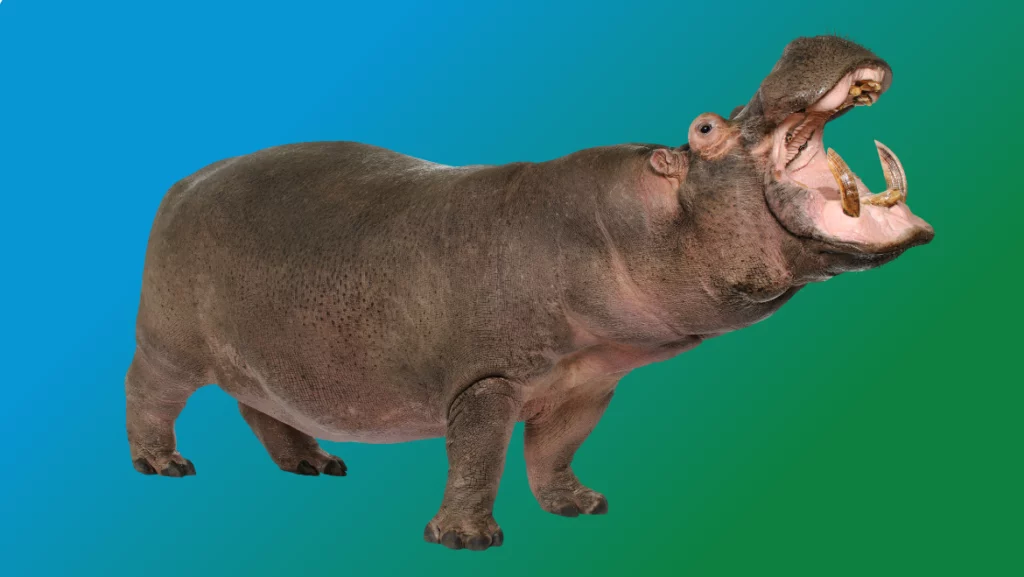
Few animals have been read so differently by the people who lived beside them. The hippo has been worshipped as a protective mother and hunted as an image of chaos — sometimes within the same culture. That contradiction is not a flaw in the symbolism. It is the symbolism.
Ancient Egypt: Taweret the Protector and Set the Destroyer
In ancient Egyptian religion the hippopotamus wore two faces. Taweret, a goddess with the body of a pregnant hippo, was one of the most beloved household protectors in Egypt — fierce guardian of women in childbirth and of the vulnerable moment when new life arrives. Her ferocity was the point: you wanted something that dangerous standing between you and harm. The same animal, in its male form, was associated with Set — disorder, storm, and the chaotic force that Horus must overcome. One creature, held as both the fiercest protection and the thing that must be mastered. If the hippo has come to you, it is usually asking which of these two it is being for you right now.
The River Horse of Two Elements
The word hippopotamus comes from the Greek for “river horse” — an animal named for belonging to two worlds at once. Like the dolphin or the swan, the hippo lives on the threshold between water and land, between the emotional deep and solid ground. Creatures who move easily between elements are, across many traditions, the ones trusted to carry us between states of being. The hippo makes that crossing several times a day: down into the water to rest and feel, out onto the land at night to feed and move. It is a living rhythm of descent and return.
The Rivers of Africa
Across the many peoples who have lived alongside hippos in Africa, the animal is held with a mixture of deep respect and genuine fear — a power of the water that is never taken lightly. These are living relationships belonging to specific communities, and I reference them here as an outsider who was taught to take them seriously, not as someone who owns them. What is consistent, and worth carrying, is this: nobody who actually shares a river with a hippo makes the mistake of thinking it is tame. Reverence and caution are, in its case, the same feeling.
The Shadow of the Hippopotamus Spirit Animal
This is where a real guide separates from a fridge magnet. When the hippo appears blocked, charging, or in a recurring nightmare, it is not withdrawing its strength. It is showing you where that strength has turned against your own life.
- The submerged charge. The most common distortion I meet with this guide is suppressed anger. The placid surface, the person who “never gets upset” — and underneath, a territorial force that erupts without warning when the water is finally invaded. Hippo asks the uncomfortable question: what have you been keeping under the surface that everyone will eventually be surprised by?
- Never coming up for air. The gift of depth becomes a trap when you stop surfacing. Staying submerged in feeling, in a mood, in the past — calling it depth when it has quietly become avoidance. The hippo goes down to rest, but it always rises to breathe. A part of you that refuses to come back up is not going deep; it is drowning slowly.
- Territory hardened into a wall. Healthy boundaries are hippo medicine at its best. Their shadow is the boundary that has grown into isolation — defending a stretch of river so fiercely that nothing living is allowed to cross it, including help, intimacy, and change.
- The charging hippo in a dream. When people dream of a hippo rising to attack, the reading I use in practice is almost always the same: a boundary is long overdue. Something has been trespassing on your ground — a demand, a person, a habit — and the part of you that should have said “no” months ago is now enormous, furious, and done waiting.
The Path of the Paws
42 hand-illustrated oracle cards, one for each animal guide — drawn from the same practice these articles come from. A way to sit with an animal instead of only reading about it.
Order your deck →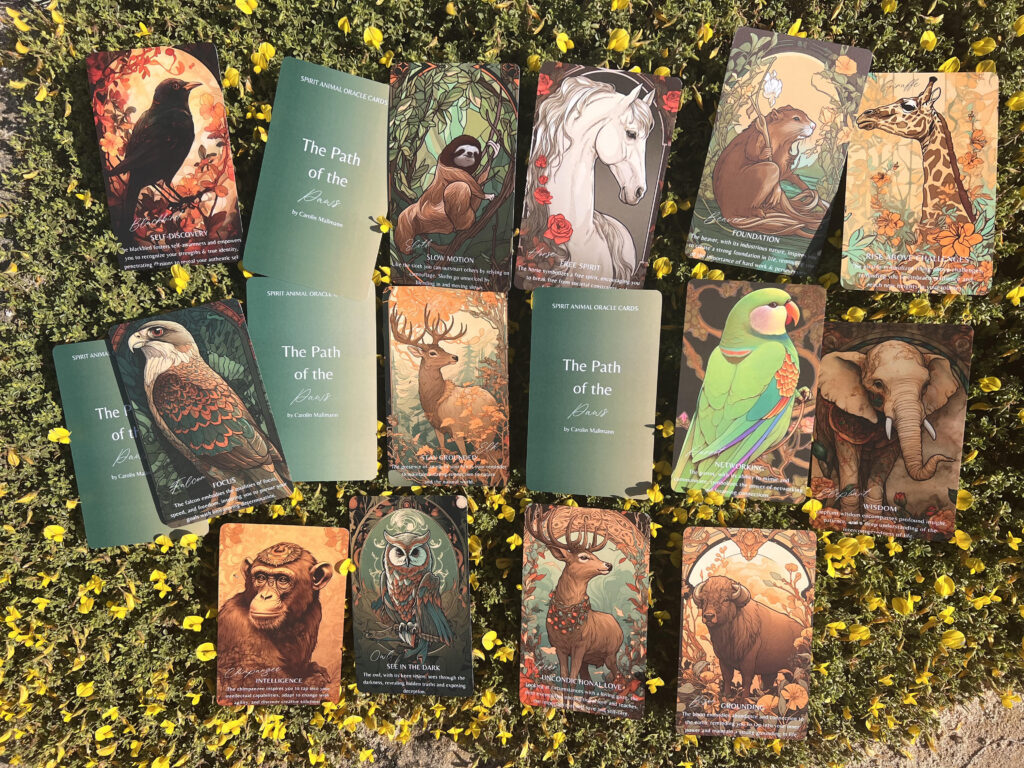
Working With Hippopotamus Medicine: A Journey and a Boundary Ritual
Hippo is a lower-world guide, and its element is water, so the work is emotional rather than airy. Do not attempt this on a day you cannot afford to feel something. If you are new to journeying, begin with the step-by-step guide to finding your spirit animal first.
- Set a precise intention. Not “show me my spirit animal” but something the hippo can answer: “What have I been holding under the surface?” or “Where is a boundary long overdue?”
- Prepare the container. Lie down somewhere undisturbed, cover your eyes, and let a steady drumbeat carry you for fifteen to twenty minutes.
- Enter through water you know. Travel to a real river or lake you have actually stood beside. Walk in. Do not try to swim — let yourself sink, the way the hippo does, until your feet find the bottom.
- Wait to be met, and push off from the floor. Let the hippo rise beside you. Notice that you can only breathe by pressing down on something solid first. Feel where, in your life, you have been trying to rise without anything under your feet.
- Ask the question you have been submerging. Then stay quiet and let the answer come as image, weight, or feeling rather than words.
- Return slowly and write it down before you speak to anyone. Then eat and put your bare feet on the ground — hippo work needs grounding to close.
The Boundary Ritual: Naming Your Stretch of River
- Name the trespass. Write down the one demand, person, or habit that keeps crossing into water that is yours.
- Say the boundary once, in plain words, with no justification attached. The hippo does not explain its river; it simply holds it.
- Let one honest feeling surface in front of one trusted person this week — the feeling you usually keep below the waterline.
Affirmations for Hippopotamus Wisdom
- “I go to the bottom of my feelings, find solid ground, and rise to breathe.”
- “My gentleness is not weakness. I can protect what is mine.”
- “I stay grounded through emotional depth, honouring both the water and the land.”
Hippopotamus Spirit Animal: Questions People Actually Ask
What does it mean when a hippopotamus appears to you?
It usually means two things are being asked of you at once: to go deeper into a feeling you have been avoiding, and to defend a boundary you have been letting slide. The hippo arrives for people who look calm on the surface while a great deal moves underneath. Its message is rarely “relax” — more often it is “stop pretending the water is shallow.”
Is the hippopotamus a good or bad omen?
Neither, and treating it as either misses the point. In ancient Egypt the same animal was both the protective goddess Taweret and the chaos of Set. A hippo that feels calm and companionable tends to signal protection and grounded strength; one that charges or blocks your path usually points to suppressed anger or a boundary that can no longer wait. The animal is not the omen — your response to it is.
What does a hippopotamus in a dream mean?
Context decides. A hippo resting underwater beside you suggests your emotional life is deep and, for now, at peace. A hippo surfacing or rising toward you often marks a feeling ready to come up. A charging hippo is the classic dream of overdue anger and a boundary demanding to be set. A hippo you cannot coax out of the water can point to a part of you that has gone too deep into a mood and forgotten how to surface.
Who does the hippopotamus spirit animal tend to arrive for?
In my practice, it comes most often for people others describe as easy-going, patient, or unflappable — and who are quietly exhausted from holding a great deal down. It also arrives for new mothers and fierce protectors, and for anyone standing at the edge of a feeling they have decided is too big to enter. If that sounds like you, the hippo is not asking you to become harder. It is asking you to stop confusing stillness with safety.
Whichever face of the hippo has surfaced for you, treat its weight as an invitation rather than a warning. When you are ready to go further, explore the full A–Z spirit animal guide, sit with the river-dwelling alligator as a close relative in the water, or learn the journeying method in full through the four-week spirit animal course.